
Introduction
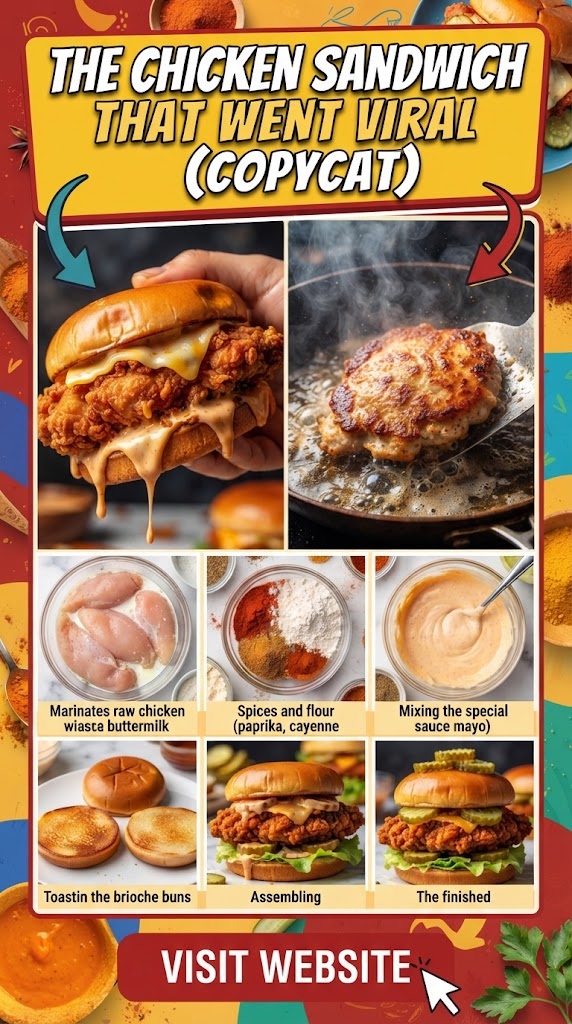
If you love crispy chicken sandwiches with a crunchy coating, juicy chicken, creamy sauce, and a soft toasted bun, this Viral Chicken Sandwich Copycat is the recipe to make. It delivers everything people want from a restaurant-style chicken sandwich without requiring a deep fryer or a complicated list of ingredients.
The chicken is soaked in a flavorful buttermilk marinade, coated in seasoned flour, and fried until deeply golden and crispy. It is then tucked into a toasted brioche bun with creamy sauce, crisp lettuce, and crunchy pickles.
The result is a chicken sandwich that is crispy on the outside, juicy inside, creamy, tangy, slightly spicy, and incredibly satisfying.
Why This Chicken Sandwich Went Viral
There is something irresistible about a properly made crispy chicken sandwich. The contrast is what makes it special: a crunchy crust surrounding tender chicken, followed by a soft bun and cool, creamy toppings.
This copycat version focuses on the details that make restaurant chicken sandwiches so good.
The chicken stays juicy
Chicken breasts can become dry when overcooked. Marinating the chicken in buttermilk helps tenderize it while adding flavor.
The coating gets extra crispy
Instead of using plain flour alone, this recipe uses seasoned flour combined with cornstarch. Cornstarch helps create a lighter, crunchier crust.
The crust is flavorful
The flour mixture contains paprika, garlic powder, onion powder, black pepper, cayenne, and other seasonings. Every bite gets seasoning rather than relying entirely on the sauce.
The sauce balances everything
A creamy, tangy, slightly spicy sauce cuts through the richness of the fried chicken and brings the whole sandwich together.
The bun matters
A soft brioche bun is ideal because it is slightly sweet and tender while still sturdy enough to hold the crispy chicken.
Complete Recipe at a Glance
Recipe: Viral Copycat Crispy Chicken Sandwich
Cuisine: American
Preparation Time: 25 minutes
Marinating Time: 2–12 hours
Cooking Time: 15–20 minutes
Total Active Time: About 45 minutes
Servings: 4 sandwiches
Difficulty: Intermediate
Ingredients
For the Chicken
- 2 large boneless, skinless chicken breasts
- 1 ½ cups buttermilk
- 1 tablespoon hot sauce
- 1 teaspoon salt
- 1 teaspoon paprika
- ½ teaspoon garlic powder
- ½ teaspoon black pepper
- ½ teaspoon onion powder
For the Crispy Coating
- 2 cups all-purpose flour
- ½ cup cornstarch
- 1 teaspoon salt
- 1 ½ teaspoons paprika
- 1 teaspoon garlic powder
- 1 teaspoon onion powder
- 1 teaspoon black pepper
- ½–1 teaspoon cayenne pepper
- ½ teaspoon dried oregano
- ½ teaspoon baking powder
For the Spicy Mayo Sauce
- ½ cup mayonnaise
- 2 tablespoons ketchup
- 1 tablespoon hot sauce
- 1 teaspoon honey
- ½ teaspoon garlic powder
- ½ teaspoon paprika
- ¼ teaspoon black pepper
- 1 teaspoon pickle juice
For the Sandwiches
- 4 brioche buns
- 4–8 dill pickle slices
- 1–2 cups shredded lettuce
- 2 tablespoons butter, for toasting buns
- Optional: sliced tomato
- Optional: sliced cheese
- Optional: extra hot sauce
For Frying
- Vegetable oil, canola oil, or peanut oil, as needed
Ingredient Notes
Chicken Breasts
Large chicken breasts work well, but they are usually too thick to fry evenly as they come.
For the best results, slice each breast horizontally into two thinner pieces. You can also gently pound the chicken to an even thickness.
Aim for pieces approximately ½ to ¾ inch thick.
Even thickness is important because it allows the chicken to cook through before the coating becomes too dark.
Buttermilk
Buttermilk is one of the secrets to juicy fried chicken.
Its mild acidity helps tenderize the chicken while giving the meat a subtle tang. It also helps the flour coating adhere to the chicken.
If you don’t have buttermilk, you can make a substitute by mixing:
- 1 ½ cups milk
- 1 ½ tablespoons lemon juice or white vinegar
Let the mixture sit for about 5–10 minutes before using.
Cornstarch
Don’t skip the cornstarch if you want a really crunchy crust.
All-purpose flour creates structure, while cornstarch helps make the coating lighter and crispier.
The combination produces a crust that stays crunchy without becoming excessively heavy.
Paprika
Paprika gives the coating a beautiful golden color and mild pepper flavor.
Regular paprika works perfectly. Smoked paprika can also be used if you want a deeper smoky flavor.
Cayenne Pepper
Cayenne is optional, but highly recommended if you enjoy a little heat.
For mild chicken, use ¼ teaspoon.
For medium spice, use ½ teaspoon.
For a hot sandwich, use 1 teaspoon or add extra hot sauce to the marinade.
How to Prepare the Chicken
Step 1: Slice the Chicken
Place the chicken breasts on a sturdy cutting board.
Using a sharp knife, carefully slice each breast horizontally through the middle.
You should end up with four thinner chicken pieces.
If some pieces are significantly thicker than others, gently pound them with a meat mallet until they are approximately the same thickness.
This helps everything cook evenly.
Step 2: Make the Buttermilk Marinade
Add the following to a large bowl:
- 1 ½ cups buttermilk
- 1 tablespoon hot sauce
- 1 teaspoon salt
- 1 teaspoon paprika
- ½ teaspoon garlic powder
- ½ teaspoon onion powder
- ½ teaspoon black pepper
Whisk everything together until evenly combined.
The marinade should smell savory, slightly spicy, and tangy.
Step 3: Marinate the Chicken
Place the chicken into the buttermilk mixture.
Turn each piece several times so it is completely coated.
Cover the bowl and refrigerate.
For the best flavor, marinate for 4–12 hours.
If you’re short on time, you can marinate the chicken for approximately 30–60 minutes, but longer marinating gives better flavor and tenderness.
Avoid leaving raw chicken at room temperature while marinating.
Making the Crispy Chicken Coating
Step 4: Prepare the Flour Mixture
In a large shallow bowl, combine:
- 2 cups flour
- ½ cup cornstarch
- 1 teaspoon salt
- 1 ½ teaspoons paprika
- 1 teaspoon garlic powder
- 1 teaspoon onion powder
- 1 teaspoon black pepper
- ½–1 teaspoon cayenne
- ½ teaspoon oregano
- ½ teaspoon baking powder
Whisk thoroughly.
Make sure the seasonings are distributed evenly throughout the flour.
The Secret to Those Extra Crispy Bits
Here’s an easy trick that makes a major difference.
Take about 2–3 tablespoons of the buttermilk marinade and drizzle it into the seasoned flour.
Use your fingers to rub the liquid into the flour.
You’ll notice little flour clumps forming.
Those clumps become crunchy pieces attached to the chicken during frying.
This creates the rugged, craggy texture that makes restaurant-style fried chicken so appealing.
Step 5: Coat the Chicken
Remove one piece of chicken from the buttermilk.
Allow excess marinade to drip off for a few seconds.
Place the chicken into the seasoned flour.
Press the flour firmly onto the chicken.
Turn it over and press again.
Make sure the entire surface is coated.
For an even thicker crust, dip the floured chicken briefly back into the buttermilk and then return it to the flour.
Press the second layer firmly onto the chicken.
Repeat with the remaining pieces.
Place the coated chicken on a clean rack or plate while you heat the oil.
How to Fry the Chicken
Step 6: Heat the Oil
Pour enough oil into a heavy-bottomed pot or deep skillet to provide several inches of depth.
Heat the oil to approximately 350°F / 175°C.
A cooking thermometer is strongly recommended.
Oil temperature is extremely important.
If the oil is too cool, the chicken can absorb excess oil and become greasy.
If the oil is too hot, the coating may burn before the chicken is fully cooked.
Step 7: Fry the Chicken
Carefully lower the coated chicken into the hot oil.
Do not overcrowd the pan.
Depending on the size of your pan, you may need to fry two pieces at a time.
Fry until the coating is deeply golden and the chicken reaches a safe internal temperature of 165°F / 74°C.
The cooking time will vary depending on the thickness of the chicken, but thin chicken pieces often take approximately 4–6 minutes per side.
Use a thermometer rather than relying solely on time.
Step 8: Drain the Chicken
When the chicken is cooked, carefully remove it from the oil.
Place it on a wire rack set over a baking sheet.
Avoid placing it directly onto paper towels if you want maximum crispiness.
A wire rack allows excess oil to drain while keeping air circulating underneath the chicken.
Season with a small pinch of salt while the crust is still hot.
Making the Viral Sandwich Sauce
Step 9: Mix the Sauce
In a small bowl, combine:
- ½ cup mayonnaise
- 2 tablespoons ketchup
- 1 tablespoon hot sauce
- 1 teaspoon honey
- ½ teaspoon garlic powder
- ½ teaspoon paprika
- ¼ teaspoon black pepper
- 1 teaspoon pickle juice
Mix until smooth.
Taste the sauce.
If you want more heat, add additional hot sauce.
If you prefer a sweeter sauce, add another ½ teaspoon honey.
If you want more tang, add a little extra pickle juice.
Cover and refrigerate until ready to assemble the sandwiches.
Toasting the Buns
Step 10: Prepare the Brioche Buns
Slice the brioche buns in half if they aren’t already sliced.
Heat a skillet over medium heat.
Spread a small amount of butter on the cut sides of each bun.
Place the buns cut-side down in the skillet.
Toast for approximately 1–2 minutes, or until the edges are lightly golden and the surface is warm and slightly crisp.
Don’t over-toast them.
The goal is a soft interior with a lightly golden surface.
How to Assemble the Chicken Sandwich
Now comes the fun part.
Place the bottom half of each toasted bun on a plate.
Spread a generous layer of the spicy mayo sauce over the bun.
Add shredded lettuce.
Place the crispy chicken on top.
Add dill pickle slices.
Add another spoonful of sauce.
Finish with the top bun.
Press the sandwich gently together.
Serve immediately.
The Perfect Layering Order
For the best texture, try this order:
Bottom bun → sauce → lettuce → crispy chicken → pickles → sauce → top bun
The lettuce provides freshness and crunch.
The pickles add acidity.
The sauce provides creaminess and heat.
The chicken provides the crispy, savory centerpiece.
The brioche bun ties everything together with a soft, slightly sweet texture.
Why Pickles Are So Important
Pickles may seem like a small ingredient, but they make a huge difference.
Fried chicken is rich.
The creamy sauce is also rich.
Pickles provide acidity and brightness that cut through that richness.
Their crunch also adds another layer of texture.
For the classic fast-food-style experience, use dill pickles rather than sweet bread-and-butter pickles.
How to Make the Chicken Extra Crispy
If maximum crunch is your goal, follow these tips.
1. Don’t skip cornstarch
The flour-cornstarch combination produces a crispier coating.
2. Create flour clumps
Adding a few drops of buttermilk to the flour creates irregular crunchy pieces.
3. Press the flour onto the chicken
Don’t simply toss the chicken through the flour.
Press firmly.
4. Maintain oil temperature
Try to keep the oil around 350°F / 175°C.
Adding cold chicken will temporarily lower the temperature, so don’t overcrowd the pan.
5. Use a wire rack
A rack prevents the bottom crust from becoming soggy.
6. Serve immediately
Fried chicken is at its crispiest shortly after cooking.
How to Keep the Chicken Juicy
The biggest mistake people make with chicken sandwiches is overcooking the chicken.
A thermometer is your best friend.
Check the thickest portion of the chicken.
Once it reaches 165°F / 74°C, remove it from the oil.
Don’t continue frying simply because you want a darker crust.
If the coating is browning too quickly while the inside is still undercooked, your oil may be too hot.
Can You Use Chicken Thighs?
Absolutely.
Chicken thighs are naturally juicy and flavorful, making them an excellent choice for this sandwich.
Boneless, skinless chicken thighs can be used instead of chicken breasts.
They may have a slightly different shape and thickness, so cooking time can vary.
Always check the internal temperature rather than relying solely on cooking time.
Can You Make This Sandwich Spicy?
Yes.
There are several ways to increase the heat.
Add more cayenne pepper to the flour.
Add extra hot sauce to the buttermilk marinade.
Increase the hot sauce in the sandwich sauce.
You can also add sliced fresh jalapeños.
For a serious spicy version, combine cayenne-seasoned chicken with a hot sauce-based glaze immediately before assembling the sandwich.
How to Make a Mild Version
For a family-friendly sandwich, reduce or completely remove the cayenne pepper.
Use only a small amount of hot sauce in the marinade and sauce.
The sandwich will still have plenty of flavor from garlic, paprika, onion powder, pickles, and the seasoned crispy crust.
Optional Cheese Version
If you love chicken sandwiches with cheese, add a slice of American cheese, cheddar, or pepper jack.
For the easiest method, place the cheese on the hot chicken immediately after frying.
The residual heat will soften the cheese.
Pepper jack is especially good if you’re making a spicy sandwich.
Optional Honey Chicken Version
For a sweet-and-spicy variation, drizzle a small amount of honey over the fried chicken before placing it on the bun.
You can also mix honey directly into the spicy mayo.
The combination of crispy chicken, spicy sauce, and sweetness is excellent.
Optional Slaw Version
Replace the lettuce with a quick creamy slaw.
Combine:
- 2 cups shredded cabbage
- ¼ cup mayonnaise
- 1 tablespoon vinegar
- 1 teaspoon honey
- Pinch of salt
- Pinch of black pepper
Mix everything together and refrigerate for 15–20 minutes.
Add the slaw directly on top of the crispy chicken.
The creamy, crunchy slaw works beautifully with the fried chicken.
Air Fryer Version
If you want to reduce the amount of oil, you can prepare an air-fryer version.
After coating the chicken, lightly spray the surface with cooking oil.
Preheat the air fryer according to its manufacturer’s instructions.
Arrange the chicken in a single layer.
Cook until the coating is crisp and the chicken reaches 165°F / 74°C, turning according to your appliance’s instructions.
The texture won’t be exactly identical to deep-fried chicken, but it can still be deliciously crispy.
Avoid overcrowding the basket.
Air needs to circulate around each piece.
Oven-Baked Version
You can also bake the coated chicken.
Place the breaded chicken on a wire rack set over a baking sheet.
Lightly spray both sides with cooking oil.
Bake in a preheated oven until the coating is golden and the chicken reaches 165°F / 74°C internally.
For best results, use a rack instead of placing the chicken directly onto a baking sheet.
This allows hot air to circulate underneath the chicken.
Common Mistakes to Avoid
Overcrowding the Pan
Adding too much chicken at once dramatically lowers the oil temperature.
The result can be greasy chicken and a soft crust.
Cook in batches.
Not Seasoning the Flour
The chicken should be flavorful even before the sauce is added.
Season every part of the coating.
Using Chicken Pieces That Are Too Thick
Very thick chicken can burn on the outside before the center cooks.
Slice or pound the chicken to an even thickness.
Skipping the Resting Rack
Putting fried chicken directly on a flat plate can trap steam underneath.
That steam softens the crust.
A wire rack is better.
Cutting the Chicken Immediately
If you cut into the chicken the second it comes out of the oil, some of the juices can escape.
Allow it to rest for a few minutes before assembling.
What to Serve With a Crispy Chicken Sandwich
This sandwich is filling enough to stand alone, but several side dishes work beautifully.
French Fries
Classic crispy fries are an obvious choice.
Season them with salt, garlic powder, or a little paprika.
Sweet Potato Fries
The sweetness of sweet potato fries pairs nicely with spicy chicken.
Coleslaw
Creamy or vinegar-based coleslaw provides a refreshing contrast.
Potato Salad
A cold, creamy potato salad makes an excellent summer side.
Pickles
Serve extra dill pickles on the side for pickle lovers.
Corn on the Cob
Grilled or boiled corn makes a simple side dish for a family meal.
Simple Salad
A crisp green salad provides freshness without competing with the sandwich.
Storage Instructions
For the best quality, store the components separately.
Place leftover chicken in an airtight container and refrigerate.
Keep the sauce in a separate sealed container.
Store lettuce and pickles separately so they don’t make the bread soggy.
The chicken is best enjoyed fresh, but leftovers can be reheated.
How to Reheat Crispy Chicken
Avoid microwaving the chicken if possible.
The microwave heats the chicken quickly but tends to soften the crispy coating.
Instead, reheat it in an oven, air fryer, or skillet until hot throughout.
If using an air fryer, reheat until the chicken is hot and the exterior becomes crisp again.
Always make sure leftovers are thoroughly reheated before eating.
Make-Ahead Tips
You can prepare several components in advance.
The sauce
Prepare the sauce a day ahead and refrigerate it.
The flavors often become even better after resting.
The marinade
The chicken can be placed in the buttermilk marinade several hours ahead.
The flour mixture
Combine the dry coating ingredients ahead of time and store them in an airtight container.
The chicken
For the best texture, fry the chicken close to serving time.
The longer fried chicken sits, the more the crust naturally loses its crispness.
Frequently Asked Questions
Can I use chicken tenders?
Yes.
Chicken tenders work very well and require less preparation because they are already relatively thin.
Keep an eye on them because they can cook faster than thick chicken breasts.
Can I use regular milk instead of buttermilk?
Yes, but buttermilk is preferred.
You can make a quick substitute with milk and lemon juice or vinegar.
Why is my chicken coating falling off?
There are several possible reasons.
The chicken may have been excessively wet before flouring.
The coating may not have been pressed firmly enough.
The oil temperature may have been incorrect.
Try pressing the seasoned flour firmly onto the chicken and letting the coated chicken rest for several minutes before frying.
Why isn’t my chicken crispy?
The most common causes are oil temperature, overcrowding, and excess moisture.
Make sure the oil is hot enough before frying.
Don’t overcrowd the pan.
And drain the cooked chicken on a wire rack rather than trapping steam underneath it.
Can I make the sauce ahead?
Yes.
The sauce can be prepared ahead and stored covered in the refrigerator.
Give it a quick stir before serving.
Can I freeze the fried chicken?
You can freeze cooked chicken, although the texture will be best when freshly prepared.
Allow cooked chicken to cool appropriately, package it well, and freeze.
Reheat using an oven or air fryer to help restore crispness.
Nutrition Information
Approximate nutrition will vary depending on the exact ingredients, chicken size, amount of oil absorbed, bun, and sauce used.
For one complete sandwich, the recipe can reasonably fall around:
- Calories: 650–850
- Protein: 35–50g
- Carbohydrates: 55–75g
- Fat: 30–45g
- Sodium: 1,000–1,800mg
These numbers are estimates rather than laboratory measurements.
Using less sauce, a smaller bun, or an air-fried chicken portion can reduce the overall calories and fat.
Expert Tips for the Best Viral Chicken Sandwich
Use a thermometer
The oil thermometer helps you maintain consistent frying temperature, while a meat thermometer confirms that the chicken has reached a safe internal temperature.
Don’t rush the marinade
A few hours in the buttermilk mixture can make a noticeable difference.
Season in layers
Season the marinade, flour, and sauce instead of depending on one component for all the flavor.
Build texture
Crispy chicken, crunchy lettuce, juicy pickles, creamy sauce, and soft brioche create a much more exciting sandwich than simply combining chicken and mayonnaise.
Don’t drown the chicken
The sauce should complement the chicken rather than completely cover its crispy crust.
Toast the buns
A lightly toasted bun adds flavor and prevents the bread from becoming soggy too quickly.
Serve immediately
This is one recipe where freshness really matters.
The chicken is at its best when the crust is hot and crunchy.
Complete Step-by-Step Summary
- Slice two chicken breasts horizontally into four thinner pieces.
- Combine buttermilk, hot sauce, salt, paprika, garlic powder, onion powder, and pepper.
- Add chicken and marinate for 4–12 hours.
- Mix flour, cornstarch, salt, paprika, garlic powder, onion powder, pepper, cayenne, oregano, and baking powder.
- Drizzle a few tablespoons of marinade into the flour to create crispy flour clumps.
- Remove chicken from the marinade.
- Press chicken firmly into the seasoned flour.
- For extra crunch, dip it back into buttermilk and coat it a second time.
- Heat frying oil to approximately 350°F / 175°C.
- Fry chicken in batches without overcrowding the pan.
- Cook until deeply golden and the chicken reaches 165°F / 74°C internally.
- Transfer chicken to a wire rack.
- Mix mayonnaise, ketchup, hot sauce, honey, garlic powder, paprika, pepper, and pickle juice.
- Butter and toast the brioche buns.
- Spread sauce over the bottom bun.
- Add lettuce.
- Add crispy chicken.
- Add dill pickles.
- Add more sauce.
- Finish with the toasted top bun.
- Serve immediately while the chicken is hot and crispy.
Final Thoughts
This Viral Copycat Chicken Sandwich proves that you don’t need a restaurant kitchen to make an incredible crispy chicken sandwich at home.
The real secret isn’t one magical ingredient. It’s the combination of small details: buttermilk-marinated chicken, a heavily seasoned flour coating, cornstarch for crunch, properly heated oil, creamy spicy sauce, crisp pickles, fresh lettuce, and a soft toasted brioche bun.
Once you’ve mastered the basic recipe, you can customize it in countless ways. Make it extra spicy, add cheese, drizzle it with honey, pile on creamy slaw, or keep it classic with pickles and spicy mayo.
The most important rule is simple: keep the chicken crispy, keep the bun soft, balance the richness with something tangy, and serve it hot.
That combination is what turns an ordinary chicken sandwich into the kind of homemade meal everyone asks you to make again.