
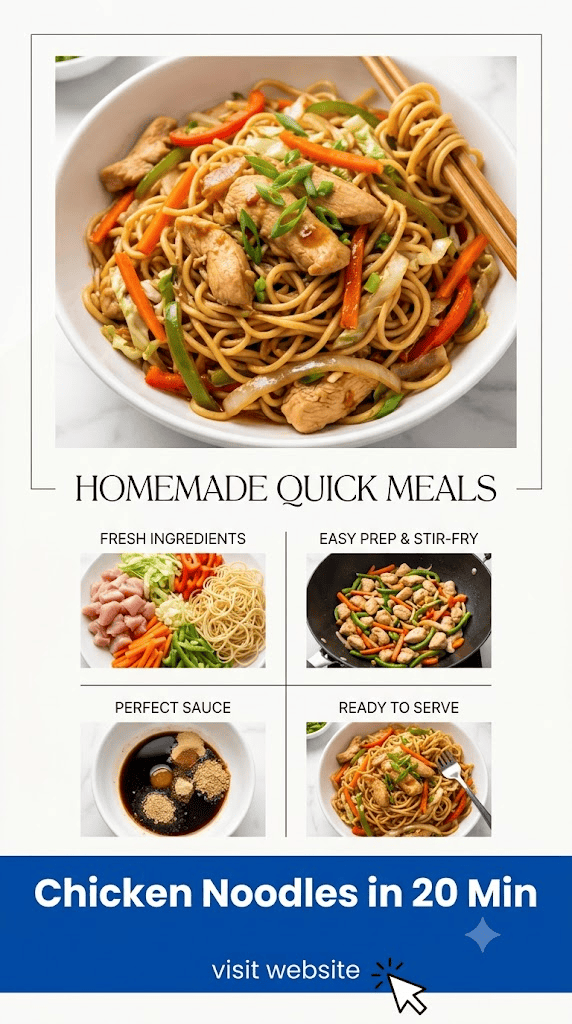
Chicken Noodles in 20 Minutes – Quick & Easy Dinner Recipe
In the fast-paced world we inhabit, the bridge between a long workday and a satisfying meal often feels impossibly wide. We frequently find ourselves caught between the convenience of greasy takeout and the daunting task of a multi-step home-cooked meal. However, the secret to mastering the weeknight hustle lies in the “20-minute meal”—a culinary philosophy that prioritizes efficiency without sacrificing flavor or nutrition.
Chicken noodles are the quintessential solution to this dilemma. They are versatile, protein-packed, and infinitely customizable. Whether you are a busy parent, a student on a budget, or a professional looking to wind down after a shift, this easy chicken noodles recipe provides a restaurant-quality experience in less time than it takes for a delivery driver to arrive at your door.
1. Noodle Selection
The foundation of any great quick dinner recipe is the base. For chicken noodles, your choice of pasta or noodle dictates the texture and the “sauce-ability” of the dish.
- Egg Noodles: These are the traditional choice for Lo Mein style dishes. They have a rich, slightly chewy texture that holds up well against high heat.
- Rice Noodles: Ideal for those seeking a gluten-free option. They are light and absorb the flavors of the stir-fry sauce exceptionally well.
- Udon: If you prefer a thick, pillowy texture, pre-cooked udon packs are a lifesaver for 20-minute meals.
- Instant Ramen: Don’t scoff! Discard the flavor packet and use the noodles for a lightning-fast stir-fry.
When choosing, consider the “soak vs. boil” factor. Rice noodles often only require a soak in hot water, saving you a stove burner and several minutes of boiling time.
2. Chicken Prep
To achieve that elusive “tender-crisp” texture found in professional kitchens, how you handle the protein is paramount. Using chicken breast is the fastest way to get dinner on the table because it cooks rapidly.
The secret technique used by many chefs is called “velveting.” While the full process involves egg whites and cornstarch, a “quick velvet” for a 20-minute meal involves tossing your sliced chicken in a teaspoon of cornstarch and a splash of soy sauce before it hits the pan. This creates a protective barrier that keeps the juices inside and allows the outside to brown beautifully without drying out.
Always slice your chicken across the grain. This breaks up the muscle fibers, ensuring that every bite is melt-in-your-mouth tender rather than chewy.
3. Fresh Vegetables
Vegetables are the engine of a healthy noodle recipe. They provide the crunch, the color, and the essential vitamins that turn a simple starch dish into a balanced meal.
For a 20-minute timeline, the key is the “cut.” You want your vegetables to be small enough to cook in 2-3 minutes.
- Bell Peppers: Provide sweetness and a pop of red or yellow.
- Broccoli: The florets act like little sponges for the sauce.
- Carrots: Use a peeler to create thin ribbons for instant cooking.
- Snap Peas: Add a satisfying snap and a bright green hue.
If you are truly pressed for time, a high-quality bag of frozen stir-fry vegetables can be tossed directly into the wok. This eliminates all chopping time, bringing your active prep down to almost zero.
4. Stir-Fry Sauce
The sauce is what binds the stir-fry chicken noodles together. Forget store-bought jars filled with preservatives; a homemade sauce takes sixty seconds to whisk and tastes infinitely fresher.
The “Golden Ratio” for a perfect stir-fry sauce involves four elements:
- Salt: Soy sauce or Tamari (for gluten-free).
- Sweet: Honey, brown sugar, or maple syrup.
- Acid: Rice vinegar or a squeeze of fresh lime juice.
- Aromatics: Minced garlic and grated ginger.
Adding a teaspoon of cornstarch to this mixture is the “pro-tip” that ensures the sauce thickens upon contact with the hot pan, glazing the noodles and chicken in a glossy, savory coating.
5. Wok Cooking
While a large skillet will suffice, a wok is the superior tool for fast weeknight meals. The unique shape of a wok allows for “tossing,” which ensures even heat distribution and prevents the noodles from sticking together.
The most important rule of wok cooking is heat. You want the pan to be shimmering hot before any oil touches it. This high-heat environment creates “Wok Hei” (the breath of the wok), a charred, smoky flavor that is the hallmark of great Asian cuisine. Use an oil with a high smoke point, such as peanut, canola, or grapeseed oil. Avoid extra virgin olive oil or butter, as they will burn and turn bitter at these temperatures.
6. Quick Sauté
The actual cooking process for this 20-minute meal is a choreographed dance. Once your “mise en place” (everything in its place) is ready, the cooking takes less than 10 minutes.
- Sear the Protein: Brown the chicken in batches. Do not crowd the pan, or the chicken will steam rather than sear. Remove and set aside.
- Aromatics: Throw in your garlic and ginger for just 30 seconds until fragrant.
- Veggies: Add the hardest vegetables first (carrots/broccoli) and the softest last (spinach/scallions).
- Combine: Add the noodles and the cooked chicken back into the pan.
- The Glaze: Pour the sauce over the top and toss vigorously for 60-90 seconds.
7. Flavorful Garnishes
The difference between a “good” meal and a “memorable” one often lies in the garnishes. They add layers of texture and fresh flavor that cut through the richness of the soy-based sauce.
- Sesame Seeds: Add a nutty crunch.
- Fresh Herbs: Cilantro or Thai basil add a floral freshness.
- Heat: Sliced bird’s eye chilies or a drizzle of Sriracha/Chili Crisp for those who enjoy a kick.
- Citrus: A final squeeze of lime juice right before serving brightens all the other flavors.
The Science of the 20-Minute Meal
Achieving a high-quality dinner in 20 minutes isn’t just about moving fast; it’s about the chemistry of the ingredients. When we cook chicken at high heat, the Maillard reaction occurs—the browning of sugars and proteins that creates that deep, savory “umami” flavor. By slicing the chicken thin, we maximize the surface area for this reaction to occur.
Furthermore, noodles are a “high-surface-area” food. Unlike a thick steak or a whole potato, every millimeter of a noodle is exposed to the sauce. This means you don’t need hours of marinating or simmering to achieve deep flavor. The sauce clings to the noodles instantly, providing a burst of flavor in every forkful.
Customizing Your Chicken Noodles
One of the reasons this recipe is a staple in many households is its adaptability.
The Low-Carb Version: Swap traditional wheat noodles for “Zoodles” (zucchini noodles) or Shirataki noodles. These options significantly lower the calorie count while still providing that satisfying “slurp” factor.
The Spicy Version: If you love heat, add a tablespoon of Gochujang (Korean chili paste) or Sambal Oelek to your sauce base. The fermentation in these pastes adds a complex depth that simple chili flakes cannot match.
The Nutty Version: Add a dollop of creamy peanut butter to your sauce to create a “Satay” style chicken noodle dish. This is particularly popular with children and provides an extra boost of healthy fats.
Troubleshooting Common Mistakes
Even with an easy chicken noodles recipe, things can go wrong. Here is how to fix them:
- Mushy Noodles: This usually happens from over-boiling. Always cook your noodles for 1 minute less than the package instructions, as they will continue to cook in the wok with the sauce.
- Dry Chicken: If the chicken is tough, it was likely overcooked or sliced too thick. Stick to the “velveting” technique and keep the heat high.
- Bland Sauce: If the dish feels like it’s “missing something,” it usually needs acid or salt. A splash more soy sauce or a squeeze of lime usually does the trick.
Nutritional Benefits
A plate of homemade chicken noodles is a powerhouse of nutrition compared to its takeout counterpart. By controlling the ingredients, you significantly reduce the sodium and sugar intake.
- Chicken: A lean source of high-quality protein, essential for muscle repair.
- Garlic & Ginger: Both possess anti-inflammatory properties and boost the immune system.
- Vegetables: Providing fiber, Vitamin C, and Vitamin A.
- Noodles: Supply the complex carbohydrates needed for sustained energy throughout the evening.
Meal Prep and Storage
This recipe is a “meal prepper’s” dream. Unlike salads that wilt or fried foods that get soggy, stir-fry noodles hold up remarkably well in the refrigerator.
Storage: Store in airtight containers for up to 4 days. Reheating: To prevent the noodles from drying out during reheating, add a teaspoon of water before microwaving. This creates steam that refreshes the noodles and thins the sauce back to its original consistency.
For those who want to save even more time, you can “pre-prep” your ingredients on Sunday. Slice the chicken, chop the vegetables, and whisk the sauce. When Tuesday evening rolls around, your actual cooking time drops from 20 minutes to just 7 or 8 minutes.
The Cultural Significance of Noodles
Noodles have been a staple of human civilization for over 4,000 years. Originating in China and spreading across the globe, they represent comfort and longevity. In many cultures, “long noodles” are served at birthdays to symbolize a long and healthy life.
By making this quick dinner recipe at home, you are participating in a global tradition of simple, nourishing cookery. It is a reminder that you don’t need a pantry full of exotic ingredients or hours of free time to create something beautiful. All you need is a hot pan, a few fresh ingredients, and twenty minutes.
Essential Kitchen Tools for Stir-Frying
To make your 20-minute cooking experience even smoother, having the right tools is essential. While you can get by with basics, these items make the process safer and more efficient:
- Long-Handled Tongs or a Wok Spatula: These allow you to move the food quickly without getting your hands too close to the intense heat.
- Microplane: This tool makes grating fresh ginger and garlic a five-second task, far faster than mincing with a knife.
- Cast Iron Skillet (Alternative): If you don’t own a wok, a heavy cast-iron skillet is the next best thing because it retains heat exceptionally well, allowing for that crucial sear on the chicken.
Conclusion
Mastering the 20-minute chicken noodles recipe is more than just learning a new meal; it’s about reclaiming your time and your health. It proves that “fast food” can be healthy, flavorful, and made right in your own kitchen.
Next time you’re tempted to reach for the delivery app, remember that in the time it takes to browse the menu, you could be sitting down to a steaming bowl of fresh, homemade noodles. The sizzle of the pan, the aroma of fresh ginger, and the satisfaction of a home-cooked meal are just twenty minutes away.
Whether you follow the recipe to the letter or use it as a canvas for your own culinary experiments, the result is guaranteed to be a hit. Simple ingredients, high heat, and a little bit of speed are all it takes to transform your weeknight dinner routine forever. Enjoy the process, savor the flavors, and embrace the ease of the ultimate chicken noodle stir-fry.