
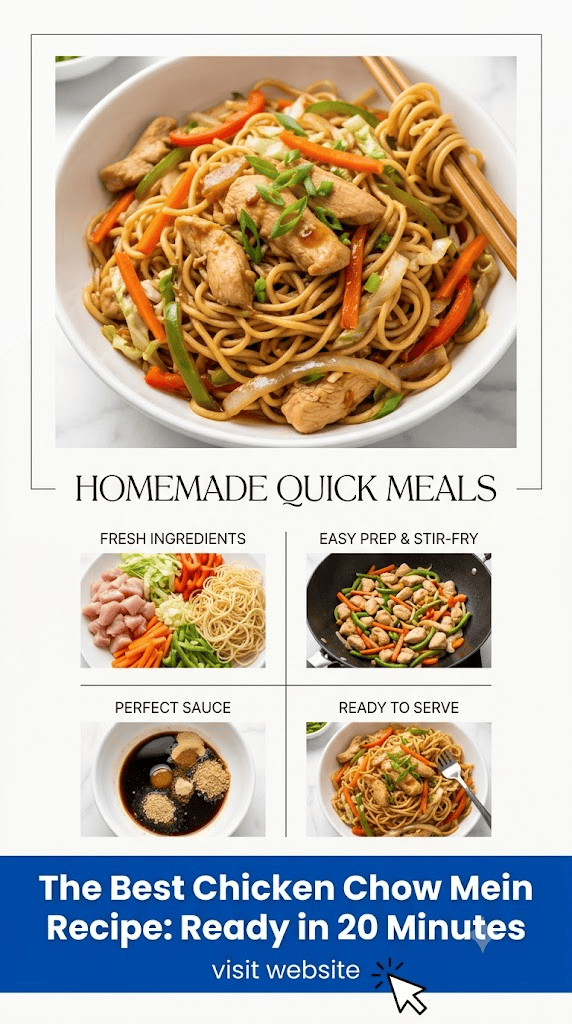
The Best Chicken Chow Mein Recipe: Ready in 20 Minutes
There is something undeniably comforting about a plate of perfectly cooked Chicken Chow Mein. It’s the ultimate comfort food—salty, savory, slightly sweet, and packed with textures that range from the snap of fresh vegetables to the chew of stir-fried noodles. For many of us, Chow Mein is the first thing we look for on a Chinese takeout menu. But what if you could recreate that exact “wok hei” (breath of the wok) flavor in your own kitchen in less time than it takes for the delivery driver to arrive?
This guide explores the absolute best Chicken Chow Mein recipe, designed for busy weeknights when you need a 20-minute dinner that doesn’t skimp on authenticity. We will dive deep into the secrets of the perfect sauce, the technique of “velveting” chicken, and how to choose the right noodles to ensure your home-cooked version rivals any restaurant in the city.
1. Chow Mein
The foundation of any great Chicken Chow Mein is, of course, the noodles. The term “Chow Mein” literally translates to “fried noodles.” Unlike “Lo Mein,” where noodles are boiled and tossed in sauce, Chow Mein noodles are meant to be stir-fried until they develop slightly crispy edges while remaining tender in the center.
When shopping for this recipe, look for “Chow Mein” noodles or thin egg noodles. You can find them in the refrigerated section of most Asian grocery stores (fresh) or in the dry pasta aisle (dried). If you are using fresh noodles, they often only need a quick rinse in hot water or a 1-minute parboil. If using dried, follow the package instructions but shave off one minute of boiling time; the noodles will finish cooking in the wok, absorbing the delicious sauce.
2. Chicken Breast
To achieve that incredibly tender, melt-in-your-mouth texture found in professional Chinese stir-fries, you must use a technique called “velveting.” Restaurant chefs don’t just throw raw chicken into a pan; they marinate it briefly in a mixture of cornstarch, soy sauce, and sometimes egg white or baking soda.
For this 20-minute recipe, we use a simplified version. By coating your thinly sliced chicken breast in a teaspoon of cornstarch and a splash of soy sauce, you create a protective barrier. This barrier locks in moisture and prevents the high heat of the wok from toughening the protein. The result is succulent chicken that carries the flavor of the sauce in every fiber.
3. Chow Mein Sauce
The sauce is the soul of the dish. A truly authentic Chow Mein sauce relies on a balance of “The Big Four”: salty, sweet, umami, and aromatic. Our signature sauce uses a combination of light soy sauce for salt, dark soy sauce for that deep mahogany color, oyster sauce for a rich umami punch, and toasted sesame oil for an earthy aroma.
A pinch of sugar is essential to balance the saltiness, and a dash of white pepper adds a subtle, floral heat that is characteristic of Cantonese cooking. When these ingredients hit the hot pan, they caramelize slightly, coating every strand of noodle in a glossy, savory glaze that is impossible to resist.
4. Fresh Vegetables
Vegetables provide the necessary “crunch” factor. Traditional Chicken Chow Mein almost always includes shredded cabbage (Napa or green), carrots, and bean sprouts. The key is the preparation: everything should be julienned or thinly sliced so that it cooks at the same speed as the noodles.
Bean sprouts are perhaps the most iconic vegetable in this dish. They should be added at the very last second of cooking. This ensures they lose their raw edge but retain their structural integrity, providing a juicy pop against the chewy noodles. If you want to boost the nutritional profile, you can also add bok choy, snap peas, or sliced bell peppers.
5. High Heat
If you want your Chicken Chow Mein to taste like it came from a high-end bistro, you need heat. Stir-frying is a fast-paced cooking method. You want your pan (ideally a wok, but a large skillet works too) to be shimmering hot before the oil even touches it.
High heat allows for the “Maillard reaction”—the browning of sugars and proteins—to happen instantly. This is what creates those charred bits on the noodles and the deep flavor profile known as “wok hei.” Because we are cooking at such high temperatures, the entire process from the moment the chicken hits the pan to the moment you plate it takes less than 8 minutes.
6. Searing Chicken
The first step in the wok is the chicken. Once your oil is hot, spread the chicken out in a single layer. Resist the urge to stir it immediately! Let it sit for about 60 seconds to develop a golden-brown crust. This sear adds a layer of complexity to the flavor that boiling or gentle sautéing simply cannot achieve.
Once the chicken is about 80% cooked through, remove it from the pan and set it aside. This prevents the chicken from becoming overcooked and rubbery while you prepare the vegetables and noodles.
7. Sautéing Aromatics
After removing the chicken, it’s time for the aromatics. Garlic and ginger are the backbone of Chinese flavor profiles. You only need to sauté them for about 30 seconds—just until they become fragrant. Be careful not to burn them, as burnt garlic turns bitter and can ruin the delicate balance of your sauce.
If you like a bit of spice, this is also the stage where you would add dried red chili flakes or finely chopped bird’s eye chilies. The oil will infuse with these flavors, distributing the heat evenly throughout the entire dish.
8. Stir-Frying Vegetables
Next, toss in your hard vegetables—the cabbage and carrots. Because the wok is so hot, these will soften slightly while maintaining a crisp bite within two minutes. You are looking for them to become vibrant in color.
The goal of stir-frying vegetables is “tender-crisp.” You don’t want a soggy mess; you want vegetables that feel alive. The high heat evaporates the moisture in the vegetables quickly, concentrating their natural sweetness.
9. Combining Ingredients
Now comes the assembly. Add your parboiled noodles into the wok with the vegetables. Immediately pour over the prepared Chow Mein sauce. Using a pair of long tongs or a wok spatula, toss everything vigorously.
The noodles should be untangled and thoroughly coated in the sauce. As the sauce hits the bottom of the hot wok, it will bubble and thicken, clinging to the noodles. This is the moment where the dish truly comes together, and the aroma will fill your entire kitchen.
10. Finishing Touches
Finally, add the seared chicken back into the pan along with the bean sprouts and green onions. Give it one last high-heat toss for about 30 to 60 seconds. This is just enough time to heat the chicken back through and wilt the bean sprouts slightly.
The green onions add a fresh, sharp bite that cuts through the richness of the soy and oyster sauce. Switch off the heat immediately to prevent the noodles from sticking or becoming mushy.
11. Serving Suggestions
Chicken Chow Mein is a complete meal on its own, but it also pairs beautifully with other classic dishes. Serve it alongside some crispy spring rolls, a hot bowl of Wonton soup, or some garlic-sauteed bok choy.
For those who love heat, serving it with a side of crispy chili oil or Sriracha is a must. The beauty of making this at home is that you can control the seasoning—extra black pepper for a kick, or a little extra sesame oil for a nuttier finish.
Why This 20-Minute Recipe Works
The magic of this recipe lies in its efficiency. By prepping all your ingredients before you turn on the stove (a concept known as mise en place), the actual cooking process is a whirlwind of activity that yields professional results.
Pro-Tip for Busy Cooks: You can chop the vegetables and mix the sauce up to 24 hours in advance. If you do this, the actual “cooking” time on a Tuesday night is reduced to a mere 10 minutes.
The Nutritional Aspect of Homemade Chow Mein
One of the biggest advantages of making Chicken Chow Mein at home is the ability to control the ingredients. Takeout versions are often laden with excessive sodium, MSG, and low-quality oils.
By making it yourself:
- Reduced Sodium: Use low-sodium soy sauce to cut the salt content by 40%.
- Lean Protein: Using chicken breast provides a high-protein, low-fat base.
- Fiber-Rich: You can double the amount of cabbage and carrots to increase the fiber content, making the meal more satiating.
- Better Oils: Use avocado oil or peanut oil, which have high smoke points and healthier fat profiles than generic “vegetable” oils.
Frequently Asked Questions (FAQ)
Can I use different proteins? Absolutely! This recipe works perfectly with shrimp, thinly sliced beef (flank steak), or even tofu for a vegetarian option. If using tofu, use extra-firm and sear it until crispy before adding it back at the end.
What if I can’t find Chow Mein noodles? In a pinch, you can use thin spaghetti or linguine. To make them more “authentic,” add a teaspoon of baking soda to the boiling water; this gives pasta a more alkaline, springy texture similar to Chinese egg noodles.
How do I store leftovers? Chow Mein stores exceptionally well. Keep it in an airtight container in the fridge for up to 3 days. To reheat, add a splash of water to a pan and stir-fry it briefly to loosen the noodles and restore the texture. Avoid the microwave if possible, as it can make the noodles rubbery.
The Secret to “Wok Hei” at Home
“Wok Hei” translates to the “breath of the wok.” It refers to the complex smoky aroma created by the carbonization of oil and the searing of food at extremely high temperatures. While commercial burners produce much more heat than a home stove, you can mimic this by:
- Using a Carbon Steel Wok: These thin pans heat up and cool down instantly.
- Cooking in Batches: If you are doubling the recipe, cook it in two batches. Overcrowding the pan drops the temperature, causing the food to steam rather than sear.
- The Flame: If you have a gas stove, let the flame lick the sides of the wok as you toss.
Conclusion
Mastering the Best Chicken Chow Mein Recipe is a rite of passage for any home cook who loves Asian cuisine. It is a dish that proves you don’t need hours in the kitchen or a list of impossible-to-find ingredients to create something truly spectacular. With the right noodles, a balanced sauce, and a very hot pan, you can transform simple pantry staples into a vibrant, restaurant-quality meal in just 20 minutes.
So, skip the menu, fire up your wok, and get ready to enjoy the most satisfying stir-fry you’ve ever made. Your weeknight dinners are about to get a major upgrade.