
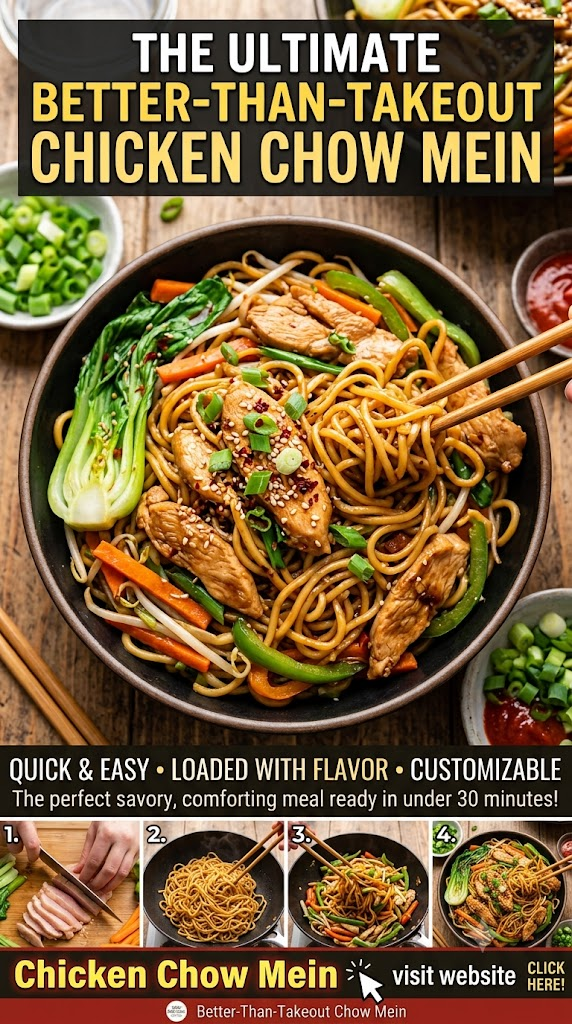
There is a specific, intoxicating aroma that defines the experience of walking past a high-end Cantonese kitchen. It’s a mix of toasted sesame, the sharp pungency of ginger and garlic, and the unmistakable “wok hei”—the breath of the wok. For many of us, Chicken Chow Mein was the gateway dish into the world of Chinese cuisine. It is the ultimate comfort food: salty, savory, slightly sweet, and packed with a variety of textures ranging from the springy chew of the noodles to the snap of fresh vegetables.
But let’s be honest: takeout can be a gamble. Sometimes it’s too oily, sometimes the chicken is dry, and often the noodles are mushy. The secret to a world-class Chicken Chow Mein doesn’t lie in a secret restaurant-only ingredient; it lies in the technique. When you master the art of the stir-fry at home, you create a version that is fresher, healthier, and significantly more flavorful than anything that comes in a cardboard box. This guide will walk you through every nuance of creating the best Chicken Chow Mein you’ve ever tasted.
1. The Noodles
The foundation of any Chow Mein is, of course, the noodles. The term “Chow Mein” literally translates to “stir-fried noodles” (“Chow” meaning stir-fried and “Mein” meaning noodles). To get that authentic restaurant texture, you must choose the right variety.
You are looking for thin, yellow egg noodles. In the refrigerated section of most Asian grocery stores, you’ll find “Hong Kong Style” pan-fry noodles. These are parboiled and ready to be crisped up. If you can’t find fresh, dried egg noodles work too, but you must be careful not to overcook them during the boiling process. The goal is “al dente”—they should have a firm bite because they will continue to cook and absorb sauce in the wok later.
The biggest mistake home cooks make is using thick, doughy noodles meant for Lo Mein. While delicious, Lo Mein is tossed in sauce, whereas Chow Mein is fried. For the ultimate experience, look for noodles that are labeled specifically for stir-frying.
2. Velveting Chicken
Have you ever wondered why the chicken in Chinese restaurants is so impossibly tender, almost silky in texture? The secret is a technique called “velveting.” This process involves marinating the meat in a mixture of cornstarch, egg white (optional), and liquid (like soy sauce or rice wine).
The cornstarch creates a protective barrier around the chicken fibers. When the meat hits the hot oil, the starch gelatinizes, locking in the juices and preventing the proteins from toughening up. For this recipe, we use chicken breast or thigh sliced into thin, bite-sized strips against the grain. A 20-minute marinade in a mixture of light soy sauce, Shaoxing wine, and cornstarch transforms the chicken from ordinary to extraordinary.
3. The Sauce
The sauce is the soul of the dish. A common misconception is that you need a dozen different bottles to make a good stir-fry sauce. In reality, it’s about the balance of five key elements: salt, umami, sweetness, acidity, and aroma.
Our “Better Than Takeout” sauce relies on a base of oyster sauce for deep umami, light soy sauce for saltiness, and dark soy sauce primarily for that rich, mahogany color. A touch of sugar balances the salt, and a splash of toasted sesame oil added at the very end provides that signature nutty aroma. Don’t forget a pinch of white pepper; it provides a floral heat that black pepper simply cannot replicate in this context.
4. Fresh Aromatics
Aromatics are the “holy trinity” of Chinese cooking. Garlic, ginger, and green onions (scallions) provide the base layers of flavor. When these hit the hot oil, they infuse the entire dish with fragrance.
For the best results, use fresh ginger rather than powdered. The zing of fresh ginger cuts through the richness of the oil and sauce. When prepping your garlic, mince it finely, but be careful not to burn it. Burnt garlic turns bitter and can ruin the entire batch of noodles. Adding the white parts of the green onions early in the cook gives them time to soften and sweeten, while the green parts are saved for the end to provide a fresh, sharp crunch.
5. Vegetable Medley
Texture is just as important as flavor in Chow Mein. A variety of vegetables provides different mouthfeels. Carrots offer a sweet crunch, celery adds an earthy bite, and bok choy provides a juicy, leafy contrast.
The unsung hero of Chow Mein is the mung bean sprout. These should be added at the very last second. They require only a few seconds of heat to lose their raw edge while maintaining a watery, refreshing snap. If you cook them too long, they release water and make your noodles soggy. Always prep your vegetables into uniform shapes—ideally long, thin matchsticks (julienne)—so they cook at the same rate as the noodles and chicken.
6. The Wok
While you can technically make Chow Mein in a large skillet, a wok is the superior tool for the job. The high, sloping sides of a wok allow you to toss the ingredients vigorously without them flying out. More importantly, the shape of the wok creates different heat zones. The bottom is searingly hot for browning meat, while the sides are cooler, allowing you to move ingredients out of the direct heat while you fry the next component.
If you are using a standard stovetop, the key is to get your pan—whether it’s a wok or a skillet—ripping hot before you add the oil. You want the oil to shimmer and just start to smoke. This high heat is what creates “wok hei,” the smoky charred flavor that is the hallmark of great stir-fry.
7. Searing Chicken
The first step in the actual cooking process is searing the chicken. Because of the velveting process, the chicken will cook quickly. Spread the chicken out in a single layer in the hot wok and let it sit undisturbed for about 60 seconds. This allows a crust to form.
Once the bottom is golden, toss the chicken until it is just barely cooked through, then remove it from the wok and set it aside. Many home cooks make the mistake of leaving the chicken in while they cook the vegetables, which leads to overcooked, rubbery meat. By removing it and adding it back at the end, you ensure every piece remains succulent.
8. Crisping Noodles
This is the step that separates “okay” Chow Mein from “incredible” Chow Mein. Instead of just tossing boiled noodles into the sauce, you want to pan-fry them. After removing the chicken, add a little more oil to the wok and spread the noodles out.
Press them down slightly with a spatula and let them fry for 2-3 minutes until the bottom layer becomes golden and crispy. Flip the “noodle cake” and repeat. This creates a variety of textures: some noodles will be soft and chewy, while others will have a satisfying crunch. This contrast is the secret weapon of high-end Cantonese restaurants.
9. Flash-Frying Veggies
Once the noodles are crisped and removed, it’s time for the vegetables. Stir-frying is a fast-paced game. You want to cook the vegetables over the highest heat possible for a very short duration.
Start with the hardier vegetables like carrots and celery. Toss them constantly to prevent burning. After a minute, add the aromatics (garlic and ginger). If you add the garlic too early, it will burn before the carrots are tender. The goal is “crisp-tender”—the vegetables should be bright in color and have a bite to them, not be soft and limp.
10. The Final Assembly
Now comes the magic moment where all the components unite. Add the seared chicken and the crisped noodles back into the wok with the vegetables. Pour the prepared sauce over the mixture.
Using a pair of tongs or a wok spatula, toss everything together vigorously. The high heat will cause the sauce to bubble and thicken almost instantly, coating every strand of noodle and every piece of chicken in a glossy, savory glaze. This is when you add the bean sprouts and the green parts of the scallions. Give it a few more quick tosses—just enough to wilt the sprouts slightly—and then kill the heat.
11. Shaoxing Wine
If there is one “secret” ingredient that gives restaurant food that specific depth, it is Shaoxing wine. This traditional Chinese rice wine has a complex, slightly nutty, and vinegary aroma that transforms when it hits a hot pan.
When you add a splash of Shaoxing wine around the edges of the wok (not directly onto the food), it flash-evaporates, creating a flavorful steam that seasons the entire dish. If you cannot find Shaoxing wine, dry sherry is a respectable substitute, but the original is well worth the trip to an Asian market.
12. Dark Soy Sauce
Dark soy sauce is often overlooked by home cooks, but it is essential for the aesthetic of Chow Mein. Unlike light soy sauce, which is thin and very salty, dark soy sauce is aged longer, often with added molasses. It is thicker, less salty, and has a mild sweetness.
Its primary role in Chow Mein is color. Without it, your noodles will look pale and unappealing. Just a tablespoon of dark soy sauce will turn the noodles a beautiful, deep amber color that makes the dish look as good as it tastes.
13. The Art of Tossing
Stir-frying is as much about physics as it is about chemistry. The constant motion of tossing the food serves two purposes. First, it prevents the food from burning on the intense heat of the wok bottom. Second, it allows the food to come into contact with the hot air and steam rising from the pan, which helps cook things evenly.
If you aren’t comfortable tossing the wok with one hand, use two tools—a spatula in one hand and a pair of long chopsticks or tongs in the other. The goal is to keep the ingredients moving at all times. This aeration is part of what creates the “wok hei” flavor.
14. Essential Garnish
Presentation and the final flavor notes are the finishing touches. While the dish is incredible on its own, a few garnishes can elevate it further. Toasted sesame seeds add a tiny pop of texture and a boost to the nutty aroma of the sesame oil.
If you like heat, adding some thinly sliced fresh bird’s eye chilies or a dollop of crispy chili oil (Lao Gan Ma) on the side allows everyone to customize their spice level. Fresh cilantro can also provide a bright, herbal contrast to the salty, savory noodles.
15. Variations and Substitutions
One of the best things about Chicken Chow Mein is its versatility. Once you have the base technique down, you can swap ingredients based on what you have in your fridge.
- Protein: Swap chicken for shrimp (which cooks even faster), thinly sliced flank steak, or firm tofu cubes.
- Vegetables: Use shredded cabbage, snap peas, bell peppers, or sliced mushrooms.
- Noodles: If you can’t find egg noodles, even spaghetti can work in a pinch (though the texture won’t be quite the same).
- Gluten-Free: Use Tamari instead of soy sauce and ensure your oyster sauce is a gluten-free variety. Use rice noodles (though they will be more delicate and prone to breaking).
16. Common Mistakes
To ensure your Chow Mein is “Better Than Takeout,” avoid these common pitfalls:
- Overcrowding the Pan: If you add too much at once, the temperature of the wok drops, and the food starts to steam in its own juices instead of searing. Cook in batches if necessary.
- Too Much Liquid: Be careful with the amount of sauce. You want the noodles to be coated, not swimming in a soup.
- Washing the Noodles: If using fresh noodles, don’t wash them until they are mushy. If they are sticking, a tiny bit of oil tossed through them after boiling/draining is all they need.
- Low Heat: If your stove isn’t hot enough, you won’t get that “wok hei.” Let the pan get hot enough that the oil “shimmers.”
17. The History of Chow Mein
Chow Mein has a fascinating history that spans continents. Originating in the Guangdong province of China, the dish traveled with Chinese immigrants to the United States and the UK in the 19th and 20th centuries.
In China, there are countless regional variations. Some versions are nearly dry, while others have a thick gravy poured over crispy noodles (often called “Hong Kong Style”). The “takeout” version we know today was adapted to suit Western palates, often becoming sweeter and more vegetable-heavy. Making it at home allows you to bridge the gap between authentic Cantonese tradition and the nostalgic comfort of Westernized Chinese food.
18. Nutritional Balance
When you make Chow Mein at home, you have total control over the nutritional profile. Restaurant versions are often laden with excessive sodium, MSG (which isn’t necessarily bad but can be overused), and cheap, refined vegetable oils.
By using lean chicken breast, a moderate amount of high-quality oils (like peanut or avocado oil), and piling on the vegetables, you turn a “guilty pleasure” into a balanced meal. You can also reduce the sugar in the sauce or use a low-sodium soy sauce to make it heart-healthy without sacrificing the flavor.
19. Sourcing Ingredients
While most supermarkets now carry basic Asian ingredients, a trip to a dedicated Asian grocery store can be a game-changer. You’ll find a wider variety of noodles, specifically the “steamed” or “parboiled” ones that are perfect for frying.
Look for high-quality oyster sauce (brands like Lee Kum Kee’s “Premium” version are excellent). Check the labels on soy sauces; the best ones are naturally brewed and contain only water, soybeans, wheat, and salt. Exploring these aisles is part of the fun of mastering international cuisines.
20. Meal Prep and Storage
Chicken Chow Mein is a fantastic candidate for meal prep. Unlike some dishes that lose their texture, Chow Mein holds up remarkably well. The noodles continue to absorb the flavors of the sauce as they sit.
Store leftovers in an airtight container in the fridge for up to three days. To reheat, the best method is to toss them back into a hot skillet with a tiny splash of water to loosen the noodles. Microwaving also works, but the stovetop method helps regain some of that “fried” texture. It’s the perfect desk lunch that will make all your coworkers jealous.
21. Pairing Suggestions
What should you serve with your masterwork? While Chow Mein is a complete meal on its own, it pairs beautifully with other simple Chinese sides. A cold, smashed cucumber salad with garlic and black vinegar provides a refreshing, acidic contrast to the savory noodles.
For a classic experience, serve it with a pot of hot Jasmine or Oolong tea. The tannins in the tea help cleanse the palate between bites of the rich, savory noodles. If you’re hosting a dinner, start with some simple pork potstickers or a hot and sour soup to round out the meal.
22. Mastering the Heat
The most intimidating part of stir-frying for beginners is the heat. We are often taught to cook low and slow to avoid burning things. In the world of the wok, speed and heat are your friends.
If you are using an electric or induction stove, you won’t get the flames licking the sides, but you can still achieve great results. Use a heavy-bottomed pan that retains heat well. Let the pan heat up for several minutes before adding your oil. If you see the oil moving like water (shimmering), it’s ready. If it starts to smoke excessively, pull it off the heat for a few seconds. Mastering this “heat dance” is the hallmark of an expert stir-fry cook.
23. The Secret of White Pepper
Many people substitute black pepper for white pepper, thinking they are the same. However, white pepper is processed differently (the outer husk is removed), leading to a sharper, more fermented, and earthy flavor profile.
In Chinese cooking, white pepper is used to provide heat without the speckled look of black pepper. It has a “back of the throat” spice that perfectly complements the ginger and soy in the Chow Mein sauce. It is a small detail, but it is one of those “hidden” flavors that makes a dish taste professional.
24. Why This Recipe Works
This recipe works because it respects the individual components of the dish. By treating the chicken, the noodles, and the vegetables as separate entities that only combine at the very end, we prevent the “mush” factor that plagues so many home stir-fries.
We use the science of velveting to ensure the meat is tender. We use the technique of pan-frying to ensure the noodles have texture. And we use a balanced, authentic sauce to tie it all together. This isn’t just a recipe; it’s a system for stir-fry success.
25. Final Thoughts
Cooking at home should be an adventure. Taking a dish that you usually order from a menu and realizing you can make it even better in your own kitchen is a powerful feeling. Chicken Chow Mein is the perfect dish to start your journey into high-heat wok cooking.
It requires minimal prep time once you get the hang of the chopping, and the actual cooking time is less than ten minutes. It’s fast, it’s vibrant, and most importantly, it’s delicious. So, put down the takeout menu, turn up the heat, and get ready to enjoy the best Chicken Chow Mein of your life. Your taste buds—and your family—will thank you.