
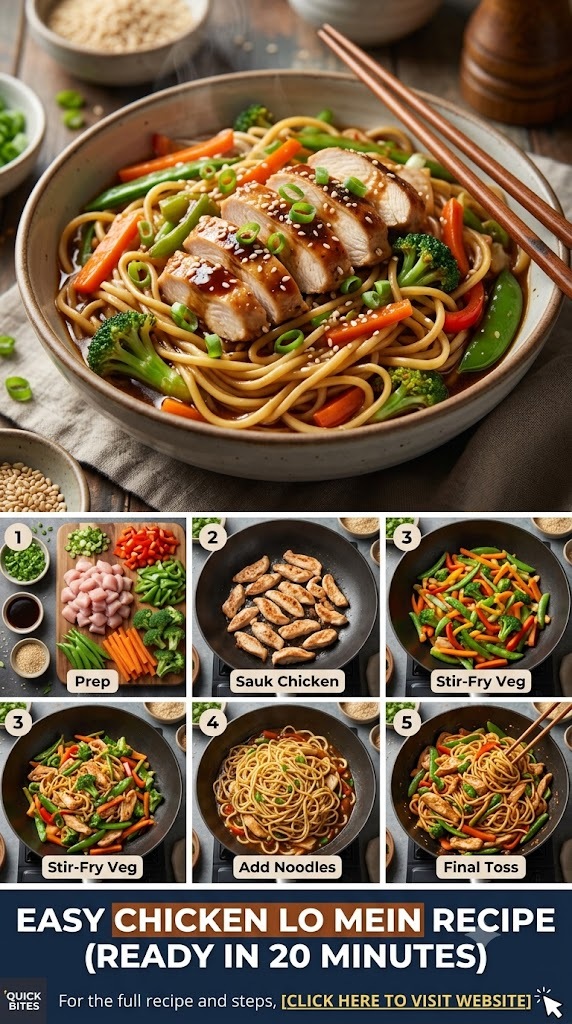
Easy Chicken Lo Mein Recipe (Ready in 20 Minutes)
There is a specific kind of magic that happens in a hot wok. It’s the transformation of humble ingredients—flour noodles, a bit of protein, and a handful of vegetables—into a dish that defines comfort food for millions. Chicken Lo Mein is the crown jewel of the Chinese takeout world, but here is a secret that the restaurants won’t tell you: it is significantly better, faster, and healthier when made in your own kitchen.
When you order takeout, you are often at the mercy of soggy noodles, overly salty sauces, and chicken that has been sitting in a warmer. When you make it at home, you control the “snap” of the vegetables, the “velvet” of the chicken, and the perfect balance of the umami-rich sauce. Best of all, this recipe takes exactly 20 minutes from the moment you pull the cutting board out to the moment you take your first bite. That is faster than any delivery driver can reach your door.
1. Essential Noodles
The foundation of any Lo Mein is, of course, the noodle. “Lo Mein” literally translates to “tossed noodles,” which distinguishes it from “Chow Mein” or “fried noodles.” For a truly authentic experience, you want to look for thick, round egg noodles. These are usually found in the refrigerated section of your local Asian grocery store, often labeled as “Oil Noodles” or “Soft Noodles.”
If you cannot find fresh egg noodles, dried lo mein noodles work perfectly well. Even in a pinch, standard spaghetti can be used, though the texture will be slightly different. The key to the perfect Lo Mein noodle is the “chew.” You want them to be al dente—cooked just enough to lose their raw crunch but firm enough to stand up to the high heat of the stir-fry without turning into mush.
2. Velvet Chicken
The secret to that incredibly tender, “melt-in-your-mouth” chicken found in high-end Chinese restaurants is a technique called “velveting.” While traditional velveting involves passing the meat through hot oil or water, our 20-minute version uses a simplified method. By coating the thinly sliced chicken in a small amount of cornstarch and soy sauce before it hits the pan, you create a protective barrier.
This barrier does two things: it locks in the moisture of the meat and creates a silky exterior texture that helps the sauce cling to every piece. For this recipe, chicken breast is the standard choice for its lean profile, but chicken thighs are an elite alternative if you prefer a juicier, more flavorful bite. The key is to slice the chicken against the grain into thin, uniform strips so they cook in under three minutes.
3. Umami Sauce
The sauce is the soul of the Lo Mein. It shouldn’t just be salty; it should be a complex layering of sweet, savory, and nutty notes. To achieve this, we use a combination of light soy sauce (for salt), dark soy sauce (for that iconic deep mahogany color), oyster sauce (for body and sweetness), and toasted sesame oil (for aroma).
A common mistake is using too much liquid. A great Lo Mein isn’t a soup; the sauce should reduce quickly in the heat of the pan, glazing the noodles rather than pooling at the bottom of the bowl. We also add a pinch of sugar to balance the saltiness and a dash of white pepper for a subtle, floral heat that lingers on the palate.
4. Crisp Vegetables
Vegetables in a Lo Mein provide the necessary structural contrast to the soft noodles. While you can use almost anything in your crisper drawer, the classic combination includes napa cabbage, carrots, and scallions. The cabbage, when seared quickly, provides a juicy crunch, while the carrots add a hint of earthy sweetness.
The trick to the vegetables is the timing. You want to cook them over high heat just until they brighten in color and lose their raw edge, but they must retain their “snap.” Overcooked vegetables are the enemy of a good stir-fry. If you want to elevate the dish, add snow peas or sliced water chestnuts for extra texture, or bok choy for a leafy, bitter element that cuts through the richness of the sauce.
5. High Heat
You don’t necessarily need a wok to make world-class Lo Mein, but you do need heat. A large, heavy-bottomed skillet or a cast-iron pan will work beautifully. The goal is to cook the ingredients rapidly. High heat facilitates the Maillard reaction—the chemical reaction between amino acids and reducing sugars that gives browned food its distinctive flavor.
In professional Chinese kitchens, this is known as Wok Hei, or “the breath of the wok.” It’s that slightly smoky, charred aroma that defines restaurant-quality stir-fry. To mimic this at home, make sure your pan is screaming hot before you add the oil, and don’t overcrowd the pan. If you put too much in at once, the temperature will drop, and your ingredients will steam instead of sear.
6. Aromatics First
Before the noodles or the chicken ever touch the pan, the oil must be infused with aromatics. Fresh ginger and garlic are non-negotiable. They provide the base layers of flavor that permeate the entire dish.
The ginger should be finely grated or julienned into matchsticks to ensure it distributes evenly, while the garlic should be minced. Be careful, though—garlic burns quickly at high temperatures. You only need about 30 seconds of contact with the hot oil until the kitchen smells incredible. At that point, immediately add your protein or vegetables to lower the temperature of the oil slightly and prevent the garlic from turning bitter.
7. Searing Protein
Once your aromatics are fragrant, it’s time for the chicken. Spread the chicken strips out in a single layer across the bottom of the pan and let them sit undisturbed for about 60 seconds. This allows a golden-brown crust to form.
Stir-frying is a misnomer; it’s not constant stirring. It’s a rhythmic process of searing and tossing. Once the chicken is 80% cooked through, you’ll remove it from the pan and set it aside. This prevents the chicken from becoming rubbery while you cook the vegetables. You will bring it back at the very end to finish cooking in the residual heat and sauce.
8. Vegetable Sauté
After the chicken is removed, it’s time for the vegetables. If the pan looks dry, add another teaspoon of high-smoke-point oil (like peanut or vegetable oil). Toss in the hard vegetables first—the carrots and the whites of the scallions. These take the longest to soften.
Follow quickly with the cabbage and any other leafy greens. Because the pan is so hot, this process should only take about 2 to 3 minutes. You are looking for “tender-crisp”—a state where the vegetable is cooked but still has a firm bite. This preserves the nutrients and the vibrant colors, making the dish as visually appealing as it is delicious.
9. The Toss
Now comes the namesake of the dish: the “Lo” or the toss. Add your cooked noodles into the pan with the vegetables. Pour the prepared sauce over the noodles and then return the chicken (and any juices that have collected on the plate) to the wok.
Using a pair of long kitchen tongs or a spatula, toss everything vigorously over high heat. The goal is to ensure every strand of noodle is coated in that dark, glossy sauce. As the sauce heats up, the cornstarch from the chicken and the starch from the noodles will thicken it slightly, creating a glaze that clings to the food rather than running off it. This stage takes less than 60 seconds.
10. Final Garnishes
The heat is off, but the dish isn’t finished until the garnishes are applied. The green parts of the scallions, which we saved from earlier, should be sprinkled on top now. Their raw, peppery bite provides a fresh contrast to the deep, cooked flavors of the sauce.
A sprinkle of toasted sesame seeds adds a tiny bit of crunch and reinforces the nuttiness of the sesame oil. If you like a bit of heat, a drizzle of chili oil or a dollop of sambal oelek can be added at this stage. These final touches transform a simple meal into a gourmet experience, providing layers of texture and flavor that hit every part of the palate.
11. Custom Variations
The beauty of this 20-minute recipe is its versatility. Once you master the basic technique, you can adapt it to whatever you have on hand.
- Shrimp Lo Mein: Replace the chicken with peeled and deveined shrimp. Shrimp cook even faster—usually in about 90 seconds.
- Beef Lo Mein: Use flank steak or sirloin, sliced very thin against the grain.
- Vegetarian/Vegan: Replace the chicken with extra-firm tofu or tempeh, and use a vegetarian stir-fry sauce in place of the oyster sauce (often made from mushrooms).
- Spicy Version: Add dried red chilies to the oil along with the garlic and ginger, or stir in a tablespoon of Szechuan peppercorns for a numbing sensation.
12. Perfect Sides
While Chicken Lo Mein is a complete meal on its own, it pairs beautifully with other classic Chinese-American dishes. If you have an extra five minutes, a quick smashed cucumber salad with garlic and vinegar provides a cooling, acidic contrast to the rich noodles.
For a fuller feast, serve the Lo Mein alongside some air-fried spring rolls or a simple egg drop soup. The goal is balance. Because the Lo Mein is savory and soft, sides that are crunchy or acidic help round out the dining experience. And of course, a hot pot of jasmine or oolong tea is the traditional way to cleanse the palate between bites.
13. Meal Prep
This recipe is a meal-prepper’s dream. Unlike many pasta dishes that can become gummy when stored, Lo Mein noodles hold their texture remarkably well. In fact, many people argue that Lo Mein tastes even better the next day after the noodles have had time to fully absorb the flavors of the sauce.
To meal prep this, simply divide the finished dish into airtight containers. It will stay fresh in the refrigerator for up to four days. When you’re ready to eat, a quick two minutes in the microwave with a teaspoon of water (to create steam) will bring it back to life. It’s the ultimate “sad desk lunch” cure.
14. Troubleshooting Tips
Even the simplest recipes can have hiccups. If your Lo Mein is too dry, don’t just add more soy sauce (which will make it too salty); instead, add a splash of chicken broth or water to loosen the sauce.
If your noodles are sticking together, it’s likely they were overcooked during the boiling phase or not drained well enough. To prevent this, toss the cooked noodles in a tiny bit of oil immediately after draining them. If the dish lacks that “restaurant flavor,” you might need a touch more acidity—a teaspoon of rice vinegar or a pinch more white pepper often provides the missing link.
15. The Health Factor
One of the primary reasons to make Lo Mein at home is the health benefit. Standard takeout Lo Mein can be a calorie bomb, often loaded with excessive oil, sugar, and MSG. By making it yourself, you can drastically reduce the sodium by using low-sodium soy sauce.
You can also increase the fiber content by doubling the vegetable portion or using whole-grain noodles. Because you are using high heat and a good quality pan, you need very little oil to achieve a great sear. This version of Chicken Lo Mein is high in protein, packed with vitamins from the fresh vegetables, and provides the slow-burning carbohydrates needed for energy—all without the “food coma” that often follows a heavy takeout meal.
16. Ingredient Science
Understanding the why behind the ingredients can make you a better cook. For instance, why use both light and dark soy sauce? Light soy sauce is fermented for a shorter time and provides the salt and the thin liquid base. Dark soy sauce is aged longer, often with molasses, giving it a thicker consistency and a much deeper color without adding too much extra salt.
Oyster sauce is another powerhouse ingredient. It’s made from oyster extracts, sugar, and salt, and it acts as a thickener while providing a unique savory-sweetness that can’t be replicated. If you understand these components, you can adjust the sauce to your specific liking—more dark soy for a richer look, or more oyster sauce for a sweeter finish.
17. The Art of Slicing
Consistency is the secret to 20-minute cooking. If your chicken pieces are different sizes, some will be dry while others are raw. If your carrots are thick chunks instead of thin matchsticks, they won’t cook in time.
Take the extra three minutes to prep your ingredients properly. Slice the chicken while it’s still slightly frozen; it makes getting those paper-thin strips much easier. For the vegetables, aim for a “julienne” cut—long, thin strips that mimic the shape of the noodles. This ensures that in every forkful (or chopstick-ful), you get a bit of everything, and everything is cooked to the same degree of perfection.
18. Noodle Science
Not all noodles are created equal. When boiling your noodles, the goal is to stop just before they are fully soft. This is because they will continue to cook when you toss them in the hot wok with the sauce.
If you use fresh oil noodles, you may not even need to boil them; a quick rinse in hot water to loosen them up is often enough. If you are using dried noodles, subtract one minute from the package’s recommended cooking time. This ensures the noodles maintain their structural integrity and don’t break apart when you’re tossing them with the heavy vegetables and chicken.
19. Mastering the Wok
The “wok toss” isn’t just for show. It’s a functional movement that aerates the food, preventing it from sticking and ensuring that the high heat hits every surface area. By tossing the food, you are also helping the sauce emulsify with the fats in the pan, creating a creamy, glossy coating.
If you are using a flat skillet, you can achieve a similar effect with a rapid stirring motion. The key is to keep the food moving. In a 20-minute recipe, the actual cooking time is only about 5 to 7 minutes. Every second the food sits still is a second it’s potentially overcooking or burning. Keep it moving, keep the heat high, and watch the flavors develop.
20. Serving the Family
Chicken Lo Mein is the ultimate family-style dish. It’s a crowd-pleaser that appeals to both children and adults. Kids love the long, slurpable noodles and the sweet-savory sauce, while adults appreciate the complex flavors and the abundance of fresh vegetables.
Setting a giant platter of steaming Lo Mein in the center of the table invites a sense of community. It’s a dish meant to be shared, passed around, and enjoyed together. Because it comes together so quickly, it’s the perfect solution for busy weeknights when you want to provide a wholesome, home-cooked meal without spending hours in the kitchen.
21. Storage and Reheating
If you find yourself with leftovers, you’re in luck. As mentioned, Lo Mein stores incredibly well. To prevent the noodles from drying out in the fridge, ensure your container is airtight.
When reheating, the microwave is the most convenient method, but the stovetop is the best. Reheating in a pan over medium heat with a splash of water or broth will help restore that “just-cooked” texture. Avoid high heat during reheating, as this can make the chicken tough. Just enough heat to warm the noodles through and loosen the sauce is all you need for a second-day meal that’s just as good as the first.
22. Conclusion
Making Chicken Lo Mein at home is more than just a way to save money or eat healthier; it’s a way to reclaim the joy of fast, flavorful cooking. In just 20 minutes, you can create a dish that rivals any restaurant, using fresh ingredients and techniques that you can master in a single afternoon.
The “snap” of the fresh vegetables, the “chew” of the egg noodles, and the deep, satisfying umami of the homemade sauce come together to create a symphony of flavor. So, skip the delivery app tonight. Put on an apron, get your wok screaming hot, and experience the satisfaction of the best Chicken Lo Mein you’ll ever make.