
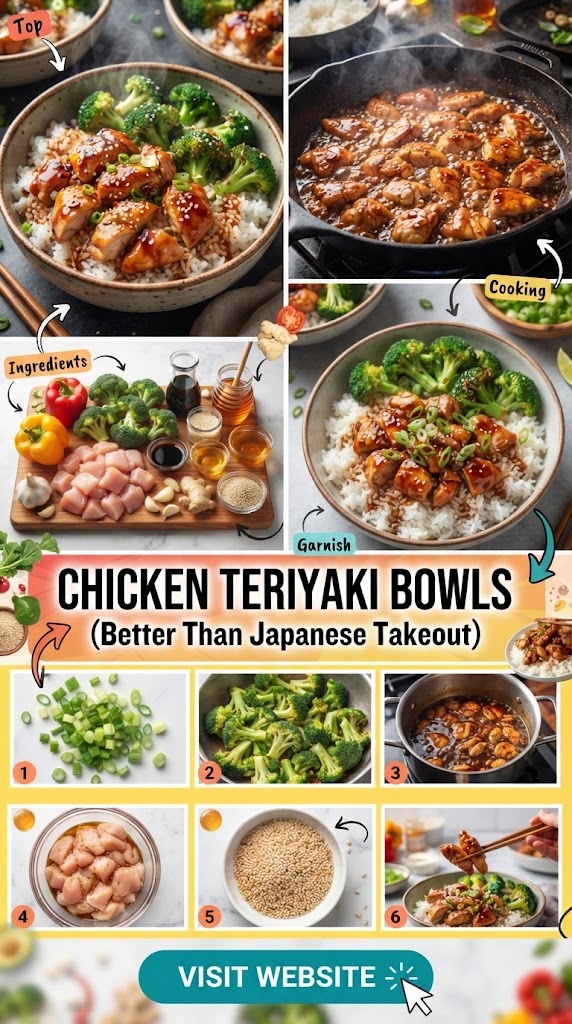
Chicken Teriyaki Bowls are one of those meals that seem simple but can be surprisingly difficult to get right. The best version has tender, juicy chicken, a glossy sweet-and-savory teriyaki sauce, fluffy rice, crisp vegetables, and plenty of fresh toppings. When everything comes together in one bowl, it makes an incredibly satisfying dinner that can easily compete with your favorite takeout.
This homemade version takes the classic idea of a teriyaki chicken bowl and makes it especially flavorful. The chicken is seared until beautifully browned, then coated in a homemade teriyaki glaze that thickens around every piece. The sauce is made with common pantry ingredients, so there is no need to buy a bottled sauce.
The recipe is also flexible. You can use chicken thighs for maximum juiciness or chicken breast for a leaner option. Add broccoli, carrots, cabbage, bell peppers, edamame, cucumber, or whatever vegetables you have available. Serve everything over steamed white rice, brown rice, or even noodles.
The result is a colorful, filling meal that works equally well for a quick family dinner or meal preparation for the week.
Why You’ll Love These Chicken Teriyaki Bowls
There are plenty of reasons to make teriyaki chicken at home.
1. The chicken stays juicy
Chicken thighs are naturally flavorful and forgiving. When cut into bite-sized pieces and cooked over fairly high heat, they develop golden-brown edges while staying tender inside.
Chicken breast also works beautifully, provided you don’t overcook it.
2. The teriyaki sauce is homemade
A good teriyaki sauce should balance sweet, salty, savory, and slightly tangy flavors. Soy sauce supplies salt and umami, brown sugar provides sweetness, ginger and garlic add aromatic depth, and rice vinegar gives the sauce a small amount of acidity.
A little cornstarch helps the sauce become thick and glossy.
3. Everything can be customized
You don’t need exactly the same vegetables every time. This bowl is an excellent way to use vegetables already in your refrigerator.
4. It is excellent for meal prep
Cook the chicken, rice, and vegetables separately, then assemble individual containers. The components keep well in the refrigerator and can be reheated for convenient lunches or dinners.
Ingredients
This recipe makes approximately 4 generous chicken teriyaki bowls.
For the Chicken
- 700 g boneless, skinless chicken thighs
- 1 tablespoon soy sauce
- 1 teaspoon sesame oil
- 1 teaspoon freshly grated ginger
- 2 cloves garlic, finely minced
- 1 tablespoon cornstarch
- 1 tablespoon neutral cooking oil
- ¼ teaspoon black pepper
For the Homemade Teriyaki Sauce
- ½ cup (120 ml) soy sauce
- ¼ cup (60 ml) water
- 3 tablespoons brown sugar
- 2 tablespoons honey
- 1 tablespoon rice vinegar
- 1 teaspoon sesame oil
- 2 cloves garlic, finely minced
- 1 teaspoon freshly grated ginger
- 1 tablespoon cornstarch
- 2 tablespoons cold water
For the Rice
- 2 cups uncooked white rice
- 2½ cups water, or according to your rice variety’s instructions
- ¼ teaspoon salt
You can substitute brown rice, jasmine rice, basmati rice, or short-grain rice.
For the Vegetables
Use approximately 4–5 cups of vegetables in total.
A good combination is:
- 2 cups broccoli florets
- 1 large carrot, thinly sliced
- 1 red bell pepper, sliced
- 1 cup shelled edamame
- 1 teaspoon sesame oil
- 1 tablespoon water
- Pinch of salt
For the Toppings
- 2 green onions, thinly sliced
- 1 tablespoon toasted sesame seeds
- ½ cucumber, thinly sliced
- Extra teriyaki sauce, if desired
- Optional: red chili flakes
- Optional: sriracha or chili sauce
- Optional: shredded nori
- Optional: pickled ginger
Equipment You’ll Need
You don’t need specialized equipment.
- Large skillet or frying pan
- Small saucepan
- Medium or large saucepan or rice cooker
- Sharp knife
- Cutting board
- Mixing bowls
- Wooden spoon or spatula
- Measuring cups and spoons
- Whisk
- Serving bowls
A large nonstick or stainless-steel skillet is particularly useful because you want enough surface area to brown the chicken instead of steaming it.
How to Make Chicken Teriyaki Bowls
Step 1: Prepare the Rice
Start with the rice because it takes longer than the chicken.
Rinse the rice under cold running water several times until the water becomes relatively clear. Rinsing removes excess surface starch and helps produce fluffier rice.
Add the rinsed rice, water, and salt to a saucepan.
Bring the water to a boil over medium-high heat. Once it starts boiling, reduce the heat to low and cover the pan tightly.
Cook according to the rice variety, generally around 15–20 minutes for white rice.
Do not repeatedly lift the lid while the rice cooks. Steam trapped inside the pot is part of the cooking process.
When the rice is tender and the water has been absorbed, remove the saucepan from the heat.
Leave it covered for another 5–10 minutes.
Finally, fluff the rice gently with a fork.
Important rice tip
If your rice package gives different water measurements or cooking instructions, follow those instructions. Different varieties require different amounts of liquid.
Step 2: Cut the Chicken
Pat the chicken thighs dry with paper towels.
This is an important step. Removing excess moisture allows the chicken to brown more effectively in the pan.
Cut the chicken into approximately 2.5 cm bite-sized pieces.
Try to keep the pieces reasonably similar in size. If some pieces are very small while others are large, they will finish cooking at different times.
Place the chicken in a bowl.
Add:
- 1 tablespoon soy sauce
- 1 teaspoon sesame oil
- 1 teaspoon grated ginger
- 2 minced garlic cloves
- 1 tablespoon cornstarch
- ¼ teaspoon black pepper
Mix thoroughly until every piece is lightly coated.
Allow the chicken to sit for approximately 10–15 minutes while you prepare the teriyaki sauce.
You don’t need a long marinade. The sauce added later provides most of the flavor.
Step 3: Make the Teriyaki Sauce
Add the following ingredients to a small saucepan:
- ½ cup soy sauce
- ¼ cup water
- 3 tablespoons brown sugar
- 2 tablespoons honey
- 1 tablespoon rice vinegar
- 1 teaspoon sesame oil
- 2 minced garlic cloves
- 1 teaspoon grated ginger
Whisk everything together.
In a separate small bowl, mix:
- 1 tablespoon cornstarch
- 2 tablespoons cold water
Stir until the cornstarch has completely dissolved.
This is called a cornstarch slurry.
Place the saucepan over medium heat.
Bring the sauce to a gentle simmer while stirring occasionally.
Once it is hot, slowly whisk in the cornstarch slurry.
Continue cooking for approximately 1–2 minutes, stirring continuously.
The sauce should become noticeably thicker and glossy.
Don’t boil it aggressively for a long time. The goal is a thick, pourable glaze rather than a stiff paste.
Remove the saucepan from the heat.
How thick should teriyaki sauce be?
When hot, the sauce should coat the back of a spoon but still flow easily.
Remember that it will thicken slightly more as it cools.
If your sauce becomes too thick, whisk in a tablespoon or two of warm water.
If it is too thin, return it to low heat and simmer briefly.
Step 4: Cook the Chicken
Heat a large skillet over medium-high heat.
Add 1 tablespoon of neutral cooking oil.
When the oil is hot, add the chicken pieces in a single layer.
Avoid overcrowding the pan.
If all the chicken doesn’t fit comfortably, cook it in two batches.
This is one of the most important secrets to getting restaurant-style chicken.
When too much chicken is packed into a pan, the moisture released from the chicken cannot evaporate quickly enough. Instead of browning, the chicken begins to steam.
Cook the chicken for approximately 3–4 minutes on the first side.
Then turn the pieces and continue cooking for another 3–5 minutes, depending on their size.
The chicken should be golden brown on the outside and completely cooked through.
For food safety, chicken should reach an internal temperature of 74°C / 165°F at the thickest point.
Step 5: Add the Teriyaki Sauce
Once the chicken is cooked, reduce the heat to medium-low.
Pour approximately ¾ of the teriyaki sauce into the skillet.
Toss the chicken gently so every piece is coated.
Allow the chicken and sauce to cook together for 1–3 minutes.
The sauce will bubble gently and cling to the chicken.
You’ll notice the chicken becoming shiny and deeply glazed.
Don’t cook the sauce for too long at high heat. The sugars in the sauce can burn.
If the pan becomes dry before the chicken is nicely glazed, add another splash of sauce or water.
Step 6: Prepare the Vegetables
You can steam, stir-fry, or roast the vegetables.
For this bowl, a quick skillet method works especially well.
Add the broccoli, carrot, and bell pepper to a large skillet or wok.
Add:
- 1 tablespoon water
- 1 teaspoon sesame oil
- A small pinch of salt
Cover and cook for approximately 3–4 minutes.
Remove the lid and continue cooking for another 2–4 minutes.
The vegetables should be tender but still have some bite.
Add the edamame during the final 1–2 minutes just to warm it through.
Don’t overcook the vegetables
The vegetables are an important contrast to the soft rice and glazed chicken.
Broccoli should retain some firmness, carrots should still have a slight crunch, and bell peppers should remain colorful.
Step 7: Assemble the Bowls
Now comes the fun part.
Divide the cooked rice between four bowls.
Add the vegetables to one side.
Place the teriyaki chicken on top or alongside the vegetables.
Drizzle with a little additional teriyaki sauce.
Finish with:
- Sliced green onions
- Toasted sesame seeds
- Fresh cucumber
For extra heat, add a small amount of chili sauce or red pepper flakes.
You can also add shredded nori for a subtle seaweed flavor.
The Perfect Chicken Teriyaki Bowl Formula
A great bowl isn’t simply a pile of ingredients. The best combination comes from balancing different flavors, textures, and temperatures.
A useful formula is:
Rice + protein + vegetables + sauce + fresh toppings + crunch
The rice gives the bowl a neutral foundation.
The chicken provides savory richness.
The vegetables provide color and freshness.
The teriyaki sauce ties everything together.
Green onions and cucumber add freshness.
Sesame seeds provide a small amount of crunch.
This balance prevents the bowl from becoming overly sweet or heavy.
What Makes This Teriyaki Chicken Better Than Takeout?
There are several small differences between homemade teriyaki bowls and many takeout versions.
Freshly cooked chicken
Takeout chicken can sometimes sit in sauce for extended periods. Cooking the chicken at home means you can serve it immediately while the edges are still caramelized.
Control over sweetness
Many commercial teriyaki sauces are quite sweet.
With homemade sauce, you control the amount of brown sugar and honey.
If you prefer a less sweet sauce, reduce the brown sugar to 2 tablespoons and use only 1 tablespoon of honey.
Better texture
You can cook vegetables until they are exactly as tender as you like.
Fresh toppings
Green onions, cucumber, sesame seeds, chili, and nori add flavors that can make a simple bowl taste much more interesting.
Ingredient Substitutions
Chicken Breast
Chicken breast works perfectly.
Use approximately 700 g boneless, skinless chicken breast.
Cut it into bite-sized pieces, but be careful not to overcook it because breast meat contains less fat than thighs.
Chicken Tenderloins
Chicken tenderloins are another convenient option.
They cook quickly and remain relatively tender.
Tofu
For a vegetarian version, replace the chicken with firm or extra-firm tofu.
Press the tofu thoroughly, cut it into cubes, and coat it lightly with cornstarch before pan-frying.
Then toss the crispy tofu with the teriyaki sauce.
Salmon
Teriyaki salmon is another excellent variation.
Cook salmon fillets separately, then brush them generously with the sauce before serving over rice.
Vegetable Variations
Don’t feel limited to broccoli and carrots.
Try:
- Snow peas
- Green beans
- Mushrooms
- Baby corn
- Cabbage
- Spinach
- Zucchini
- Bok choy
- Bell peppers
- Asparagus
- Edamame
- Shredded carrots
- Cucumber
For a particularly colorful bowl, use at least three different colors of vegetables.
How to Make the Bowl Spicy
Traditional teriyaki sauce isn’t necessarily hot, but adding spice is easy.
Mild heat
Add a pinch of red pepper flakes.
Medium heat
Add 1–2 teaspoons of sriracha to the teriyaki sauce.
Strong heat
Add sliced fresh chili peppers or a spoonful of your favorite chili sauce.
For the best balance, add spicy sauce at serving time so everyone can control the heat.
How to Make It Less Sweet
If you don’t enjoy very sweet teriyaki sauce, reduce the sweeteners.
Use:
- 2 tablespoons brown sugar
- 1 tablespoon honey
Keep the soy sauce, ginger, garlic, and rice vinegar the same.
The rice vinegar is particularly helpful because its acidity prevents the sauce from tasting flat or overwhelmingly sweet.
How to Make It Gluten-Free
Use certified gluten-free soy sauce or tamari.
Also check the labels of any other packaged sauces or ingredients you add.
The basic chicken, rice, vegetables, garlic, ginger, honey, sesame oil, and cornstarch are naturally gluten-free, but packaged ingredients can vary.
How to Make It Ahead of Time
This recipe is excellent for meal preparation.
Cook the rice, chicken, and vegetables separately.
Allow everything to cool appropriately before transferring it into airtight containers.
For four meal-prep portions, divide the rice between four containers.
Add the vegetables and chicken.
Keep fresh toppings such as cucumber, green onions, and sesame seeds separate when possible.
Store in the refrigerator.
When ready to eat, reheat the rice, chicken, and vegetables until thoroughly hot.
Add fresh toppings afterward.
Meal-prep tip
Keep some extra teriyaki sauce separately.
The rice absorbs sauce as it sits, so adding a little fresh sauce after reheating makes the bowl taste much more flavorful.
How to Store Leftovers
Place leftover chicken, rice, and vegetables in airtight containers and refrigerate promptly.
For best quality, use refrigerated leftovers within 3–4 days.
Store cucumber and other fresh toppings separately because they can release water and make the rice soggy.
Reheat only the portion you plan to eat.
When reheating, make sure the chicken and rice are steaming hot throughout.
Can You Freeze Chicken Teriyaki Bowls?
Yes, although the texture of some vegetables may change after freezing.
The chicken and rice freeze particularly well.
For the best results:
- Cook the chicken and rice.
- Allow them to cool.
- Portion them into freezer-safe containers.
- Add the cooked vegetables if desired.
- Freeze.
- Thaw in the refrigerator before reheating when possible.
- Add fresh green onions, cucumber, and sesame seeds after reheating.
You can also freeze the teriyaki sauce separately.
Common Mistakes to Avoid
1. Crowding the Chicken
This is probably the biggest mistake.
If the pan is packed, the chicken releases moisture and steams.
Solution: Cook in batches.
2. Starting With Wet Chicken
Water on the surface prevents good browning.
Solution: Pat the chicken dry before seasoning.
3. Burning the Sauce
Teriyaki sauce contains sugar, and sugar can burn quickly.
Solution: Add the sauce after the chicken is cooked and lower the heat.
4. Using Too Much Cornstarch
Too much cornstarch can make the sauce thick and gelatinous.
Solution: Use the stated amount and remember that the sauce thickens as it cools.
5. Overcooking Vegetables
Soft, dull vegetables can make the entire bowl feel heavy.
Solution: Cook vegetables quickly and leave some texture.
6. Making Everything Sweet
Teriyaki should have sweetness, but it also needs salt, acidity, aromatics, and umami.
Solution: Don’t keep adding sugar. Adjust the balance with soy sauce and rice vinegar.
How to Get Extra-Crispy Chicken
If you prefer chicken with particularly crisp edges, make a few adjustments.
Use chicken thighs and cut them into relatively small pieces.
Pat them very dry.
Coat them lightly with cornstarch.
Heat the skillet properly before adding the chicken.
Don’t move the chicken around constantly.
Let each side develop a golden crust before turning it.
Then add the sauce only after the chicken is browned and cooked.
This gives you the best contrast between crispy chicken edges and sticky teriyaki glaze.
How to Toast Sesame Seeds
Toasting sesame seeds takes only a few minutes and makes them much more aromatic.
Place the sesame seeds in a dry skillet over low to medium heat.
Stir frequently.
After a few minutes, they should become lightly golden and fragrant.
Immediately transfer them to a plate or bowl.
Don’t leave them in the hot skillet because they can continue cooking and burn.
Extra Teriyaki Sauce
If you love a heavily sauced bowl, double the sauce recipe.
You can store extra sauce separately in the refrigerator and use it for:
- Chicken
- Beef
- Salmon
- Tofu
- Stir-fried vegetables
- Noodles
- Rice bowls
Always use clean utensils when taking sauce from the storage container.
Serving Suggestions
These bowls are substantial enough to serve as a complete meal, but you can add side dishes for a larger dinner.
Good options include:
- Miso soup
- Cucumber salad
- Steamed edamame
- Seaweed salad
- Pickled vegetables
- Spring rolls
- Japanese-style cabbage salad
For a lighter meal, increase the vegetables and reduce the rice portion.
For a more filling meal, add an extra serving of rice or edamame.
Frequently Asked Questions
Can I use bottled teriyaki sauce?
Absolutely.
Homemade sauce gives you more control over flavor, but a good bottled sauce can make this recipe faster.
If using bottled sauce, start with a smaller amount and add more according to taste because commercial sauces vary significantly in saltiness and sweetness.
Can I use chicken breast instead of thighs?
Yes.
Chicken breast is leaner and works very well. Just be careful not to overcook it.
Why isn’t my sauce thick?
The cornstarch needs heat to activate.
Make sure the sauce reaches a gentle simmer after adding the cornstarch slurry.
If it is still too thin, simmer it briefly longer.
Why did my sauce become too thick?
It was probably cooked too long or contained too much cornstarch.
Whisk in a small amount of warm water until the desired consistency is reached.
Can I make this without sesame oil?
Yes.
The recipe will still work. Sesame oil contributes a distinctive toasted flavor, but you can omit it if necessary.
Can I use honey instead of brown sugar?
Yes, but the flavor will change slightly.
You can use additional honey, although brown sugar contributes a deeper caramel flavor.
Can I make this recipe vegetarian?
Yes.
Replace the chicken with crispy tofu and use a suitable vegetarian-friendly sauce.
Complete Recipe Card
Chicken Teriyaki Bowls
Prep Time: 20 minutes
Cook Time: 25 minutes
Total Time: About 45 minutes
Servings: 4 bowls
Ingredients
Chicken
- 700 g boneless, skinless chicken thighs
- 1 tablespoon soy sauce
- 1 teaspoon sesame oil
- 1 teaspoon fresh grated ginger
- 2 cloves garlic, minced
- 1 tablespoon cornstarch
- 1 tablespoon neutral cooking oil
- ¼ teaspoon black pepper
Teriyaki Sauce
- ½ cup soy sauce
- ¼ cup water
- 3 tablespoons brown sugar
- 2 tablespoons honey
- 1 tablespoon rice vinegar
- 1 teaspoon sesame oil
- 2 cloves garlic, minced
- 1 teaspoon grated ginger
- 1 tablespoon cornstarch
- 2 tablespoons cold water
Rice
- 2 cups uncooked rice
- 2½ cups water, adjusted according to rice variety
- ¼ teaspoon salt
Vegetables
- 2 cups broccoli florets
- 1 large carrot
- 1 red bell pepper
- 1 cup shelled edamame
- 1 teaspoon sesame oil
- 1 tablespoon water
- Pinch of salt
Toppings
- 2 green onions
- 1 tablespoon sesame seeds
- ½ cucumber
- Chili sauce or red pepper flakes, optional
- Shredded nori, optional
Detailed Cooking Method
1. Cook the rice
Rinse the rice until the water is relatively clear. Combine with the appropriate amount of water and salt. Bring to a boil, cover, reduce heat to low, and cook until tender. Rest covered for 5–10 minutes, then fluff with a fork.
2. Season the chicken
Cut the chicken into bite-sized pieces. Combine with soy sauce, sesame oil, ginger, garlic, cornstarch, and black pepper. Mix thoroughly and rest for 10–15 minutes.
3. Prepare the sauce
Combine soy sauce, water, brown sugar, honey, rice vinegar, sesame oil, garlic, and ginger in a saucepan.
Mix cornstarch with cold water separately.
Heat the sauce until gently simmering, then whisk in the slurry. Cook for 1–2 minutes until glossy and thickened.
4. Brown the chicken
Heat oil in a large skillet over medium-high heat.
Add the chicken in a single layer. Cook approximately 3–4 minutes on one side, turn, and continue cooking until browned and cooked through.
Chicken should reach 74°C / 165°F internally.
5. Glaze the chicken
Reduce heat to medium-low.
Pour in approximately ¾ of the teriyaki sauce.
Toss the chicken continuously or frequently for 1–3 minutes until the sauce becomes glossy and coats every piece.
6. Cook the vegetables
Cook broccoli, carrot, and bell pepper with water, sesame oil, and a pinch of salt.
Cover for 3–4 minutes, then uncover and continue cooking until the vegetables are tender-crisp.
Add edamame during the final 1–2 minutes.
7. Assemble
Divide rice among four bowls.
Add vegetables and teriyaki chicken.
Drizzle with additional sauce.
Top with sliced green onions, sesame seeds, cucumber, and optional chili.
Serve immediately.
Final Tips for the Best Chicken Teriyaki Bowls
For the best possible result, remember these simple rules:
Pat the chicken dry. This helps it brown.
Don’t overcrowd the skillet. Give the chicken room to sear.
Use chicken thighs for maximum juiciness. Breast meat is excellent too, but requires more careful cooking.
Make the sauce separately. This lets you control its thickness and flavor.
Don’t burn the teriyaki glaze. Sugar caramelizes quickly.
Keep vegetables slightly crisp. Texture makes the bowl much more enjoyable.
Add fresh toppings at the end. Green onion and cucumber brighten the rich sauce.
Save extra sauce. A little additional glaze just before serving can transform the finished bowl.
The beauty of these Chicken Teriyaki Bowls is that they combine everything you want in a satisfying homemade dinner: juicy caramelized chicken, glossy teriyaki sauce, fluffy rice, colorful vegetables, fresh toppings, and plenty of contrasting textures. Once you’ve made the basic recipe, it’s easy to adapt it with different proteins, vegetables, grains, and spice levels.
And because the entire meal can be prepared in roughly 45 minutes, there’s little reason to wait for takeout when a fresher, customizable, homemade teriyaki bowl is this easy to make.
Chicken Teriyaki Bowls (Better Than Japanese Takeout)
Chicken Teriyaki Bowls are one of those meals that seem simple but can be surprisingly difficult to get right. The best version has tender, juicy chicken, a glossy sweet-and-savory teriyaki sauce, fluffy rice, crisp vegetables, and plenty of fresh toppings. When everything comes together in one bowl, it makes an incredibly satisfying dinner that can easily compete with your favorite takeout.
This homemade version takes the classic idea of a teriyaki chicken bowl and makes it especially flavorful. The chicken is seared until beautifully browned, then coated in a homemade teriyaki glaze that thickens around every piece. The sauce is made with common pantry ingredients, so there is no need to buy a bottled sauce.
The recipe is also flexible. You can use chicken thighs for maximum juiciness or chicken breast for a leaner option. Add broccoli, carrots, cabbage, bell peppers, edamame, cucumber, or whatever vegetables you have available. Serve everything over steamed white rice, brown rice, or even noodles.
The result is a colorful, filling meal that works equally well for a quick family dinner or meal preparation for the week.
Why You’ll Love These Chicken Teriyaki Bowls
There are plenty of reasons to make teriyaki chicken at home.
1. The chicken stays juicy
Chicken thighs are naturally flavorful and forgiving. When cut into bite-sized pieces and cooked over fairly high heat, they develop golden-brown edges while staying tender inside.
Chicken breast also works beautifully, provided you don’t overcook it.
2. The teriyaki sauce is homemade
A good teriyaki sauce should balance sweet, salty, savory, and slightly tangy flavors. Soy sauce supplies salt and umami, brown sugar provides sweetness, ginger and garlic add aromatic depth, and rice vinegar gives the sauce a small amount of acidity.
A little cornstarch helps the sauce become thick and glossy.
3. Everything can be customized
You don’t need exactly the same vegetables every time. This bowl is an excellent way to use vegetables already in your refrigerator.
4. It is excellent for meal prep
Cook the chicken, rice, and vegetables separately, then assemble individual containers. The components keep well in the refrigerator and can be reheated for convenient lunches or dinners.
Ingredients
This recipe makes approximately 4 generous chicken teriyaki bowls.
For the Chicken
- 700 g boneless, skinless chicken thighs
- 1 tablespoon soy sauce
- 1 teaspoon sesame oil
- 1 teaspoon freshly grated ginger
- 2 cloves garlic, finely minced
- 1 tablespoon cornstarch
- 1 tablespoon neutral cooking oil
- ¼ teaspoon black pepper
For the Homemade Teriyaki Sauce
- ½ cup (120 ml) soy sauce
- ¼ cup (60 ml) water
- 3 tablespoons brown sugar
- 2 tablespoons honey
- 1 tablespoon rice vinegar
- 1 teaspoon sesame oil
- 2 cloves garlic, finely minced
- 1 teaspoon freshly grated ginger
- 1 tablespoon cornstarch
- 2 tablespoons cold water
For the Rice
- 2 cups uncooked white rice
- 2½ cups water, or according to your rice variety’s instructions
- ¼ teaspoon salt
You can substitute brown rice, jasmine rice, basmati rice, or short-grain rice.
For the Vegetables
Use approximately 4–5 cups of vegetables in total.
A good combination is:
- 2 cups broccoli florets
- 1 large carrot, thinly sliced
- 1 red bell pepper, sliced
- 1 cup shelled edamame
- 1 teaspoon sesame oil
- 1 tablespoon water
- Pinch of salt
For the Toppings
- 2 green onions, thinly sliced
- 1 tablespoon toasted sesame seeds
- ½ cucumber, thinly sliced
- Extra teriyaki sauce, if desired
- Optional: red chili flakes
- Optional: sriracha or chili sauce
- Optional: shredded nori
- Optional: pickled ginger
Equipment You’ll Need
You don’t need specialized equipment.
- Large skillet or frying pan
- Small saucepan
- Medium or large saucepan or rice cooker
- Sharp knife
- Cutting board
- Mixing bowls
- Wooden spoon or spatula
- Measuring cups and spoons
- Whisk
- Serving bowls
A large nonstick or stainless-steel skillet is particularly useful because you want enough surface area to brown the chicken instead of steaming it.
How to Make Chicken Teriyaki Bowls
Step 1: Prepare the Rice
Start with the rice because it takes longer than the chicken.
Rinse the rice under cold running water several times until the water becomes relatively clear. Rinsing removes excess surface starch and helps produce fluffier rice.
Add the rinsed rice, water, and salt to a saucepan.
Bring the water to a boil over medium-high heat. Once it starts boiling, reduce the heat to low and cover the pan tightly.
Cook according to the rice variety, generally around 15–20 minutes for white rice.
Do not repeatedly lift the lid while the rice cooks. Steam trapped inside the pot is part of the cooking process.
When the rice is tender and the water has been absorbed, remove the saucepan from the heat.
Leave it covered for another 5–10 minutes.
Finally, fluff the rice gently with a fork.
Important rice tip
If your rice package gives different water measurements or cooking instructions, follow those instructions. Different varieties require different amounts of liquid.
Step 2: Cut the Chicken
Pat the chicken thighs dry with paper towels.
This is an important step. Removing excess moisture allows the chicken to brown more effectively in the pan.
Cut the chicken into approximately 2.5 cm bite-sized pieces.
Try to keep the pieces reasonably similar in size. If some pieces are very small while others are large, they will finish cooking at different times.
Place the chicken in a bowl.
Add:
- 1 tablespoon soy sauce
- 1 teaspoon sesame oil
- 1 teaspoon grated ginger
- 2 minced garlic cloves
- 1 tablespoon cornstarch
- ¼ teaspoon black pepper
Mix thoroughly until every piece is lightly coated.
Allow the chicken to sit for approximately 10–15 minutes while you prepare the teriyaki sauce.
You don’t need a long marinade. The sauce added later provides most of the flavor.
Step 3: Make the Teriyaki Sauce
Add the following ingredients to a small saucepan:
- ½ cup soy sauce
- ¼ cup water
- 3 tablespoons brown sugar
- 2 tablespoons honey
- 1 tablespoon rice vinegar
- 1 teaspoon sesame oil
- 2 minced garlic cloves
- 1 teaspoon grated ginger
Whisk everything together.
In a separate small bowl, mix:
- 1 tablespoon cornstarch
- 2 tablespoons cold water
Stir until the cornstarch has completely dissolved.
This is called a cornstarch slurry.
Place the saucepan over medium heat.
Bring the sauce to a gentle simmer while stirring occasionally.
Once it is hot, slowly whisk in the cornstarch slurry.
Continue cooking for approximately 1–2 minutes, stirring continuously.
The sauce should become noticeably thicker and glossy.
Don’t boil it aggressively for a long time. The goal is a thick, pourable glaze rather than a stiff paste.
Remove the saucepan from the heat.
How thick should teriyaki sauce be?
When hot, the sauce should coat the back of a spoon but still flow easily.
Remember that it will thicken slightly more as it cools.
If your sauce becomes too thick, whisk in a tablespoon or two of warm water.
If it is too thin, return it to low heat and simmer briefly.
Step 4: Cook the Chicken
Heat a large skillet over medium-high heat.
Add 1 tablespoon of neutral cooking oil.
When the oil is hot, add the chicken pieces in a single layer.
Avoid overcrowding the pan.
If all the chicken doesn’t fit comfortably, cook it in two batches.
This is one of the most important secrets to getting restaurant-style chicken.
When too much chicken is packed into a pan, the moisture released from the chicken cannot evaporate quickly enough. Instead of browning, the chicken begins to steam.
Cook the chicken for approximately 3–4 minutes on the first side.
Then turn the pieces and continue cooking for another 3–5 minutes, depending on their size.
The chicken should be golden brown on the outside and completely cooked through.
For food safety, chicken should reach an internal temperature of 74°C / 165°F at the thickest point.
Step 5: Add the Teriyaki Sauce
Once the chicken is cooked, reduce the heat to medium-low.
Pour approximately ¾ of the teriyaki sauce into the skillet.
Toss the chicken gently so every piece is coated.
Allow the chicken and sauce to cook together for 1–3 minutes.
The sauce will bubble gently and cling to the chicken.
You’ll notice the chicken becoming shiny and deeply glazed.
Don’t cook the sauce for too long at high heat. The sugars in the sauce can burn.
If the pan becomes dry before the chicken is nicely glazed, add another splash of sauce or water.
Step 6: Prepare the Vegetables
You can steam, stir-fry, or roast the vegetables.
For this bowl, a quick skillet method works especially well.
Add the broccoli, carrot, and bell pepper to a large skillet or wok.
Add:
- 1 tablespoon water
- 1 teaspoon sesame oil
- A small pinch of salt
Cover and cook for approximately 3–4 minutes.
Remove the lid and continue cooking for another 2–4 minutes.
The vegetables should be tender but still have some bite.
Add the edamame during the final 1–2 minutes just to warm it through.
Don’t overcook the vegetables
The vegetables are an important contrast to the soft rice and glazed chicken.
Broccoli should retain some firmness, carrots should still have a slight crunch, and bell peppers should remain colorful.
Step 7: Assemble the Bowls
Now comes the fun part.
Divide the cooked rice between four bowls.
Add the vegetables to one side.
Place the teriyaki chicken on top or alongside the vegetables.
Drizzle with a little additional teriyaki sauce.
Finish with:
- Sliced green onions
- Toasted sesame seeds
- Fresh cucumber
For extra heat, add a small amount of chili sauce or red pepper flakes.
You can also add shredded nori for a subtle seaweed flavor.
The Perfect Chicken Teriyaki Bowl Formula
A great bowl isn’t simply a pile of ingredients. The best combination comes from balancing different flavors, textures, and temperatures.
A useful formula is:
Rice + protein + vegetables + sauce + fresh toppings + crunch
The rice gives the bowl a neutral foundation.
The chicken provides savory richness.
The vegetables provide color and freshness.
The teriyaki sauce ties everything together.
Green onions and cucumber add freshness.
Sesame seeds provide a small amount of crunch.
This balance prevents the bowl from becoming overly sweet or heavy.
What Makes This Teriyaki Chicken Better Than Takeout?
There are several small differences between homemade teriyaki bowls and many takeout versions.
Freshly cooked chicken
Takeout chicken can sometimes sit in sauce for extended periods. Cooking the chicken at home means you can serve it immediately while the edges are still caramelized.
Control over sweetness
Many commercial teriyaki sauces are quite sweet.
With homemade sauce, you control the amount of brown sugar and honey.
If you prefer a less sweet sauce, reduce the brown sugar to 2 tablespoons and use only 1 tablespoon of honey.
Better texture
You can cook vegetables until they are exactly as tender as you like.
Fresh toppings
Green onions, cucumber, sesame seeds, chili, and nori add flavors that can make a simple bowl taste much more interesting.
Ingredient Substitutions
Chicken Breast
Chicken breast works perfectly.
Use approximately 700 g boneless, skinless chicken breast.
Cut it into bite-sized pieces, but be careful not to overcook it because breast meat contains less fat than thighs.
Chicken Tenderloins
Chicken tenderloins are another convenient option.
They cook quickly and remain relatively tender.
Tofu
For a vegetarian version, replace the chicken with firm or extra-firm tofu.
Press the tofu thoroughly, cut it into cubes, and coat it lightly with cornstarch before pan-frying.
Then toss the crispy tofu with the teriyaki sauce.
Salmon
Teriyaki salmon is another excellent variation.
Cook salmon fillets separately, then brush them generously with the sauce before serving over rice.
Vegetable Variations
Don’t feel limited to broccoli and carrots.
Try:
- Snow peas
- Green beans
- Mushrooms
- Baby corn
- Cabbage
- Spinach
- Zucchini
- Bok choy
- Bell peppers
- Asparagus
- Edamame
- Shredded carrots
- Cucumber
For a particularly colorful bowl, use at least three different colors of vegetables.
How to Make the Bowl Spicy
Traditional teriyaki sauce isn’t necessarily hot, but adding spice is easy.
Mild heat
Add a pinch of red pepper flakes.
Medium heat
Add 1–2 teaspoons of sriracha to the teriyaki sauce.
Strong heat
Add sliced fresh chili peppers or a spoonful of your favorite chili sauce.
For the best balance, add spicy sauce at serving time so everyone can control the heat.
How to Make It Less Sweet
If you don’t enjoy very sweet teriyaki sauce, reduce the sweeteners.
Use:
- 2 tablespoons brown sugar
- 1 tablespoon honey
Keep the soy sauce, ginger, garlic, and rice vinegar the same.
The rice vinegar is particularly helpful because its acidity prevents the sauce from tasting flat or overwhelmingly sweet.
How to Make It Gluten-Free
Use certified gluten-free soy sauce or tamari.
Also check the labels of any other packaged sauces or ingredients you add.
The basic chicken, rice, vegetables, garlic, ginger, honey, sesame oil, and cornstarch are naturally gluten-free, but packaged ingredients can vary.
How to Make It Ahead of Time
This recipe is excellent for meal preparation.
Cook the rice, chicken, and vegetables separately.
Allow everything to cool appropriately before transferring it into airtight containers.
For four meal-prep portions, divide the rice between four containers.
Add the vegetables and chicken.
Keep fresh toppings such as cucumber, green onions, and sesame seeds separate when possible.
Store in the refrigerator.
When ready to eat, reheat the rice, chicken, and vegetables until thoroughly hot.
Add fresh toppings afterward.
Meal-prep tip
Keep some extra teriyaki sauce separately.
The rice absorbs sauce as it sits, so adding a little fresh sauce after reheating makes the bowl taste much more flavorful.
How to Store Leftovers
Place leftover chicken, rice, and vegetables in airtight containers and refrigerate promptly.
For best quality, use refrigerated leftovers within 3–4 days.
Store cucumber and other fresh toppings separately because they can release water and make the rice soggy.
Reheat only the portion you plan to eat.
When reheating, make sure the chicken and rice are steaming hot throughout.
Can You Freeze Chicken Teriyaki Bowls?
Yes, although the texture of some vegetables may change after freezing.
The chicken and rice freeze particularly well.
For the best results:
- Cook the chicken and rice.
- Allow them to cool.
- Portion them into freezer-safe containers.
- Add the cooked vegetables if desired.
- Freeze.
- Thaw in the refrigerator before reheating when possible.
- Add fresh green onions, cucumber, and sesame seeds after reheating.
You can also freeze the teriyaki sauce separately.
Common Mistakes to Avoid
1. Crowding the Chicken
This is probably the biggest mistake.
If the pan is packed, the chicken releases moisture and steams.
Solution: Cook in batches.
2. Starting With Wet Chicken
Water on the surface prevents good browning.
Solution: Pat the chicken dry before seasoning.
3. Burning the Sauce
Teriyaki sauce contains sugar, and sugar can burn quickly.
Solution: Add the sauce after the chicken is cooked and lower the heat.
4. Using Too Much Cornstarch
Too much cornstarch can make the sauce thick and gelatinous.
Solution: Use the stated amount and remember that the sauce thickens as it cools.
5. Overcooking Vegetables
Soft, dull vegetables can make the entire bowl feel heavy.
Solution: Cook vegetables quickly and leave some texture.
6. Making Everything Sweet
Teriyaki should have sweetness, but it also needs salt, acidity, aromatics, and umami.
Solution: Don’t keep adding sugar. Adjust the balance with soy sauce and rice vinegar.
How to Get Extra-Crispy Chicken
If you prefer chicken with particularly crisp edges, make a few adjustments.
Use chicken thighs and cut them into relatively small pieces.
Pat them very dry.
Coat them lightly with cornstarch.
Heat the skillet properly before adding the chicken.
Don’t move the chicken around constantly.
Let each side develop a golden crust before turning it.
Then add the sauce only after the chicken is browned and cooked.
This gives you the best contrast between crispy chicken edges and sticky teriyaki glaze.
How to Toast Sesame Seeds
Toasting sesame seeds takes only a few minutes and makes them much more aromatic.
Place the sesame seeds in a dry skillet over low to medium heat.
Stir frequently.
After a few minutes, they should become lightly golden and fragrant.
Immediately transfer them to a plate or bowl.
Don’t leave them in the hot skillet because they can continue cooking and burn.
Extra Teriyaki Sauce
If you love a heavily sauced bowl, double the sauce recipe.
You can store extra sauce separately in the refrigerator and use it for:
- Chicken
- Beef
- Salmon
- Tofu
- Stir-fried vegetables
- Noodles
- Rice bowls
Always use clean utensils when taking sauce from the storage container.
Serving Suggestions
These bowls are substantial enough to serve as a complete meal, but you can add side dishes for a larger dinner.
Good options include:
- Miso soup
- Cucumber salad
- Steamed edamame
- Seaweed salad
- Pickled vegetables
- Spring rolls
- Japanese-style cabbage salad
For a lighter meal, increase the vegetables and reduce the rice portion.
For a more filling meal, add an extra serving of rice or edamame.
Frequently Asked Questions
Can I use bottled teriyaki sauce?
Absolutely.
Homemade sauce gives you more control over flavor, but a good bottled sauce can make this recipe faster.
If using bottled sauce, start with a smaller amount and add more according to taste because commercial sauces vary significantly in saltiness and sweetness.
Can I use chicken breast instead of thighs?
Yes.
Chicken breast is leaner and works very well. Just be careful not to overcook it.
Why isn’t my sauce thick?
The cornstarch needs heat to activate.
Make sure the sauce reaches a gentle simmer after adding the cornstarch slurry.
If it is still too thin, simmer it briefly longer.
Why did my sauce become too thick?
It was probably cooked too long or contained too much cornstarch.
Whisk in a small amount of warm water until the desired consistency is reached.
Can I make this without sesame oil?
Yes.
The recipe will still work. Sesame oil contributes a distinctive toasted flavor, but you can omit it if necessary.
Can I use honey instead of brown sugar?
Yes, but the flavor will change slightly.
You can use additional honey, although brown sugar contributes a deeper caramel flavor.
Can I make this recipe vegetarian?
Yes.
Replace the chicken with crispy tofu and use a suitable vegetarian-friendly sauce.
Complete Recipe Card
Chicken Teriyaki Bowls
Prep Time: 20 minutes
Cook Time: 25 minutes
Total Time: About 45 minutes
Servings: 4 bowls
Ingredients
Chicken
- 700 g boneless, skinless chicken thighs
- 1 tablespoon soy sauce
- 1 teaspoon sesame oil
- 1 teaspoon fresh grated ginger
- 2 cloves garlic, minced
- 1 tablespoon cornstarch
- 1 tablespoon neutral cooking oil
- ¼ teaspoon black pepper
Teriyaki Sauce
- ½ cup soy sauce
- ¼ cup water
- 3 tablespoons brown sugar
- 2 tablespoons honey
- 1 tablespoon rice vinegar
- 1 teaspoon sesame oil
- 2 cloves garlic, minced
- 1 teaspoon grated ginger
- 1 tablespoon cornstarch
- 2 tablespoons cold water
Rice
- 2 cups uncooked rice
- 2½ cups water, adjusted according to rice variety
- ¼ teaspoon salt
Vegetables
- 2 cups broccoli florets
- 1 large carrot
- 1 red bell pepper
- 1 cup shelled edamame
- 1 teaspoon sesame oil
- 1 tablespoon water
- Pinch of salt
Toppings
- 2 green onions
- 1 tablespoon sesame seeds
- ½ cucumber
- Chili sauce or red pepper flakes, optional
- Shredded nori, optional
Detailed Cooking Method
1. Cook the rice
Rinse the rice until the water is relatively clear. Combine with the appropriate amount of water and salt. Bring to a boil, cover, reduce heat to low, and cook until tender. Rest covered for 5–10 minutes, then fluff with a fork.
2. Season the chicken
Cut the chicken into bite-sized pieces. Combine with soy sauce, sesame oil, ginger, garlic, cornstarch, and black pepper. Mix thoroughly and rest for 10–15 minutes.
3. Prepare the sauce
Combine soy sauce, water, brown sugar, honey, rice vinegar, sesame oil, garlic, and ginger in a saucepan.
Mix cornstarch with cold water separately.
Heat the sauce until gently simmering, then whisk in the slurry. Cook for 1–2 minutes until glossy and thickened.
4. Brown the chicken
Heat oil in a large skillet over medium-high heat.
Add the chicken in a single layer. Cook approximately 3–4 minutes on one side, turn, and continue cooking until browned and cooked through.
Chicken should reach 74°C / 165°F internally.
5. Glaze the chicken
Reduce heat to medium-low.
Pour in approximately ¾ of the teriyaki sauce.
Toss the chicken continuously or frequently for 1–3 minutes until the sauce becomes glossy and coats every piece.
6. Cook the vegetables
Cook broccoli, carrot, and bell pepper with water, sesame oil, and a pinch of salt.
Cover for 3–4 minutes, then uncover and continue cooking until the vegetables are tender-crisp.
Add edamame during the final 1–2 minutes.
7. Assemble
Divide rice among four bowls.
Add vegetables and teriyaki chicken.
Drizzle with additional sauce.
Top with sliced green onions, sesame seeds, cucumber, and optional chili.
Serve immediately.
Final Tips for the Best Chicken Teriyaki Bowls
For the best possible result, remember these simple rules:
Pat the chicken dry. This helps it brown.
Don’t overcrowd the skillet. Give the chicken room to sear.
Use chicken thighs for maximum juiciness. Breast meat is excellent too, but requires more careful cooking.
Make the sauce separately. This lets you control its thickness and flavor.
Don’t burn the teriyaki glaze. Sugar caramelizes quickly.
Keep vegetables slightly crisp. Texture makes the bowl much more enjoyable.
Add fresh toppings at the end. Green onion and cucumber brighten the rich sauce.
Save extra sauce. A little additional glaze just before serving can transform the finished bowl.
The beauty of these Chicken Teriyaki Bowls is that they combine everything you want in a satisfying homemade dinner: juicy caramelized chicken, glossy teriyaki sauce, fluffy rice, colorful vegetables, fresh toppings, and plenty of contrasting textures. Once you’ve made the basic recipe, it’s easy to adapt it with different proteins, vegetables, grains, and spice levels.
And because the entire meal can be prepared in roughly 45 minutes, there’s little reason to wait for takeout when a fresher, customizable, homemade teriyaki bowl is this easy to make.