
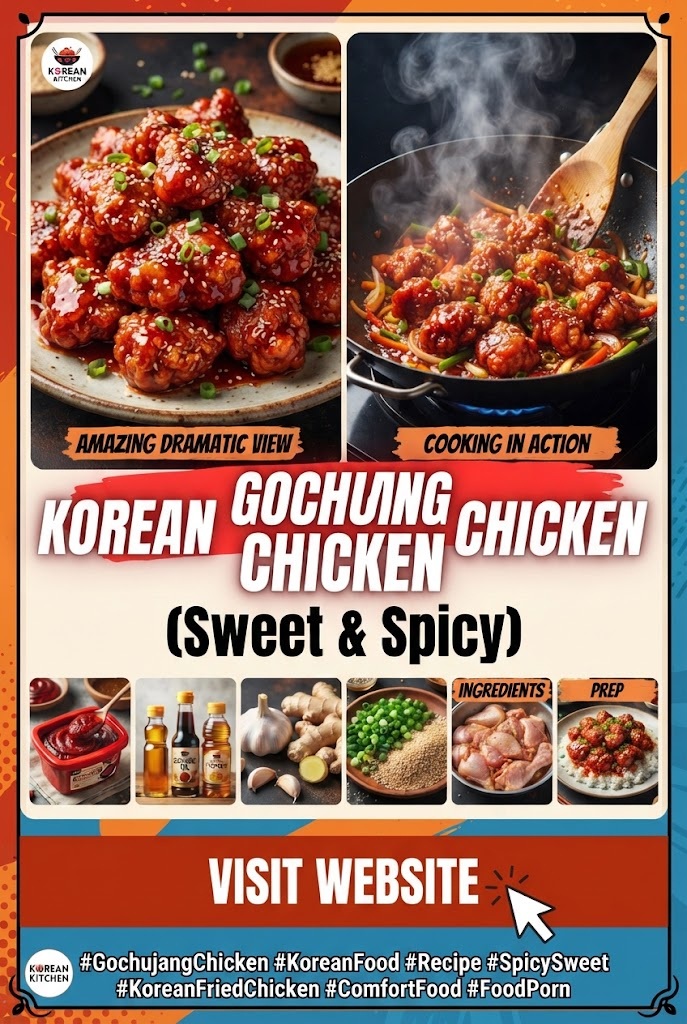
Korean Gochujang Chicken is the perfect dish for anyone who loves bold, savory, sweet, spicy, and slightly smoky flavors all in one bite. Tender pieces of chicken are coated in a glossy Korean-inspired sauce made with gochujang, soy sauce, honey, garlic, ginger, sesame oil, and a few simple pantry ingredients. The chicken is then cooked until beautifully caramelized, allowing the sauce to cling to every piece.
This recipe is especially good for a quick family dinner because the ingredients are straightforward and the cooking process is simple. You can serve it with steamed rice, noodles, lettuce wraps, vegetables, or even use it as a filling for Korean-style rice bowls.
The star ingredient is gochujang, a Korean fermented red chili paste. It has a distinctive combination of chili heat, fermented savory flavor, mild sweetness, and deep umami. Unlike ordinary hot sauce, gochujang is thick and concentrated, which makes it excellent for marinades and sticky cooking sauces.
The result is chicken that is sweet, spicy, savory, juicy, sticky, and deeply flavorful.
What Is Korean Gochujang Chicken?
Gochujang chicken is chicken cooked with a sauce or marinade centered around gochujang. Gochujang is traditionally made from red chili powder, fermented soybean powder, glutinous rice, and salt. Its fermentation gives it a complex flavor that cannot be completely duplicated by ordinary chili sauces.
In this recipe, gochujang is combined with soy sauce for saltiness, honey or brown sugar for sweetness, rice vinegar for acidity, garlic and ginger for fragrance, and sesame oil for a nutty finish.
The chicken absorbs the flavors while cooking, and the sauce reduces until it becomes thick and glossy.
There are many ways to prepare gochujang chicken. It can be grilled, baked, pan-fried, air-fried, or cooked on a barbecue. This version uses a skillet because it is fast, accessible, and produces excellent caramelization.
You can use chicken thighs or chicken breast. Boneless, skinless chicken thighs are my preferred choice because they remain juicy and tender even when cooked a little longer. Chicken breast works very well too, particularly if you prefer lean meat, but it should not be overcooked.
Why You Will Love This Recipe
There are several reasons this Korean-inspired chicken deserves a place in your regular dinner rotation.
1. It has an incredible sweet-and-spicy flavor
The gochujang provides warmth and fermented chili flavor, while honey balances the heat with sweetness. Soy sauce adds umami and saltiness, and vinegar prevents the sauce from becoming overly rich.
2. It is easy to prepare
You do not need complicated cooking techniques. Marinate the chicken, mix the sauce, cook the chicken, add the sauce, and allow everything to caramelize.
3. It is versatile
Serve it with rice, noodles, vegetables, salad, lettuce leaves, or Korean-style side dishes.
4. It is excellent for meal preparation
Cooked chicken can be refrigerated and reheated for lunches throughout the week.
5. You can control the spice level
Use less gochujang for a milder version or add Korean chili flakes, known as gochugaru, for extra heat.
Complete Ingredient List
For the Chicken
- 700 g boneless, skinless chicken thighs, cut into bite-sized pieces
- 1 tablespoon soy sauce
- 1 tablespoon gochujang
- 1 teaspoon sesame oil
- 1 teaspoon freshly grated ginger
- 2 cloves garlic, finely minced
- 1 teaspoon honey
- ½ teaspoon black pepper
- 1 tablespoon neutral cooking oil, such as vegetable, canola, or sunflower oil
For the Gochujang Sauce
- 3 tablespoons gochujang
- 2 tablespoons soy sauce
- 2 tablespoons honey
- 1 tablespoon brown sugar
- 1 tablespoon rice vinegar
- 1 tablespoon sesame oil
- 3 cloves garlic, finely minced
- 1 teaspoon freshly grated ginger
- 2 tablespoons water
- 1 teaspoon gochugaru, optional, for additional heat
- 1 teaspoon cornstarch, optional, for a thicker glaze
For Garnishing
- 1 tablespoon toasted sesame seeds
- 2 green onions, thinly sliced
- A small handful of fresh cilantro, optional
- Thinly sliced red chili, optional
- A drizzle of sesame oil, optional
For Serving
- Steamed white rice
- Brown rice
- Korean rice
- Noodles
- Lettuce leaves
- Steamed broccoli
- Cucumber salad
- Carrots
- Kimchi
- Stir-fried vegetables
Ingredient Notes
Chicken
Boneless, skinless chicken thighs are ideal because they have enough fat to remain juicy and tender. Cut the chicken into pieces of approximately the same size so that everything cooks evenly.
Chicken breast can be substituted. If using breast meat, cut it into slightly larger pieces and avoid prolonged cooking.
Bone-in chicken can also be used, but the cooking time will be considerably longer.
Gochujang
Gochujang is the most important ingredient in this recipe. It should not be confused with gochugaru.
Gochujang is a thick fermented chili paste.
Gochugaru is Korean chili powder or chili flakes.
They provide different textures and flavors. Gochujang creates the thick, savory base of the sauce, while gochugaru is mainly useful for increasing chili heat and adding a little extra red color.
Soy Sauce
Soy sauce provides salt and umami. Regular soy sauce works well. If using dark soy sauce, use it sparingly because it has a stronger color and flavor.
For a less salty dish, use low-sodium soy sauce.
Honey
Honey gives the chicken its beautiful sticky glaze. Brown sugar can be used instead, or you can combine the two.
Maple syrup can also work if honey is unavailable.
Rice Vinegar
Rice vinegar gives the sauce acidity. This is important because the sauce contains sweet and salty ingredients. Without acidity, it can taste heavy.
If necessary, substitute a mild white vinegar, but use a little less at first.
Garlic and Ginger
Fresh garlic and ginger provide much more fragrance than dried versions. Finely grate the ginger and mince the garlic so they distribute evenly throughout the sauce.
Sesame Oil
Sesame oil adds a characteristic Korean and East Asian-inspired nutty aroma. A small amount goes a long way.
How to Make Korean Gochujang Chicken
Step 1: Prepare the Chicken
Begin by patting the chicken dry with paper towels.
This is an important step because excess moisture can prevent the chicken from browning properly. If the chicken is wet, it will tend to steam in the skillet rather than develop a flavorful golden crust.
Cut the chicken into bite-sized pieces.
Try to keep the pieces relatively uniform in size. Pieces that are significantly different in size will cook at different speeds.
Place the chicken in a large bowl.
Add:
- 1 tablespoon soy sauce
- 1 tablespoon gochujang
- 1 teaspoon sesame oil
- 1 teaspoon grated ginger
- 2 minced garlic cloves
- 1 teaspoon honey
- ½ teaspoon black pepper
Mix thoroughly until every piece of chicken is coated.
Allow the chicken to marinate for 20–30 minutes.
If you have additional time, you can refrigerate it for up to several hours. Longer marination gives the chicken more opportunity to absorb the flavors.
Do not leave raw chicken sitting at room temperature for extended periods.
Step 2: Make the Gochujang Sauce
While the chicken marinates, prepare the sauce.
In a bowl, combine:
- 3 tablespoons gochujang
- 2 tablespoons soy sauce
- 2 tablespoons honey
- 1 tablespoon brown sugar
- 1 tablespoon rice vinegar
- 1 tablespoon sesame oil
- 3 minced garlic cloves
- 1 teaspoon grated ginger
- 2 tablespoons water
Whisk until smooth.
Taste the sauce before adding it to the chicken.
At this stage, you can adjust it according to your preference.
For more sweetness, add another teaspoon of honey.
For more heat, add gochugaru or a small amount of Korean chili powder.
For more acidity, add a few drops of rice vinegar.
For a less intense sauce, add another tablespoon of water.
If you want a particularly thick glaze, mix 1 teaspoon cornstarch with 1 tablespoon cold water separately. This slurry can be added near the end of cooking.
Step 3: Heat the Pan
Place a large skillet or frying pan over medium-high heat.
Allow the pan to heat properly before adding the oil.
Add 1 tablespoon of neutral cooking oil.
The oil should become shiny but should not smoke heavily.
A sufficiently hot skillet is important because it helps the chicken brown instead of releasing too much liquid and steaming.
Step 4: Cook the Chicken
Add the marinated chicken to the hot skillet in a single layer.
Do not overcrowd the pan.
If your skillet is small, cook the chicken in two batches.
This is one of the most important techniques in the entire recipe.
When too much chicken is added at once, the temperature of the pan drops. The chicken releases moisture, and instead of browning, it begins to simmer in its own liquid.
Cook the chicken for approximately 3–5 minutes on the first side, depending on the size of the pieces.
Turn the pieces and continue cooking until they are browned on multiple sides.
Chicken should be cooked through before serving.
For food safety, chicken should reach an internal temperature of 74°C / 165°F at the thickest part.
Step 5: Add the Gochujang Sauce
Once the chicken is nearly cooked through, reduce the heat to medium.
Pour the prepared gochujang sauce into the skillet.
Immediately stir and toss the chicken so the sauce coats every piece.
At first, the sauce will look relatively thin.
Do not worry.
As it heats, the water begins to evaporate and the sugars concentrate. The sauce will become thicker, darker, and glossier.
Cook for approximately 3–5 minutes, stirring frequently.
Keep an eye on the pan because sauces containing honey and sugar can burn if cooked over excessively high heat.
Step 6: Caramelize the Chicken
This is the stage that turns good gochujang chicken into excellent gochujang chicken.
Allow the sauce to reduce until it clings tightly to the chicken.
The chicken should become shiny and deeply colored.
Stir frequently, but give the chicken enough contact with the pan to develop caramelized edges.
If the sauce becomes too thick before the chicken is completely finished, add 1 tablespoon of water.
If the sauce remains too thin, continue cooking for another minute or two.
If using the cornstarch slurry, add a small amount and stir thoroughly. The sauce should thicken quickly.
Do not add excessive cornstarch because the finished sauce should remain glossy and sticky rather than becoming pudding-like.
Step 7: Finish the Chicken
Turn off the heat.
Taste one piece of chicken.
Check the balance of:
- Saltiness
- Sweetness
- Spice
- Acidity
If desired, add a tiny splash of rice vinegar to brighten the flavor.
You can also add a few drops of sesame oil for extra aroma.
Sprinkle the chicken with toasted sesame seeds and sliced green onions.
For additional color and freshness, add thinly sliced red chili or fresh cilantro.
How to Serve Korean Gochujang Chicken
The easiest way to serve this chicken is over steamed rice.
Place hot rice in a bowl and spoon the sticky chicken over the top.
Add green onions and sesame seeds.
For a complete meal, serve it with vegetables such as broccoli, carrots, cucumber, cabbage, or spinach.
You can also create a Korean-inspired rice bowl.
Start with rice, then add:
- Gochujang chicken
- Cucumber
- Carrots
- Kimchi
- Steamed spinach
- Sesame seeds
- Green onions
A fried egg on top is also delicious.
The runny egg yolk combines with the spicy sauce and creates an especially rich bite.
Korean Gochujang Chicken Lettuce Wraps
For a lighter serving option, use lettuce leaves instead of rice.
Choose large, sturdy lettuce leaves.
Spoon a small amount of chicken into each leaf.
Top with:
- Thinly sliced cucumber
- Green onion
- Sesame seeds
- Shredded carrot
- Kimchi
Fold the lettuce around the filling and eat it like a wrap.
The crisp lettuce provides a refreshing contrast to the warm, sticky, spicy chicken.
Korean Gochujang Chicken With Noodles
This chicken is also excellent with noodles.
Cook your favorite noodles according to their package directions.
Drain them thoroughly.
Toss the noodles with a small amount of sesame oil.
Place the noodles in a bowl and top with the cooked gochujang chicken.
Add sliced green onions and sesame seeds.
If you like extra sauce, double the sauce portion of the recipe and reserve some for the noodles.
How Spicy Is This Recipe?
The finished chicken is moderately spicy, but the heat can vary considerably depending on the brand and type of gochujang you use.
For a mild version:
- Reduce gochujang to 2 tablespoons.
- Omit gochugaru.
- Increase honey slightly if needed.
For medium heat:
- Follow the recipe as written.
For a spicy version:
- Use 4 tablespoons gochujang.
- Add 1–2 teaspoons gochugaru.
- Add thinly sliced fresh chili.
- Reduce the amount of honey slightly if you want the chili flavor to dominate.
Remember that increasing gochujang also increases saltiness, so taste the sauce before adding additional soy sauce.
Tips for Perfect Gochujang Chicken
Don’t overcrowd the skillet
This is probably the most important cooking tip.
Cook in batches if necessary.
A crowded pan produces steamed chicken rather than beautifully browned chicken.
Don’t burn the sauce
Because honey and brown sugar contain sugars, they can caramelize quickly.
Once the sauce has been added, reduce the heat to medium or medium-low if necessary.
Stir frequently.
Use fresh garlic
Fresh garlic produces a much stronger aroma and more satisfying flavor.
Marinate the chicken
Even a 20-minute marinade makes a noticeable difference.
If you have several hours, refrigerate the marinating chicken and cook it later.
Cut the chicken evenly
Uniform pieces cook at approximately the same rate.
Let the sauce reduce
Don’t immediately add lots of thickener.
The sauce naturally becomes thicker as moisture evaporates.
Taste before serving
Gochujang brands vary in saltiness, sweetness, and heat. Adjust the finished dish according to the ingredients you’re using.
Can You Bake Gochujang Chicken?
Yes.
For a baked version, preheat your oven to 220°C / 425°F.
Arrange the marinated chicken pieces on a lined baking tray, leaving space between them.
Bake until the chicken is cooked through, turning once halfway through cooking.
Mix the sauce separately.
During the final few minutes, brush the chicken generously with the gochujang sauce.
Return the chicken to the oven until the sauce becomes glossy and caramelized.
For an even deeper glaze, brush with another thin layer immediately after removing it from the oven.
Be careful not to apply a thick sugary sauce too early because it can burn before the chicken is fully cooked.
Can You Air-Fry Gochujang Chicken?
Absolutely.
Air frying produces delicious caramelized edges.
Preheat the air fryer to approximately 190°C / 375°F.
Arrange the chicken in the basket without overcrowding it.
Cook, turning halfway through, until the chicken is cooked through.
Because the sauce contains sugar, it is often better to apply some of the sauce during the later portion of cooking rather than coating the chicken heavily from the beginning.
Brush the cooked or nearly cooked chicken with the gochujang glaze and return it to the air fryer for a short final cooking period.
Watch carefully because the glaze can darken quickly.
Can You Grill Gochujang Chicken?
Yes, and grilling gives the chicken a wonderful smoky flavor.
Cut the chicken into relatively large pieces so they are easier to handle on the grill.
Marinate as directed.
Preheat the grill to medium-high heat.
Place the chicken on the grill and cook until browned and nearly cooked through.
Brush with the gochujang sauce toward the end of cooking.
Turn and brush again.
Avoid continuously brushing sugary sauce over very high heat because the sugar can burn.
The finished chicken should have attractive charred edges without becoming bitter.
What to Serve With Gochujang Chicken
Steamed Rice
Plain steamed rice is the classic easy choice.
The neutral rice balances the spicy sauce and absorbs the extra glaze.
Kimchi
Kimchi adds acidity, fermentation, spice, and crunch.
Cucumber Salad
Fresh cucumber provides a cool contrast to the hot chicken.
Steamed Broccoli
Broccoli is an easy vegetable side and works particularly well with the sweet sauce.
Korean-Style Spinach
Season cooked spinach with sesame oil, garlic, and sesame seeds.
Pickled Vegetables
Pickled radish, cucumber, or carrots provide acidity and freshness.
Fried Egg
A fried egg turns the chicken and rice into a satisfying complete meal.
Storage Instructions
Allow leftover chicken to cool before transferring it to an airtight container.
Refrigerate promptly.
Properly refrigerated cooked chicken is generally best consumed within 3–4 days.
When reheating, use a skillet, microwave, or oven.
The skillet is particularly good because you can add a tablespoon of water to loosen the sauce while reheating.
If using a microwave, cover the container loosely and heat in short intervals, stirring between intervals.
Avoid repeatedly reheating the same portion.
Can You Freeze Gochujang Chicken?
Yes.
Cooked gochujang chicken can be frozen in an airtight freezer-safe container.
Allow it to cool completely before freezing.
For best quality, use it within approximately 2–3 months.
Thaw it safely in the refrigerator before reheating.
The sauce may become slightly less glossy after freezing and thawing, but the flavor should remain excellent.
When reheating, add a small splash of water and warm gently in a skillet.
Meal-Prep Gochujang Chicken
This recipe works exceptionally well for meal preparation.
Prepare a large batch at the beginning of the week.
Divide cooked rice between meal-prep containers.
Add portions of gochujang chicken.
Add vegetables such as:
- Broccoli
- Carrots
- Cabbage
- Cucumber
- Green beans
Keep fresh garnishes separate if possible.
When ready to eat, reheat the chicken and rice thoroughly, then add green onions and sesame seeds.
For the best texture, fresh cucumber and other raw vegetables should be added after reheating.
Common Mistakes to Avoid
Using too much sauce too early
A large amount of liquid can prevent browning.
Brown the chicken first, then add the sauce.
Cooking at extremely high heat
High heat can burn the sugar in the sauce.
Medium heat is usually better once the glaze is added.
Cutting the chicken too small
Very small pieces can dry out quickly.
Aim for bite-sized pieces that are large enough to remain juicy.
Adding too much soy sauce
Gochujang already contains salt.
Add soy sauce carefully and taste before adding more.
Skipping the acid
Rice vinegar might seem like a small ingredient, but it provides important balance.
The acidity cuts through the sweetness and makes the dish taste brighter.
Not allowing the sauce to reduce
If you serve the chicken while the sauce is still watery, you lose the sticky glaze that makes this dish special.
Give it a few extra minutes to thicken.
Frequently Asked Questions
Can I use chicken breast?
Yes. Chicken breast works well, but it is leaner than chicken thighs.
Be careful not to overcook it.
An instant-read thermometer is useful for checking doneness.
Can I use bone-in chicken?
Yes, but cooking will take longer.
Bone-in chicken is particularly suitable for baking or grilling.
Is gochujang very spicy?
Gochujang varies by brand. Some varieties are relatively mild, while others have considerably more chili heat.
Check the package if you are sensitive to spice.
Can I substitute another chili paste?
You can create a tasty alternative, but the flavor will not be identical.
Gochujang has a distinctive fermented character that is difficult to reproduce with ordinary chili sauce.
Can I make it without honey?
Yes.
Use brown sugar, maple syrup, or another preferred sweetener.
Can I make this gluten-free?
Use a certified gluten-free gochujang and gluten-free soy sauce or tamari, and check all other packaged ingredients.
Can I make it less sweet?
Absolutely.
Start with 1 tablespoon honey and taste the sauce.
The sweetness is there to balance the chili and fermentation, but it can be adjusted.
Can I make it extra saucy?
Yes.
Double the sauce ingredients.
Cook the chicken separately and prepare the additional sauce in the same skillet. Allow it to simmer until it reaches your desired consistency, then return the chicken to the pan.
Complete Recipe Card
Korean Gochujang Chicken
Prep Time: 30 minutes
Marinating Time: 20–30 minutes
Cook Time: 15–20 minutes
Total Time: Approximately 1 hour
Servings: 4
Cuisine: Korean-inspired
Course: Main course
Difficulty: Easy to moderate
Ingredients
Chicken
- 700 g boneless, skinless chicken thighs
- 1 tablespoon soy sauce
- 1 tablespoon gochujang
- 1 teaspoon sesame oil
- 1 teaspoon grated ginger
- 2 cloves garlic, minced
- 1 teaspoon honey
- ½ teaspoon black pepper
- 1 tablespoon neutral oil
Sauce
- 3 tablespoons gochujang
- 2 tablespoons soy sauce
- 2 tablespoons honey
- 1 tablespoon brown sugar
- 1 tablespoon rice vinegar
- 1 tablespoon sesame oil
- 3 cloves garlic, minced
- 1 teaspoon grated ginger
- 2 tablespoons water
- 1 teaspoon gochugaru, optional
- 1 teaspoon cornstarch, optional
Garnish
- Sesame seeds
- Sliced green onions
- Fresh red chili, optional
- Cilantro, optional
Detailed Cooking Method
1. Cut the chicken
Pat the chicken dry and cut it into evenly sized bite-sized pieces.
2. Marinate
Place the chicken in a bowl.
Add soy sauce, gochujang, sesame oil, ginger, garlic, honey, and black pepper.
Mix thoroughly.
Marinate for 20–30 minutes.
3. Prepare the sauce
Mix gochujang, soy sauce, honey, brown sugar, rice vinegar, sesame oil, garlic, ginger, and water.
Add gochugaru if desired.
If using cornstarch, mix it separately with cold water.
4. Heat the skillet
Place a large skillet over medium-high heat.
Add neutral cooking oil.
5. Brown the chicken
Add the chicken in a single layer.
Cook for 3–5 minutes.
Turn the chicken and continue cooking until browned and nearly cooked through.
Work in batches if necessary.
6. Add the sauce
Reduce the heat to medium.
Pour in the gochujang sauce.
Toss the chicken thoroughly.
7. Reduce
Cook for approximately 3–5 minutes, stirring frequently.
Allow the sauce to reduce until thick, sticky, and glossy.
8. Check doneness
Make sure the chicken has reached 74°C / 165°F internally.
9. Finish
Turn off the heat.
Taste and adjust sweetness, spice, saltiness, or acidity as desired.
10. Garnish
Sprinkle with sesame seeds and green onions.
Serve immediately with steamed rice or your favorite sides.
Nutrition and Portion Considerations
The nutritional value of this dish depends on the exact chicken cut, amount of sauce consumed, type of soy sauce, and serving size.
Chicken provides a substantial amount of protein, while the sauce contributes carbohydrates from honey and brown sugar.
Serving the chicken with rice makes it a more substantial meal, while serving it with lettuce and vegetables creates a lighter option.
If you are watching sodium intake, choose low-sodium soy sauce and avoid adding extra salt.
If you want to reduce sweetness, decrease the honey and brown sugar.
Final Thoughts
Korean Gochujang Chicken is one of those recipes that delivers restaurant-style flavor without requiring complicated cooking. The combination of fermented chili paste, soy sauce, garlic, ginger, honey, vinegar, and sesame oil creates a sauce that is remarkably flavorful for such a short ingredient list.
The key to getting the best result is understanding the cooking process. Brown the chicken first, add the sauce afterward, and allow the sauce to reduce until it becomes thick and glossy. That simple technique gives you tender chicken covered in a sticky, caramelized glaze.
Serve it over steaming rice for an easy weeknight dinner, add vegetables for a balanced bowl, wrap it in lettuce for a fresh meal, or pair it with noodles for something more substantial.
Most importantly, adjust the recipe to your own taste. Gochujang brands differ, and everyone’s preferred balance of sweet, spicy, salty, and tangy flavors is different. Start with the recommended quantities, taste as you go, and make small adjustments.
Once you’ve made this recipe a few times, you can easily turn it into your own signature version—more fiery, sweeter, smokier, garlicky, or extra saucy.
The finished dish should be tender, glossy, sticky, savory, sweet, and pleasantly spicy, with caramelized edges and enough sauce to coat every piece of chicken.