
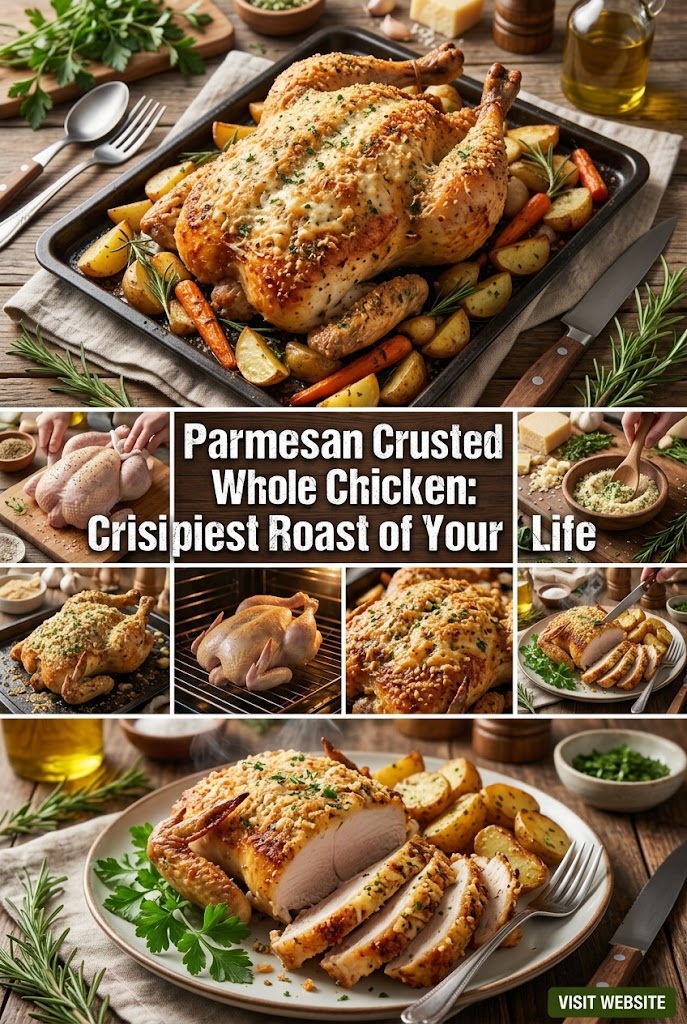
There is a fundamental truth in the culinary world that every home cook eventually faces: the quest for the perfect roast chicken is a rite of passage. We’ve all been there—scouring the internet for a recipe that promises “shatteringly crisp skin” and “succulent meat,” only to end up with a bird that is either tragically dry or features skin as rubbery as a raincoat.
The search ends here. Welcome to the masterclass on the Parmesan Crusted Whole Chicken. This isn’t just another Sunday roast; it is a culinary revelation. By leveraging the Maillard reaction, the high-fat content of aged cheese, and specific roasting techniques, we are going to create a chicken that defies the laws of average home cooking.
In this comprehensive guide, we will dive deep into the science of why this recipe works, the essential tools you’ll need, a step-by-step walkthrough, and the secret variations that will make you a legend in your own kitchen.
The Science Behind the Crunch: Why Parmesan is the Secret Weapon
Most roast chicken recipes rely solely on the bird’s own fat to crisp the skin. While effective if done perfectly, it leaves very little room for error. If the oven temperature fluctuates or if the bird wasn’t dried properly, you lose that crunch.
The Role of Parmesan Cheese
Parmesan (specifically Parmigiano-Reggiano) is a low-moisture, high-protein, and high-fat ingredient. When exposed to the dry heat of an oven, the cheese undergoes a transformation. The proteins brown beautifully, and the fats melt into the chicken skin, essentially “frying” the surface while it roasts. This creates a secondary layer—a crust—that protects the meat from drying out while providing a textural contrast that salt and oil alone cannot achieve.
The Maillard Reaction
The Maillard reaction is a chemical reaction between amino acids and reducing sugars that gives browned food its distinctive flavor. By adding Parmesan and a hint of garlic powder, we are accelerating this process. The result is a savory, “umami” explosion that elevates the chicken from simple protein to a gourmet experience.
Choosing Your Bird: Quality Matters
You cannot build a cathedral on a swamp, and you cannot make a world-class Parmesan crusted chicken with a poor-quality bird.
- Size Matters: Look for a chicken between 3.5 to 4.5 pounds. Smaller birds tend to cook more evenly, while massive “roasters” often dry out on the exterior before the interior reaches a safe temperature.
- Air-Chilled is King: When shopping, look for the label “Air-Chilled.” Most commercial chickens are water-chilled, meaning they soak up excess moisture during processing. This moisture leeches out during roasting, steaming the skin from the inside out. Air-chilled chicken has less water weight and yields significantly crispier results.
- Room Temperature: Never put a cold bird in a hot oven. Take your chicken out of the refrigerator at least 45 to 60 minutes before cooking. This ensures the muscles are relaxed and the heat can penetrate the core more efficiently.
Essential Kitchen Arsenal
Before we get to the ingredients, ensure you have the right tools. Precision is the difference between “good” and “unforgettable.”
- A Heavy Roasting Pan or Cast Iron Skillet: A cast iron skillet is preferred for this recipe because it holds heat exceptionally well, helping to crisp the bottom of the bird.
- A Wire Rack: Elevating the chicken allows hot air to circulate 360 degrees, preventing a soggy bottom.
- Digital Meat Thermometer: This is non-negotiable. Stop guessing. You need to pull that bird at exactly 160°F (it will carry over to 165°F while resting).
- Kitchen Twine: For trussing, which ensures the legs and wings don’t burn while the breast cooks.
- Paper Towels: Your best friend for achieving crispy skin.
The Recipe: Parmesan Crusted Whole Chicken
Ingredients
The Bird:
- 1 Whole Chicken (4 lbs), air-chilled.
- Kosher salt (for dry brining).
The Parmesan Crust “Glue”:
- 4 tbsp Unsalted butter, softened (or high-quality mayonnaise for an even richer crust).
- 1 tbsp Dijon mustard.
- 2 cloves Garlic, finely minced.
- 1 tsp Lemon zest.
The Dry Crust Mix:
- 1 cup Parmigiano-Reggiano, finely grated (avoid the stuff in the green shaker can).
- 1/2 cup Panko breadcrumbs (for extra texture) or crushed pork rinds for a Keto version.
- 1 tsp Smoked paprika.
- 1 tsp Dried oregano.
- 1/2 tsp Freshly ground black pepper.
- 1/4 tsp Cayenne pepper (optional, for a hint of heat).
Step 1: The Dry Brine (The Pro Secret)
If you have the time, salt your chicken 12 to 24 hours in advance. Generously sprinkle kosher salt over the entire bird, including inside the cavity. Leave it uncovered in the fridge. This does two things: it seasons the meat deeply and dries out the skin, making it paper-thin and ready to shatter once roasted.
Step 2: Preparation and Drying
Preheat your oven to 425°F (220°C). If you didn’t dry brine, use paper towels to pat the chicken bone-dry. Every drop of moisture on that skin is an enemy of the crust.
Step 3: The “Glue” Application
Mix your softened butter (or mayo), Dijon mustard, minced garlic, and lemon zest in a small bowl. Rub this mixture all over the chicken. Don’t be afraid to get under the skin of the breast—this keeps the white meat incredibly juicy. This layer acts as the adhesive for our Parmesan mixture.
Step 4: Applying the Parmesan Crust
In a separate bowl, combine the grated Parmesan, Panko, and spices. Gently press the mixture onto the chicken. You want a thick, even coating. The butter/mayo layer will hold it in place.
Pro Tip: Do not put the crust on the bottom of the chicken if you aren’t using a rack, as it will just burn and stick to the pan. Focus on the top and sides.
Step 5: The Roasting Process
Place the chicken on the wire rack inside your roasting pan or skillet. Slide it into the center rack of the oven.
- Initial Blast: Roast at 425°F for 15 minutes. This high heat jumpstarts the browning of the cheese.
- The Mellow Roast: Lower the temperature to 375°F (190°C). Continue roasting for approximately 45-60 minutes.
- The Check: Start checking the internal temperature at the 45-minute mark. Insert the probe into the thickest part of the thigh without hitting the bone.
Step 6: The Rest
Once the thermometer hits 160°F, remove the chicken from the oven. Do not tent it with foil. Tenting creates steam, which will instantly soften that glorious Parmesan crust you just worked so hard for. Let it rest uncovered for at least 15 to 20 minutes. This allows the juices to redistribute into the meat fibers.
Mastering the Spatchcock Method (Optional Variation)
If you want your Parmesan Crusted Whole Chicken to cook in nearly half the time with even more surface area for the crust, you need to learn to spatchcock.
Spatchcocking involves removing the backbone of the chicken so it lays flat.
- Place the chicken breast-side down.
- Using heavy-duty kitchen shears, cut along both sides of the backbone.
- Remove the backbone (save it for stock!).
- Flip the chicken over and press down hard on the breastbone until you hear a crack.
- Now, apply your Parmesan crust to the entire upward-facing surface.
Because the chicken is flat, it cooks more evenly, and every bit of skin is exposed to the direct heat of the oven. This is the “speed-run” version of the recipe that yields incredible results.
Flavor Variations to Keep Things Fresh
Once you’ve mastered the classic Parmesan crust, it’s time to experiment. The base recipe is a canvas for your culinary creativity.
1. The Mediterranean Herb Crust
Add 2 tablespoons of chopped fresh rosemary, thyme, and sage to the Parmesan mix. The aromatics will fill your house and give the chicken a sophisticated, earthy profile.
2. The Spicy Calabrian Crust
Mix a teaspoon of crushed red pepper flakes or a tablespoon of Calabrian chili paste into the “glue” layer. The heat pairs beautifully with the saltiness of the Parmesan.
3. The Lemon-Garlic Explosion
Double the lemon zest and add a tablespoon of lemon juice to the butter rub. This acidity cuts through the richness of the cheese and the fat of the chicken, making it feel lighter and brighter.
4. The Truffle Parmesan Upgrade
If you’re feeling fancy, use truffle-infused salt or a drizzle of truffle oil in your crust mixture. This transforms a simple chicken into a high-end restaurant dish.
What to Serve with Parmesan Crusted Chicken
A dish this bold needs sides that can hold their own without overshadowing the main event.
- Garlic Butter Roasted Asparagus: The snap of the asparagus provides a fresh contrast to the crunchy chicken.
- Creamy Polenta: The soft, buttery texture of polenta is the perfect bed for a slice of crispy chicken.
- Arugula Salad with Shaved Fennel: A simple vinaigrette-dressed salad cleanses the palate between bites of the rich, cheesy crust.
- Roasted Root Vegetables: Carrots, parsnips, and potatoes can be roasted in the same oven, soaking up any stray chicken drippings.
Troubleshooting Common Issues
Even the best cooks run into trouble. Here’s how to fix common Parmesan chicken pitfalls:
Problem: The crust is browning too fast, but the chicken is raw. Solution: Loosely drape a piece of foil over the parts that are browning too quickly. Lower the oven temperature by 25 degrees and give it more time.
Problem: The crust fell off. Solution: This usually happens if the “glue” layer (the butter or mayo) was too thin or if the chicken was too wet. Ensure the chicken is bone-dry before starting.
Problem: The meat is dry. Solution: You likely overcooked it. Invest in a digital thermometer. Also, remember to rest the bird! If you cut it too soon, all the juice runs out onto the cutting board.
Problem: The bottom of the chicken is soggy. Solution: Use a wire rack. If you don’t have one, bed the chicken on thick slices of onion and lemon to lift it off the pan’s surface.
Why This Recipe “Actually Works”
The internet is full of “quick” recipes that cut corners. This recipe works because it respects the chemistry of cooking.
- Moisture Control: By drying the bird and using low-moisture cheese, we eliminate steam.
- Fat Integration: The combination of chicken fat and Parmesan fat creates a “frying” effect on the skin.
- Temperature Management: Starting high and finishing lower ensures a cooked-through interior and a golden-brown exterior.
Nutritional Benefits: A High-Protein Powerhouse
For those watching their macros, Parmesan Crusted Whole Chicken is a fantastic option.
- High Protein: Chicken is one of the leanest sources of high-quality protein.
- Keto-Friendly: By replacing Panko with crushed pork rinds or more Parmesan, this recipe becomes nearly zero-carb.
- Healthy Fats: When using grass-fed butter and high-quality cheese, you are getting beneficial fats and fat-soluble vitamins (A, D, E, and K).
Leftover Magic: What to Do with the Remnants
If you somehow have leftovers, do not let them go to waste. The Parmesan crust adds a level of flavor that makes leftovers even better than the original meal.
- Parmesan Chicken Salad: Cold, sliced Parmesan chicken over a bed of mixed greens with a Caesar dressing.
- The Ultimate Club Sandwich: Use slices of the breast meat, bacon, avocado, and lettuce on toasted sourdough.
- Cheesy Chicken Pasta: Toss shredded leftovers with fettuccine, heavy cream, and more Parmesan for a quick Alfredo.
- Chicken Bone Broth: Never throw away the carcass. Boil it with onions, carrots, and celery for a rich, mineral-dense broth.
Frequently Asked Questions (FAQ)
Can I use pre-shredded Parmesan from a bag?
It is highly recommended that you grate your own. Pre-shredded cheeses are coated in potato starch or cellulose to prevent clumping. This coating prevents the cheese from melting and crisping properly, often resulting in a grainy texture.
Can I make this in an Air Fryer?
Yes! If your air fryer is large enough to hold a whole chicken, this recipe translates beautifully. Air fry at 350°F for about 45-50 minutes, turning halfway through (be careful not to knock the crust off).
Do I need to baste the chicken?
No. Basting is the enemy of a crispy crust. Every time you pour liquid over the crust, you are softening it. Trust the fat in the cheese and the butter to do the work for you.
What if I don’t like Dijon mustard?
You won’t actually taste the “mustard” flavor in the final product. It acts as an emulsifier and an acid source to tenderize the skin. However, if you are strictly against it, you can use Greek yogurt or plain mayonnaise.
Final Thoughts: The Joy of the Perfect Roast
There is something deeply satisfying about pulling a perfectly golden, aromatic, and crispy chicken out of the oven. It appeals to our most basic culinary instincts. The Parmesan Crusted Whole Chicken takes the comfort of a traditional roast and injects it with a burst of Italian-inspired flavor and a texture that is simply unmatched.
Whether you are cooking for a holiday, a special date night, or just a Tuesday where you want to feel like a Michelin-starred chef, this recipe is your roadmap to success. Follow the steps, respect the bird, and enjoy the sound of that first, crunchy bite.
Happy roasting!
Summary Checklist for Success:
- Buy air-chilled chicken (3.5–4.5 lbs).
- Dry brine for 12–24 hours if possible.
- Pat the skin bone-dry with paper towels.
- Use high-quality, hand-grated Parmigiano-Reggiano.
- Use a meat thermometer to pull at 160°F.
- Rest for 20 minutes—uncovered!
By following this guide, you aren’t just making dinner; you’re creating an experience that your guests will be talking about for weeks. The Parmesan Crusted Whole Chicken is more than a recipe—it’s a technique that will change the way you look at poultry forever.