
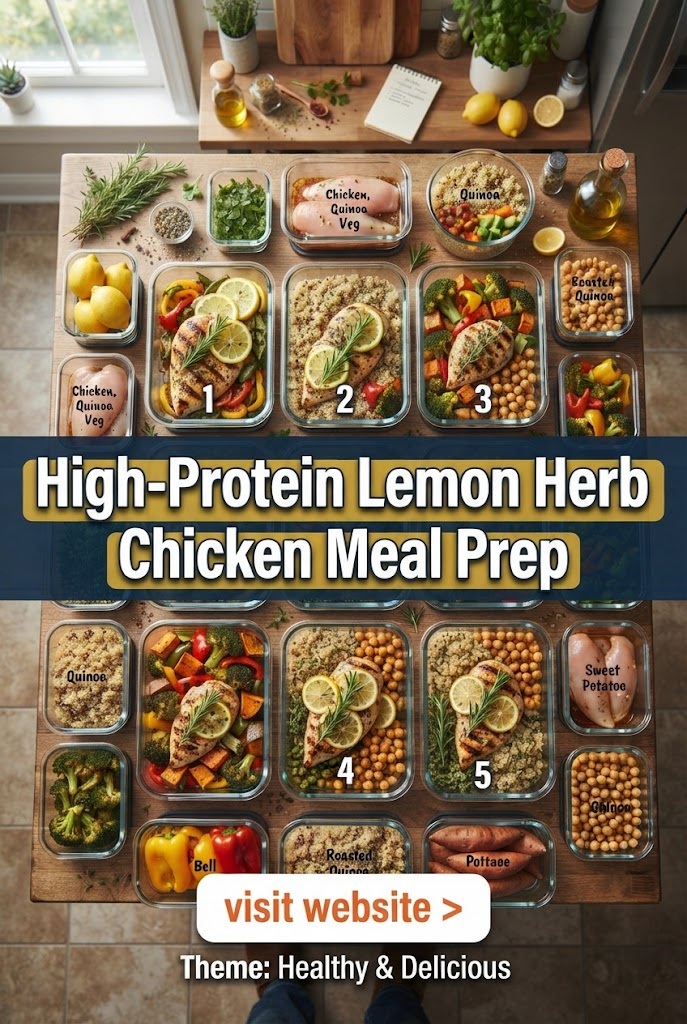
In the world of fitness and healthy living, protein is the undisputed king. It builds muscle, repairs tissue, and keeps you satiated long after you’ve finished your meal. However, the biggest challenge most people face isn’t finding protein—it’s making it taste good day after day without adding excessive calories, sugars, or unhealthy fats.
Enter the Lemon Herb Flavor Profile. This culinary trifecta of acidity, aromatics, and earthiness provides a sophisticated palate that never gets old. When applied to chicken—the most versatile lean protein source—you create a meal prep powerhouse that is as delicious as it is nutritious.
This comprehensive guide provides five distinct high-protein lemon herb chicken recipes, complete with structured ingredient forms, step-by-step instructions, and expert tips for perfect dinner meal prepping.
The Science of Lemon and Herbs in Meal Prep
Before diving into the recipes, it is essential to understand why this specific flavor profile is the “holy grail” for meal preppers.
- Natural Tenderization: The citric acid in lemon juice acts as a mild denaturant. When used in a marinade, it begins to break down the tough protein fibers in chicken breast, ensuring that even after reheating in a microwave, the meat remains juicy rather than rubbery.
- The Sodium Alternative: One of the biggest mistakes in meal prep is over-salting to compensate for blandness. Herbs like rosemary, thyme, and oregano provide “flavor depth,” while lemon provides “brightness,” allowing you to reduce sodium intake without sacrificing taste.
- Antioxidant Boost: Fresh herbs are packed with polyphenols and antioxidants. Rosemary contains rosmarinic acid, and oregano is high in carvacrol—both of which offer anti-inflammatory benefits that aid in post-workout recovery.
Recipe 1: The Classic Sheet Pan Lemon Herb Chicken & Root Vegetables
Perfect for: Maximum efficiency and high-volume meal prep.
This recipe focuses on the synergy between lean chicken breast and complex carbohydrates. By roasting everything on one pan, the juices from the lemon-marinated chicken seep into the vegetables, creating a unified flavor profile.
Ingredient Details (Form Shape)
| Category | Ingredient | Quantity (4 Servings) | Purpose |
|---|---|---|---|
| Protein | Boneless, Skinless Chicken Breast | 1.5 kg (approx. 3.3 lbs) | Lean protein source |
| Produce | Large Lemons | 3 Units | Acid and zest for flavor |
| Produce | Fresh Rosemary Sprigs | 4 Sprigs | Woody, aromatic notes |
| Produce | Fresh Thyme | 1 Bunch | Earthy undertone |
| Produce | Garlic Cloves | 6 Cloves (minced) | Savory depth |
| Vegetables | Sweet Potatoes | 500g (cubed) | Complex carbohydrates |
| Vegetables | Asparagus Spears | 1 Large Bunch | Micronutrients and fiber |
| Healthy Fats | Extra Virgin Olive Oil | 4 tbsp | Flavor carrier and roasting agent |
| Seasoning | Sea Salt & Black Pepper | To taste | Basic seasoning |
| Seasoning | Red Pepper Flakes | 1 tsp (optional) | Subtle heat |
Step-by-Step Instructions
- Preheat and Prep: Preheat your oven to 400°F (200°C). Line two large baking sheets with parchment paper or silicone mats to prevent sticking.
- The Marinade: In a small bowl, whisk together the olive oil, the juice of two lemons, lemon zest, minced garlic, chopped rosemary, and thyme.
- Prepare the Chicken: Cut the chicken breasts into even-sized cutlets or 1-inch strips. This ensures they cook at the same rate as the vegetables. Place the chicken in a large bowl and pour half of the marinade over it. Let it sit for 15 minutes.
- Vegetable Toss: Place the cubed sweet potatoes and trimmed asparagus on the baking sheets. Drizzle with the remaining marinade and toss well. Ensure the potatoes are in a single layer to allow for crisping.
- Assembly: Arrange the chicken pieces among the vegetables on the pans. Slice the remaining lemon into thin rounds and place them directly on top of the chicken pieces.
- Roasting: Bake for 22–25 minutes. At the 15-minute mark, quickly rotate the pans. Check the internal temperature of the chicken; it should reach 165°F (74°C).
- Resting: Allow the chicken to rest on the pan for 5 minutes before transferring to meal prep containers. This allows the juices to redistribute.
Recipe 2: Mediterranean Lemon Herb Grilled Chicken Thighs
Perfect for: Those who prefer a higher fat-to-protein ratio and maximum juiciness.
Chicken thighs are often overlooked in meal prep due to their higher fat content, but they are significantly more forgiving when reheated. This recipe uses a Greek-inspired herb blend.
Ingredient Details (Form Shape)
| Category | Ingredient | Quantity (4 Servings) | Purpose |
|---|---|---|---|
| Protein | Boneless, Skinless Chicken Thighs | 1.2 kg | Juicy protein source |
| Produce | Fresh Oregano | 3 tbsp (chopped) | Key Mediterranean flavor |
| Produce | Fresh Flat-Leaf Parsley | ½ cup (chopped) | Freshness and color |
| Produce | Garlic | 5 Cloves (crushed) | Pungent aromatics |
| Base | Plain Greek Yogurt | ½ cup | Tenderizing marinade base |
| Acid | Lemon Juice | ¼ cup | Acidic component |
| Fat | Avocado Oil | 2 tbsp | High smoke point for grilling |
| Grain | Dry Quinoa | 1.5 cups | High-protein side grain |
| Spice | Dried Sumac | 1 tsp | Tart, citrusy spice |
| Spice | Smoked Paprika | 1 tsp | Color and depth |
Step-by-Step Instructions
- Yogurt Marinade: In a large zip-top bag or glass bowl, combine Greek yogurt, lemon juice, crushed garlic, chopped oregano, sumac, and smoked paprika. The lactic acid in the yogurt works with the lemon juice to ultra-tenderize the thighs.
- Marinate: Add the chicken thighs to the mixture, ensuring every piece is coated. Refrigerate for at least 2 hours (or up to 8 hours for maximum flavor).
- Cook the Grain: While the chicken marinates, rinse the quinoa and cook it in a pot with a 1:2 ratio of water or chicken bone broth. Once cooked, fluff with a fork and stir in fresh parsley and a squeeze of lemon.
- Grilling/Searing: Heat a grill pan or cast-iron skillet over medium-high heat with avocado oil. Remove chicken from the marinade, shaking off excess.
- Execution: Sear the thighs for 5–7 minutes per side. Because thighs have more connective tissue, they benefit from a slightly longer cook time than breasts.
- Charring: Allow the edges to slightly char; this mimics the traditional Mediterranean “souvlaki” style.
- Portioning: Divide the herb-flecked quinoa into four containers and top with two chicken thighs each. Add a side of fresh cucumber and tomato salad for a complete meal.
Recipe 3: One-Pot Lemon Herb Chicken & Protein Pasta
Perfect for: Post-workout recovery when glycogen replenishment is key.
This recipe utilizes “Protein Pasta” (made from chickpeas or lentils) to boost the overall protein count of the meal while keeping the comfort-food vibe of a traditional pasta dish.
Ingredient Details (Form Shape)
| Category | Ingredient | Quantity (4 Servings) | Purpose |
|---|---|---|---|
| Protein | Diced Chicken Breast | 1 kg | Lean protein |
| Pasta | Chickpea or Lentil Penne | 300g (dry) | High-fiber, high-protein carb |
| Produce | Fresh Basil | 1 cup (packed) | Sweet, peppery herb |
| Produce | Spinach | 3 cups (fresh) | Volume and iron |
| Liquid | Low-Sodium Chicken Broth | 3 cups | Cooking liquid for pasta |
| Acid | Lemon Zest & Juice | 2 Lemons | Brightening the sauce |
| Dairy | Parmesan Cheese (Grated) | ¼ cup | Umami and saltiness |
| Fat | Grass-fed Butter | 1 tbsp | Silkiness for the sauce |
| Spice | Onion Powder | 1 tsp | Flavor base |
| Spice | Red Chili Flakes | ½ tsp | Heat contrast |
Step-by-Step Instructions
- Sauté the Chicken: In a large pot or Dutch oven, heat a drizzle of oil over medium heat. Season the diced chicken with salt, pepper, and onion powder. Sauté until golden brown and cooked through. Remove chicken and set aside.
- Deglaze: Pour a splash of chicken broth into the pot to scrape up the “fond” (the brown bits).
- Cook Pasta in Broth: Add the remaining chicken broth and the dry protein pasta to the pot. Bring to a boil, then reduce to a simmer. The pasta will absorb the broth, making it much more flavorful than if cooked in water.
- Incorporate Aromatics: When the pasta is nearly al dente (usually 2 minutes before the package directions suggest), add the lemon juice, lemon zest, and butter.
- The Wilt: Stir in the fresh spinach and the cooked chicken. The residual heat will wilt the spinach in about 60 seconds.
- Finishing Touches: Turn off the heat. Stir in the grated Parmesan and the fresh basil. The starch from the protein pasta combined with the butter and cheese creates a light, creamy “sauce” without the need for heavy cream.
- Meal Prep Tip: When storing, add an extra tablespoon of broth to each container. Protein pasta tends to absorb moisture as it sits; the extra liquid prevents it from becoming dry when reheated.
Recipe 4: Slow Cooker Lemon Herb Pulled Chicken
Perfect for: “Set it and forget it” Sunday prep.
This method is ideal for those who want a versatile protein that can be used in wraps, over salads, or inside whole-wheat pita bread throughout the week.
Ingredient Details (Form Shape)
| Category | Ingredient | Quantity (6 Servings) | Purpose |
|---|---|---|---|
| Protein | Whole Chicken Breasts | 1.8 kg | Bulk protein |
| Herb | Dried Herbes de Provence | 2 tbsp | Complex floral/earthy blend |
| Herb | Fresh Chives | ¼ cup (chopped) | Mild onion flavor |
| Liquid | White Wine (Dry) or Broth | ½ cup | Acidity and depth |
| Acid | Lemon Slices | 2 Lemons | Infusing flavor during slow cook |
| Produce | Shallots | 3 Large (sliced) | Sweet, delicate aromatics |
| Produce | Garlic | 8 Cloves (whole) | Becomes sweet and soft |
| Seasoning | Celery Salt | 1 tsp | Savory complexity |
| Seasoning | Cracked Black Pepper | 1 tbsp | Bold spice |
Step-by-Step Instructions
- Layering the Base: Place the sliced shallots and whole garlic cloves at the bottom of the slow cooker. These act as a “rack” for the chicken.
- Seasoning the Meat: Rub the chicken breasts generously with the Herbes de Provence, celery salt, and black pepper.
- Assembly: Place the chicken on top of the shallots. Pour the white wine (or broth) around the sides—do not pour it directly over the chicken to avoid washing off the spices.
- Lemon Infusion: Top the chicken with a layer of lemon slices.
- Slow Cooking: Cover and cook on LOW for 4–5 hours. Avoid the “High” setting if possible, as lean chicken breast can become stringy if cooked too fast at high heat.
- The Shred: Once the chicken reaches 165°F, remove it to a cutting board. Discard the lemon slices. Use two forks to shred the meat into bite-sized pieces.
- The “Gold” Liquid: Strain the liquid remaining in the slow cooker. Toss the shredded chicken with about ½ cup of this concentrated “jus” to keep it incredibly moist for the week.
- Garnish: Fold in the fresh chives before portioning into containers.
Recipe 5: Lemon Herb Chicken Skewers with Homemade Tzatziki
Perfect for: A low-carb, high-protein dinner that feels like a “cheat meal.”
Skewers maximize the surface area of the meat, allowing more lemon and herb marinade to penetrate every bite. Pairing this with a high-protein Tzatziki (made with Greek yogurt) adds an extra 10-15g of protein per serving.
Ingredient Details (Form Shape)
| Category | Ingredient | Quantity (4 Servings) | Purpose |
|---|---|---|---|
| Protein | Chicken Breast (Cubed) | 1.2 kg | Main protein |
| Herb | Fresh Dill | ½ cup (chopped) | Signature Greek flavor |
| Herb | Fresh Mint | 2 tbsp (finely chopped) | Refreshing contrast |
| Acid | Lemon Juice | 3 tbsp | Marinade acid |
| Fat | Extra Virgin Olive Oil | 3 tbsp | Marinade base |
| Dip Base | Non-Fat Greek Yogurt | 2 cups | High-protein sauce base |
| Dip Veggie | English Cucumber | 1 Large | Crunch and hydration |
| Produce | Red Onion | 1 Large (chunked) | For the skewers |
| Produce | Bell Peppers | 2 Units (chunked) | For the skewers |
Step-by-Step Instructions
- Marinate the Cubes: Combine the cubed chicken with olive oil, lemon juice, half of the dill, and half of the minced garlic. Let marinate for 30–60 minutes.
- Prepare the Tzatziki: Grate the cucumber. Use a clean kitchen towel to squeeze out all excess water (this is crucial to prevent a watery sauce). Mix the cucumber with Greek yogurt, remaining dill, mint, a splash of lemon, and salt. Refrigerate until serving.
- Thread the Skewers: Alternate chicken cubes with chunks of red onion and bell pepper on bamboo or metal skewers. (Note: If using bamboo, soak them in water for 30 minutes prior to prevent burning).
- Broil or Grill: Grill over medium-high heat for 10–12 minutes, turning occasionally, until the chicken is charred on the outside and juicy on the inside.
- Serving for Meal Prep: Remove the chicken and vegetables from the skewers (this makes them easier to store and reheat). Place them over a bed of cauliflower rice or baby spinach.
- Sauce Storage: Keep the Tzatziki in a separate small condiment container. Do not heat the Tzatziki; it is meant to be eaten cold as a dipping sauce for the warm chicken.
Maximizing the Nutritional Impact
To truly excel at high-protein dinner meal prepping, you must look beyond just the chicken. Here is how to optimize these meals:
1. The Power of “Cruciferous” Sides
When prepping lemon herb chicken, pair it with broccoli, Brussels sprouts, or kale. These vegetables contain compounds that support liver detoxification, which is helpful when you are consuming a high-protein diet. The lemon juice from the chicken helps the body absorb the non-heme iron found in these greens.
2. Monitoring the “Protein Density”
In these recipes, we aim for a protein-to-calorie ratio where at least 30-40% of the calories come from protein. By using lemon and herbs instead of heavy cream or sugary BBQ sauces, you keep the “blank space” in your daily calorie budget for healthy fats (like avocado) or complex carbs (like berries or oats).
3. Understanding the Herb Profiles
You can rotate these herbs to prevent “palate fatigue”:
- Cilantro & Lime: Switch lemon/rosemary for lime/cilantro for a Mexican-inspired high-protein meal.
- Tarragon & Lemon: Offers a sophisticated, slightly licorice-like flavor that pairs beautifully with chicken.
- Sage & Lemon: Perfect for cooler months, providing a warm, cozy aromatic profile.
Expert Storage and Reheating Tips
The biggest complaint about chicken meal prep is that it gets dry. Follow these rules to ensure your high-protein dinners stay restaurant-quality for up to four days.
The “Under-Cook” Myth
Do not under-cook your chicken with the intention of “finishing it” in the microwave. This is a food safety hazard. Instead, cook the chicken to exactly 165°F. The key to moisture is the resting period and the acidic marinade, not raw centers.
The Reheating Technique
When you are ready to eat your dinner, follow these steps:
- Add Moisture: Sprinkle a teaspoon of water or chicken broth over the chicken before closing the lid loosely.
- Interval Heating: Heat for 1 minute, stir/flip the chicken, and heat for another 45 seconds. This prevents “hot spots” that turn chicken into rubber.
- The Air Fryer Method: If you have an air fryer at work or home, reheat your lemon herb chicken at 350°F for 3–4 minutes. This restores the exterior texture better than any other method.
Freezing Guidelines
Lemon herb chicken freezes exceptionally well.
- Freeze in Sauce: If you made Recipe 4 (Pulled Chicken), freeze it in its own juices.
- Labeling: Always label your containers with the date. High-protein chicken meals are best consumed within 3 months of freezing.
- Thawing: Thaw in the refrigerator for 24 hours before you plan to eat. Never thaw chicken at room temperature.
Meal Prep Logistics: The Sunday Strategy
To execute these five recipes efficiently, you don’t need five different cooking sessions. You can “Batch Prep” the lemon herb components:
- The “Zest-and-Juice” Station: Start by zesting and juicing 10–12 lemons all at once. Keep the juice in one jar and zest in another.
- The Herb Chop: Finely chop all your parsley, rosemary, and thyme at the beginning. Store them in damp paper towels in the fridge to keep them vibrant.
- The Universal Marinade: You can create a “Base Lemon Herb Oil” (Olive oil, lemon juice, garlic, salt, pepper). Divide this base into three bowls. Add rosemary to one (for Recipe 1), oregano to another (for Recipe 2), and dill to the third (for Recipe 5).
- Staggered Cooking: While the slow cooker (Recipe 4) is running, the sheet pan (Recipe 1) can be in the oven, and you can be searing the thighs (Recipe 2) on the stovetop. This “multi-modal” cooking allows you to prep 15–20 meals in under 2 hours.
Frequently Asked Questions
Can I use frozen chicken for these recipes?
Yes, but ensure they are fully thawed and patted dry with paper towels. Frozen chicken often releases excess water during cooking, which can “steam” the meat rather than sear it, leading to a less desirable texture.
I find lemon juice too tart; how can I balance it?
If the acidity is too sharp, add a teaspoon of honey or maple syrup to the marinade. This provides a “gastrique” effect—balancing the acid with a tiny amount of natural sugar without significantly impacting the nutritional profile.
Which herbs are best dried vs. fresh?
- Rosemary and Thyme: These hold up very well in dried form. Use 1/3 of the amount called for in fresh.
- Parsley, Cilantro, and Basil: These must be fresh. Dried versions of these herbs often lose their flavor and turn “grassy” or tasteless.
Conclusion: The Path to Consistent Gains
Success in any fitness or health journey is built on consistency. By mastering these high-protein lemon herb chicken recipes, you remove the “decision fatigue” that often leads to poor dietary choices. You provide your body with the high-quality amino acids it needs for repair and the vibrant, micronutrient-dense flavors that make healthy eating a pleasure rather than a chore.
Whether you prefer the crispy edges of a roasted thigh, the convenience of a slow-cooked shred, or the heartiness of a protein pasta, the lemon-herb foundation ensures that your dinner is the highlight of your day. Start with one recipe this Sunday, and watch how a little citrus and a few handfuls of herbs transform your meal prep game forever.