
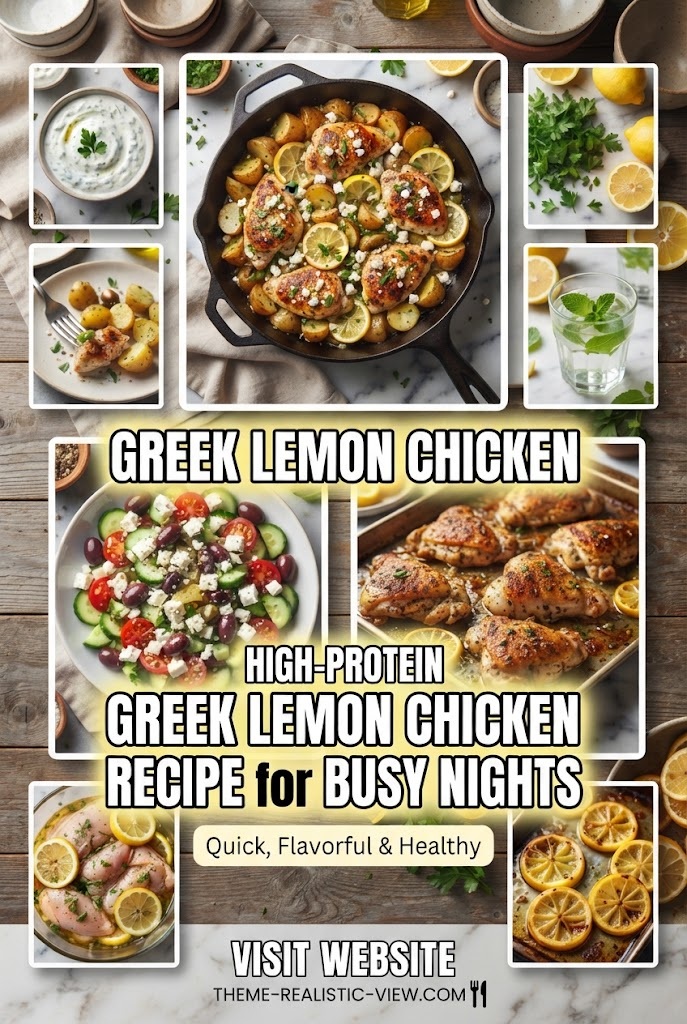
In the modern, fast-paced world, the struggle to balance a demanding career, a rigorous fitness routine, and a healthy diet is a daily challenge. We often find ourselves at a crossroads at 6:00 PM: do we order calorie-dense takeout, or do we spend two hours in the kitchen? For those prioritizing health, muscle recovery, and flavor, the answer lies in the Mediterranean tradition.
Specifically, the High-Protein Greek Lemon Chicken is the gold standard for busy nights. It is a dish that marries the bright, zesty acidity of citrus with the earthy robustness of wild oregano, all centered around lean, high-quality protein. This isn’t just a meal; it’s a nutritional strategy designed to fuel your body while satisfying a gourmet palate.
Why High-Protein Greek Lemon Chicken is the Perfect Meal
When we talk about “high protein,” we aren’t just talking about bodybuilders. Protein is the building block of every cell in your body. It aids in tissue repair, hormone production, and—perhaps most importantly for those on a busy schedule—satiety. A high-protein meal keeps you full longer, preventing the late-night snacking that often derails health goals.
Greek cuisine is naturally aligned with these goals. By focusing on whole foods, healthy fats like extra virgin olive oil, and fresh aromatics, you create a flavor profile that is deeply satisfying without the need for heavy creams, sugars, or processed additives.
The Nutritional Powerhouse: Chicken Breast
The star of this recipe is the chicken breast. It is one of the leanest sources of animal protein available. A standard 6-ounce serving of chicken breast provides approximately 52 grams of protein with minimal fat. It contains all nine essential amino acids, making it a “complete” protein, which is vital for muscle protein synthesis and metabolic health.
The Role of Vitamin C and Digestion
By incorporating a heavy dose of fresh lemon juice, you aren’t just adding flavor. The Vitamin C in lemons acts as a powerful antioxidant and improves the bioavailability of iron found in the chicken and any accompanying greens. Furthermore, the acidity of the lemon helps break down the protein fibers during the marinating process, leading to a more tender, easily digestible meal.
The Essential Ingredients for Success
To achieve that authentic Mediterranean flavor, quality is paramount. Here is a breakdown of what you’ll need and why each ingredient matters.
1. The Protein
- Chicken Breasts (Boneless, Skinless): Opt for organic or pasture-raised if possible. These often have a higher ratio of Omega-3 fatty acids and a firmer texture.
- Alternative: If you prefer a juicier cut, chicken thighs work beautifully, though they increase the fat content slightly.
2. The Marinade (The “Ladolemono”)
In Greek cooking, “Ladolemono” is the holy grail of sauces—a simple emulsion of oil and lemon.
- Extra Virgin Olive Oil (EVOO): Look for cold-pressed oil. It provides heart-healthy monounsaturated fats.
- Fresh Lemons: Never use the bottled stuff. You need the zest and the juice for that bright, floral punch.
- Garlic: At least four cloves. Garlic contains allicin, which has potent medicinal properties.
- Dried Oregano: Specifically, Greek oregano. It is more pungent and savory than the Mexican variety.
- Sea Salt and Cracked Black Pepper: Essential for drawing out the natural juices of the meat.
3. The Aromatics
- Fresh Rosemary or Thyme: These woody herbs add depth and a “roasted” aroma that fills your home.
- Red Onion: When seared, these provide a subtle sweetness that balances the lemon’s acidity.
Step-by-Step Cooking Guide: The 30-Minute Method
The beauty of this recipe is its efficiency. By using a “sear-to-oven” or “high-heat skillet” method, you can have dinner on the table in less time than it takes for a delivery driver to arrive.
Step 1: Prep and Butterfly
To ensure the chicken cooks evenly and quickly, butterfly the breasts. Slice them horizontally through the middle so you have two thinner pieces. This increases the surface area for the marinade and reduces cooking time by half.
Step 2: The Flash-Marination
If you have hours, great. If you have ten minutes, that’s enough. Whisk the olive oil, lemon juice, zest, minced garlic, and oregano in a bowl. Toss the chicken in. The acidity of the lemon will begin to tenderize the meat immediately.
Step 3: The Sear
Heat a heavy-bottomed skillet (cast iron is best) over medium-high heat. Add a teaspoon of olive oil. Once shimmering, place the chicken in. Do not move it. Let it develop a golden-brown crust for about 4 minutes. This “Maillard reaction” is where the flavor lives.
Step 4: The Finish
Flip the chicken. If the breasts are thin, they will finish on the stovetop in another 3-4 minutes. If they are thicker, toss the whole skillet into a preheated oven (400°F) for 5-7 minutes.
Step 5: The Rest
This is the most skipped, yet most important step. Let the chicken rest for 5 minutes before slicing. This allows the juices to redistribute, ensuring every bite is moist and tender.
Advanced Flavor Profiles: Elevating Your Greek Chicken
If you want to take this dish from a “standard weeknight meal” to “dinner party quality,” consider these additions:
- Feta Crumbles: Add high-quality sheep’s milk feta during the last minute of cooking. The heat softens the cheese into a creamy, salty topping.
- Kalamata Olives: Toss these into the pan to warm them up. Their briny saltiness perfectly complements the lemon.
- Capers: For a “Piccata” twist, capers add a burst of acidity that cuts through the richness of the olive oil.
- Honey: A teaspoon of Greek honey in the marinade creates a beautiful caramelization and balances the tartness.
Mastering the “Busy Night” Logistics
How do you actually execute this when you’re exhausted? It’s about the “Mise en Place” (everything in its place).
Meal Prep Strategy
This recipe is a meal-prepper’s dream. You can marinate a large batch of chicken on Sunday. The chicken can sit in the marinade for up to 24 hours. Alternatively, you can cook a large batch, slice it, and store it in airtight containers.
Pro-Tip: If reheating, do so at a lower power setting in the microwave or briefly in a pan with a splash of water to prevent the chicken from becoming rubbery.
The One-Pan Wonder
To minimize cleanup, throw vegetables directly into the pan with the chicken. Asparagus, zucchini, and bell peppers cook at roughly the same rate as butterflied chicken. You’ll have a complete, high-protein, fiber-rich meal with only one pan to wash.
Perfect Side Dish Pairings
To make this a balanced Mediterranean meal, consider these pairings that stay true to the high-protein, low-carb, or heart-healthy theme.
1. The Classic Greek Salad (Horiatiki)
Forget the lettuce. A true Greek salad is tomatoes, cucumbers, red onions, blocks of feta, and olives. It provides hydration and fiber without heavy calories.
2. Lemon Herb Quinoa
For those needing more carbohydrates (ideal for post-workout recovery), quinoa is a superior choice to rice. It contains more protein and fiber. Cook it in chicken bone broth for an extra protein boost.
3. Tzatziki Sauce
Don’t buy the store-bought version filled with preservatives. Mix Greek yogurt (more protein!), grated cucumber, garlic, and dill. It acts as a cooling dip for the hot, zesty chicken.
4. Roasted Cauliflower with Turmeric
For a low-carb option, roasted cauliflower florets soak up the pan juices from the lemon chicken beautifully.
The Science of Flavor: Why Lemon and Oregano Work
Have you ever wondered why Greek food feels so “clean” yet satisfying? It’s a matter of chemical balance.
- Acidity (Lemon): Acts as a flavor enhancer. It “wakes up” the taste buds, making the savory notes of the chicken more pronounced.
- Fat (Olive Oil): Carries the fat-soluble compounds of the garlic and oregano to your palate.
- Herbal Notes (Oregano): Provides a bitter, earthy contrast to the bright lemon.
When these three elements meet high-quality protein, the brain receives signals of both nutritional density and sensory variety, which leads to higher meal satisfaction.
Health Benefits: Beyond the Macros
While the high protein content (approx. 40g-50g per serving) is the main draw for many, the peripheral health benefits are staggering:
- Anti-Inflammatory Properties: Olive oil and oregano are packed with polyphenols that combat oxidative stress in the body.
- Blood Sugar Regulation: Because this meal is low in refined sugars and high in protein/healthy fats, it prevents the insulin spikes associated with “energy crashes.”
- Heart Health: The Mediterranean diet is clinically proven to reduce the risk of cardiovascular disease. This chicken recipe is a cornerstone of that dietary pattern.
Common Mistakes to Avoid
Even a simple recipe can go wrong. Avoid these pitfalls to ensure your Greek Lemon Chicken is perfect every time:
- Overcooking the Chicken: Chicken breast turns dry and “woody” once it passes 165°F (74°C). Use a meat thermometer. Pull the chicken off the heat at 160°F; the residual heat will bring it to 165°F while resting.
- Using Dried Garlic: Powdered garlic doesn’t have the same aromatic complexity as fresh. Take the 30 seconds to mince a real clove.
- Crowding the Pan: If you put too many chicken breasts in one skillet, they will steam in their own juices rather than sear. Use two pans or cook in batches to get that crispy exterior.
- Forgetting the Zest: Most of the lemon’s essential oils are in the skin. If you only use the juice, you’re missing 50% of the flavor profile.
Customizing for Different Diets
This recipe is incredibly versatile and can be adapted for almost any dietary restriction:
- Keto/Low-Carb: This recipe is naturally keto-friendly. Serve with sautéed spinach or cauliflower mash.
- Paleo: Ensure your “feta” is a vegan almond-based version or omit the cheese entirely. Use extra EVOO for healthy fats.
- Whole30: Use compliant ingredients and skip the honey or cheese. The lemon and herbs provide more than enough flavor.
- Gluten-Free: This recipe is 100% naturally gluten-free.
Troubleshooting: How to Fix “Dry” Chicken
If you find your chicken is consistently dry, try the “Dry Brining” technique. Salt the chicken breasts 30 minutes before you plan to cook them and leave them on the counter. The salt draws moisture out, dissolves into a brine, and is then reabsorbed into the meat, breaking down muscle proteins and locking in moisture. When you’re ready to cook, pat them dry, add your lemon/oil/oregano, and proceed. This guarantees a juicy result even if you slightly overcook it.
The Connection Between High-Protein Meals and Mental Clarity
There is an emerging field of study called nutritional psychiatry. Diets high in lean proteins and Mediterranean fats are linked to lower rates of depression and anxiety. By choosing a meal like Greek Lemon Chicken over a high-sugar, processed alternative, you are providing your brain with the amino acids (like tryptophan and tyrosine) necessary to produce neurotransmitters like serotonin and dopamine.
For the busy professional, this means better focus in the afternoon and a more stable mood throughout the evening.
Frequently Asked Questions (FAQ)
Can I use a slow cooker for this recipe?
While you can, chicken breast tends to shred and become dry in a slow cooker. If you want to use a slow cooker, use chicken thighs and reduce the lemon juice slightly, as it can become quite bitter over long cook times.
How long does the cooked chicken last in the fridge?
Properly stored in an airtight container, it will stay fresh and delicious for up to 4 days. This makes it an ideal candidate for Sunday meal prep.
Is this recipe child-friendly?
Absolutely. Most children enjoy the “bright” flavor of lemon. If the garlic or oregano is too strong for them, you can reduce the amounts or serve the chicken with a side of mild Greek yogurt for dipping.
What is the best way to reheat this?
To keep it from drying out, place the chicken in a pan with a tablespoon of water or chicken broth, cover it with a lid, and heat on low for 3-5 minutes. This creates a “steam room” effect that restores the moisture.
Conclusion: Making Healthy Eating Sustainable
The “High-Protein Greek Lemon Chicken” is more than just a recipe; it’s a tool for a better lifestyle. It proves that you don’t need a pantry full of exotic ingredients or a degree from a culinary school to eat well. By focusing on the fundamentals—quality protein, fresh acidity, and healthy fats—you can transform your “busy night” from a source of stress into a culinary highlight.
Next time you find yourself reaching for your phone to order takeout, remember that in the time it takes for the app to find a driver, you could be sitting down to a steaming plate of Mediterranean goodness. Your body, your brain, and your taste buds will thank you.
Summary Checklist for Your Grocery Trip:
- 1.5 lbs Boneless, Skinless Chicken Breasts
- 3-4 Large Organic Lemons
- 1 Bottle Premium Extra Virgin Olive Oil
- 1 Head of Fresh Garlic
- 1 Jar of Dried Greek Oregano
- Fresh Parsley (for garnish)
- Optional: Feta cheese, Kalamata olives, or Greek yogurt for Tzatziki.
Enjoy the journey of cooking. It is the most fundamental way to care for yourself and your loved ones. Once you master this Greek Lemon Chicken, it will undoubtedly become a permanent fixture in your weekly rotation.