
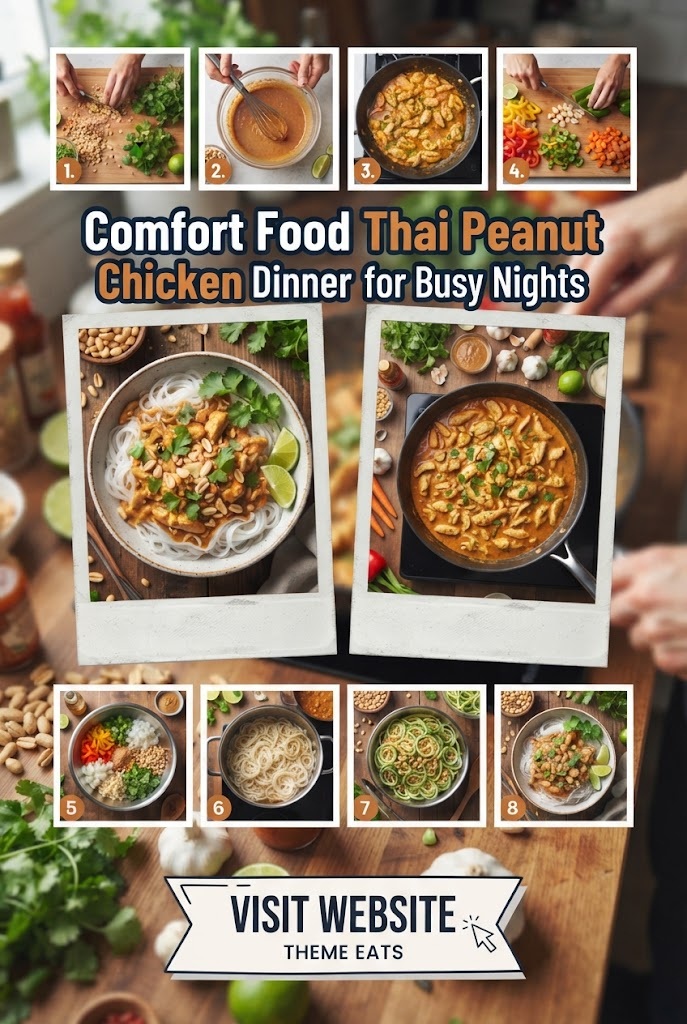
There is a specific kind of magic that happens when the creamy, nutty richness of peanut butter meets the aromatic, zesty profile of Thai spices. For anyone navigating the whirlwind of a modern lifestyle, the “busy night” is more than just a phrase; it is a daily reality. Between work deadlines, family commitments, and the desire for a moment of peace, the kitchen often feels like a battlefield rather than a sanctuary. This is where Thai Peanut Chicken steps in—a dish that manages to be both a decadent indulgence and a nutritional powerhouse, all while being achievable in the time it takes to watch a sitcom.
In this comprehensive guide, we will explore why Thai Peanut Chicken is the undisputed champion of weeknight dinners, how to master the perfect velvety sauce, and the various ways you can customize this dish to fit your dietary needs and cravings.
Why Thai Peanut Chicken is the King of Comfort
Comfort food is often associated with heavy, calorie-laden dishes that leave you feeling lethargic. However, the Thai approach to comfort is different. It relies on the “Four Pillars of Flavor”: sweet, sour, salty, and spicy. When these four elements are perfectly balanced, the brain receives a satisfying hit of complexity that is far more rewarding than simple fats or sugars.
Thai Peanut Chicken provides comfort through:
- Texture: The contrast between tender chicken, crunchy peanuts, and a silky sauce.
- Warmth: The gentle heat from red curry paste or chili flakes that warms you from the inside out.
- Satiety: The healthy fats in peanut butter and the protein in chicken keep you full longer, preventing late-night snacking.
The Anatomy of the Perfect Peanut Sauce
The soul of this dish lies in the sauce. A mediocre sauce results in a bland stir-fry, but a great sauce transforms basic ingredients into a restaurant-quality experience. Let’s break down what you need for a sauce that will have you licking the spoon.
1. The Nut Base
While traditional Thai satay uses ground roasted peanuts, the modern home cook’s secret weapon is high-quality peanut butter.
- Creamy vs. Crunchy: Creamy peanut butter yields a smoother, more elegant sauce. Crunchy peanut butter adds a rustic, textured feel.
- Natural vs. Processed: Natural peanut butter (just peanuts and salt) offers a more intense nut flavor and less sugar, which is ideal for controlling the sweetness of the dish.
2. The Creaminess Factor
Coconut milk is the standard vehicle for Thai sauces. For the richest experience, use full-fat canned coconut milk. The “lite” versions are essentially watered down and won’t provide that luxurious mouthfeel that defines comfort food.
3. The Aromatics
Garlic and ginger are non-negotiable. They provide the base notes of flavor. If you want to elevate the dish further, adding lemongrass or galangal (if available) can provide an authentic citrusy undertone.
4. The “Big Three” Seasonings
- Soy Sauce or Tamari: For saltiness and umami.
- Lime Juice: To cut through the fat and brighten the entire dish.
- Honey or Maple Syrup: To balance the salt and heat.
The Master Recipe: 20-Minute Thai Peanut Chicken
This recipe is designed for the “busy night” scenario. It minimizes prep time while maximizing flavor output.
Ingredients
- Chicken: 1.5 lbs of chicken thighs (preferred for juiciness) or breasts, cut into bite-sized pieces.
- Aromatics: 3 cloves of garlic (minced) and 1 tablespoon of fresh grated ginger.
- Vegetables: 1 red bell pepper (sliced) and 2 cups of sugar snap peas or broccoli florets.
- The Sauce:
- 1/2 cup creamy peanut butter
- 1 can (13.5 oz) full-fat coconut milk
- 2 tablespoons red curry paste (adjust for spice)
- 2 tablespoons soy sauce
- 1 tablespoon honey
- 1 tablespoon lime juice
- Garnish: Fresh cilantro, crushed peanuts, and lime wedges.
Step-by-Step Instructions
Step 1: Sear the Protein
Heat a large skillet or wok over medium-high heat with a splash of oil (avocado or coconut oil works best). Add the chicken pieces in a single layer. Let them sear without moving them for 2-3 minutes to get a golden-brown crust. Flip and cook for another 2 minutes until almost cooked through. Remove the chicken from the pan and set aside.
Step 2: Sauté the Aromatics and Veggies
In the same pan, add a bit more oil if needed. Toss in your sliced bell peppers and broccoli. Sauté for 3-4 minutes until they are bright in color but still retain a bit of “snap.” Add the garlic and ginger during the last 60 seconds of sautéing to prevent them from burning.
Step 3: Build the Sauce
Reduce the heat to medium. Move the vegetables to the side of the pan and add the red curry paste. Let it “bloom” in the heat for 30 seconds until fragrant. Pour in the coconut milk, peanut butter, soy sauce, and honey. Whisk gently directly in the pan until the peanut butter has melted and the sauce is a uniform, sunset-orange color.
Step 4: Re-integrate and Simmer
Add the chicken (and any juices from the plate) back into the pan. Stir to coat everything in the velvety peanut sauce. Let it simmer for 3-5 minutes. This allows the sauce to thicken and the flavors to penetrate the chicken.
Step 5: The Final Touch
Turn off the heat. Stir in the lime juice. This is crucial—adding lime juice at the end preserves its brightness. Taste and add a pinch of salt or more chili flakes if desired.
Customizing Your Meal
One of the reasons Thai Peanut Chicken is a staple in many households is its versatility. You can adapt the recipe based on what you have in your pantry or your specific dietary goals.
The Low-Carb/Keto Version
If you are watching your carb intake, skip the honey and use a stevia-based sweetener or simply omit it (the coconut milk has a natural sweetness). Instead of serving over rice, use:
- Zucchini Noodles (Zoodles): These soak up the sauce beautifully.
- Cauliflower Rice: A neutral base that lets the peanut flavor shine.
- Shredded Cabbage: Sautéed briefly, it provides a wonderful crunch.
The Vegan/Vegetarian Option
Peanut sauce is naturally vegan-friendly if you use maple syrup instead of honey. For the protein, substitute the chicken with:
- Extra Firm Tofu: Press it well and pan-fry until crispy before adding to the sauce.
- Tempeh: Its nutty flavor complements the peanut sauce perfectly.
- Chickpeas: A “pantry staple” version that requires zero prep time.
The “Extra Veggie” Boost
If you’re trying to clear out the crisper drawer, this dish is the perfect “kitchen sink” meal. You can easily add:
- Spinach or kale (stir in at the very end until wilted).
- Carrot ribbons or matchsticks.
- Water chestnuts for extra crunch.
- Baby corn or bamboo shoots.
Secrets to Success: Pro-Tips for the Home Cook
Even a simple recipe has nuances. Here are the professional secrets to making your Thai Peanut Chicken taste like it came from a high-end bistro.
1. Don’t Overcook the Chicken
Chicken breast, in particular, can become rubbery if simmered too long in the sauce. By searing it first and finishing it in the sauce for only a few minutes, you ensure it stays succulent and tender.
2. The Importance of “Blooming”
“Blooming” is the process of heating spices or curry paste in fat before adding liquid. This releases the essential oils and deepens the flavor profile significantly. Never just dump curry paste into the coconut milk; always sauté it first.
3. Balancing the Consistency
Peanut sauce can thicken rapidly as it cools. If your sauce becomes too thick, don’t panic. Add a splash of chicken broth, water, or even more coconut milk to loosen it back up to your desired consistency.
4. Use Fresh Herbs
While dried cilantro exists, it lacks the punch of the fresh stuff. The contrast between the hot, heavy sauce and the cold, fresh cilantro is what makes the dish feel “alive.”
Pairing Suggestions: Completing the Experience
What you serve alongside your Thai Peanut Chicken can elevate the meal from a simple dinner to a full sensory experience.
Grains and Bases
- Jasmine Rice: The classic choice. Its floral aroma is the perfect partner for Thai flavors.
- Coconut Rice: For an even more indulgent meal, cook your rice in half water and half coconut milk with a pinch of salt.
- Rice Noodles: Soak wide rice noodles in hot water, then toss them directly into the pan with the chicken and sauce for a “Pad Thai” style twist.
Drink Pairings
- Non-Alcoholic: A Thai Iced Tea (sweet and creamy) or a sparkling water with a heavy squeeze of lime and a sprig of mint.
- Alcoholic: A crisp Riesling or a Gewürztraminer works wonders. These wines have a slight sweetness and acidity that balance the heat and richness of the peanut sauce. If you prefer beer, a light Lager or a citrus-forward IPA is your best bet.
Meal Prep and Storage: The Gift That Keeps on Giving
Thai Peanut Chicken is one of those rare dishes that actually tastes better the next day. As it sits, the garlic, ginger, and spices meld together more deeply.
- Fridge: Store in an airtight container for up to 4 days.
- Freezer: You can freeze the chicken and sauce for up to 3 months. However, note that coconut milk can sometimes “split” when frozen. To fix this, reheat the dish slowly on the stove and whisk vigorously to recombine the sauce.
- Reheating Tip: If reheating in the microwave, add a teaspoon of water to keep the chicken from drying out and to help the sauce regain its silkiness.
Troubleshooting Common Issues
Even the best cooks run into hiccups. Here is how to fix common Thai Peanut Chicken mishaps:
- The sauce is too salty: This usually happens if the soy sauce is heavy-handed. Add a squeeze of lime juice and a teaspoon of sugar/honey to balance it out. You can also add more coconut milk.
- The sauce is too spicy: Add an extra tablespoon of peanut butter or a splash of heavy cream/coconut milk. Fat is the best neutralizer for capsaicin (the heat in chili).
- The sauce is bland: Usually, this means it needs more acid or salt. Try a splash of fish sauce (for depth) or another squeeze of lime. Often, a tiny pinch of salt is all it takes to make the peanut flavor “pop.”
The Nutritional Profile: Is it Healthy?
Many people wonder if a dish featuring peanut butter and coconut milk can be part of a healthy diet. The answer is a resounding yes, provided you focus on balance.
- Healthy Fats: Monounsaturated fats from peanut butter are heart-healthy. Medium-chain triglycerides (MCTs) found in coconut milk are easily used by the body for energy.
- High Protein: Chicken is an excellent source of lean protein, essential for muscle repair and satiety.
- Micronutrients: By loading the dish with bell peppers, broccoli, and ginger, you are getting a massive dose of Vitamin C, antioxidants, and anti-inflammatory compounds.
To make it even “healthier,” simply increase the ratio of vegetables to chicken and serve it over a bed of greens or cauliflower rice.
Bringing it All Together: The Experience of Cooking
Cooking should not be a chore, even on a busy night. When you make this Thai Peanut Chicken, take a moment to enjoy the process. Listen to the sizzle of the chicken, smell the aromatics as they hit the hot oil, and watch the sauce transform from individual ingredients into a cohesive, golden glaze.
This dish is a reminder that you don’t need hours in the kitchen to create something extraordinary. With a few pantry staples and 20 minutes, you can provide yourself and your family with a meal that nourishes the body and comforts the soul.
Frequently Asked Questions
Can I use PB2 or peanut flour?
You can, but you will miss out on the creamy fats that make the sauce “comforting.” If you use powdered peanut butter, you’ll need to add a bit more coconut milk or a teaspoon of sesame oil to mimic the richness.
Is red curry paste very spicy?
It depends on the brand. “Thai Kitchen” is generally mild, while brands like “Maesri” or “Mae Ploy” pack a significant punch. Always start with one tablespoon and add more after tasting.
Can I use frozen vegetables?
Absolutely. A “Stir-Fry Medley” from the freezer section is a massive time-saver. Just ensure you sauté them long enough to cook off the excess moisture before adding the sauce ingredients.
What if I have a peanut allergy?
You can substitute peanut butter with Almond Butter or Cashew Butter. For a nut-free version, SunButter (made from sunflower seeds) works surprisingly well, though it has a slightly earthier taste.
Conclusion: Your New Weeknight Staple
The Thai Peanut Chicken dinner is more than just a recipe; it’s a strategy for better living. It proves that “fast food” can be homemade, healthy, and incredibly delicious. Whether you are cooking for a family of four or prepping lunches for yourself for the week, this dish offers a reliability that few others can match.
The next time you find yourself staring at the fridge after a long day, tempted to reach for the delivery app, remember the peanut butter in your pantry and the chicken in your freezer. In less time than the delivery driver would take to arrive, you could be sitting down to a steaming bowl of creamy, spicy, nutty perfection. That is the true meaning of comfort food.